How to Visit the Kiswah Museum in Makkah: A Complete Exhibition of the Two Holy Mosques Architecture Guide
If you searched for the “Kiswah Museum” in Makkah, you are almost certainly looking for the Exhibition of the Two Holy Mosques Architecture, a purpose-built museum in the Umm Al-Jood district that displays historic Kaaba doors, pieces of the Kiswa (the Kaaba’s cloth covering), ancient manuscripts, and architectural models tracing 1,400 years of the Grand Mosque and the Prophet’s Mosque. It sits roughly 10 km from Masjid al-Haram, close to the King Abdulaziz Complex for the Holy Kaaba Kiswa (commonly called the Kiswa Factory), which is why the two sites are often confused.
This guide explains exactly what the “Kiswah Museum” is, how far it is from your hotel, how to get there, what you will see, and how to plan a comfortable Umm Al-Jood taxi trip around it — whether you’re travelling solo, with family, or as part of a larger Umrah group.
What Is the Kiswah Museum and How Do You Get There?
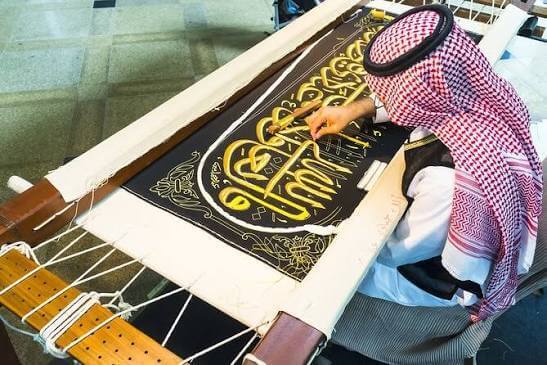
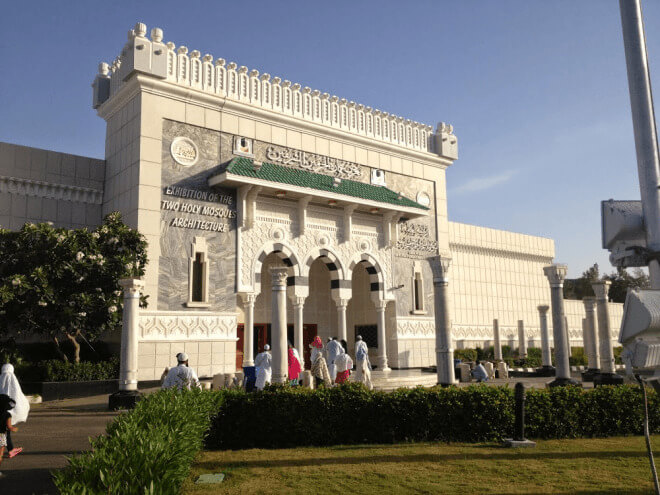
The site most people mean by “Kiswah Museum” is the Exhibition of the Two Holy Mosques Architecture, located on the Old Makkah–Jeddah Road in the Al Hamra, Umm Al-Jood district of Makkah. It is about 10 km from the Haram — roughly a 20 to 30-minute drive under normal traffic, though this can stretch closer to an hour during Hajj, Ramadan, or peak Umrah season. Because the museum sits outside the walkable central zone, and public transport connections in this area are limited, the most practical way to reach it is by private Ziyarat taxi. A private Kiswah museum taxi lets you go directly from your hotel to the exhibition, wait while you explore, and continue on to nearby historical sites without you needing to arrange transport twice.
What Is the “Kiswah Museum”? Clearing Up a Common Mix-Up
Because the topic involves the Kiswa (the sacred black-and-gold cloth that covers the Kaaba), many pilgrims assume there is a single “Kiswah Museum” they can visit. In reality, there are two related but separate sites in the same Umm Al-Jood area, and understanding the difference will save you a wasted trip.
1. Exhibition of the Two Holy Mosques Architecture (the actual “museum”)
This is the public museum most visitors mean when they search for the Kiswah Museum. It is officially dedicated to the architectural history of the Grand Mosque in Makkah and the Prophet’s Mosque in Madinah, and its collection includes historic Kaaba doors, fragments of past Kiswa cloth, inscriptions, manuscripts, and scale models. It is open to visitors, including non-Saudi tourists and pilgrims, and is the site this guide focuses on.
2. King Abdulaziz Complex for the Holy Kaaba Kiswa (the Kiswa Factory)
This is the working factory where the Kiswa is actually woven, embroidered, and prepared each year using silk, gold, and silver thread. It sits in the same general Umm Al-Jood area but is a separate, active production facility. Public access to the factory is far more restricted than to the exhibition — entry is generally limited to organized delegations, media visits, and pre-approved groups rather than walk-in tourists, so most independent pilgrims will not be able to enter on a casual visit.
If your goal is simply to see Kaaba doors, historic Kiswa pieces, and learn the story of how the Two Holy Mosques were built and expanded, the Exhibition of the Two Holy Mosques Architecture is the site to plan your trip around.
Location and Distance from Masjid al-Haram
The Exhibition of the Two Holy Mosques Architecture is located on the Old Makkah–Jeddah Road in the Al Hamra Umm Al-Jud neighborhood, Makkah, near the King Abdulaziz Kiswa Complex. It sits roughly 10 km from the Haram, which puts it well outside comfortable walking distance from almost any hotel in the central Makkah zone.
Because the surrounding area is a working industrial and government district rather than a tourist strip, there are no dedicated shuttle buses or metro connections running directly to the exhibition. Ride options in this part of Makkah are essentially limited to private cars and taxis, which is why most visitors — including tour operators — book a private Ziyarat taxi rather than relying on public transport.
History and Religious Significance
The Exhibition of the Two Holy Mosques Architecture was inaugurated on 1 February 2000, established under the direction of the late Prince Abdul Majeed bin Abdulaziz on behalf of King Fahd bin Abdulaziz. Housed in a 1,200-square-metre facility, the museum was created by the General Presidency for the Affairs of the Grand Mosque and the Prophet’s Mosque to document how the two holiest sites in Islam have physically evolved across roughly 1,400 years, from the early Islamic period through to the modern Saudi-era expansions.
The building itself was designed to echo the architectural language of the Grand Mosque, so the visit is as much about experiencing Islamic architectural style firsthand as it is about viewing exhibits behind glass. In 2025, the General Presidency completed a comprehensive renovation of the exhibition and reopened it in a trial operations phase, refreshing the displays and expanding its educational programming for visitors and researchers alike.
For pilgrims performing Umrah or Hajj, the exhibition adds valuable historical context: after standing in the Haram itself, seeing the actual doors, columns, and Kiswa fragments removed during past renovations helps visitors understand the scale of care the Two Holy Mosques have received across centuries.
What You Will See Inside the Exhibition
The museum is organized into seven themed halls covering the architectural and historical development of the Grand Mosque and the Prophet’s Mosque. Notable items on display include:
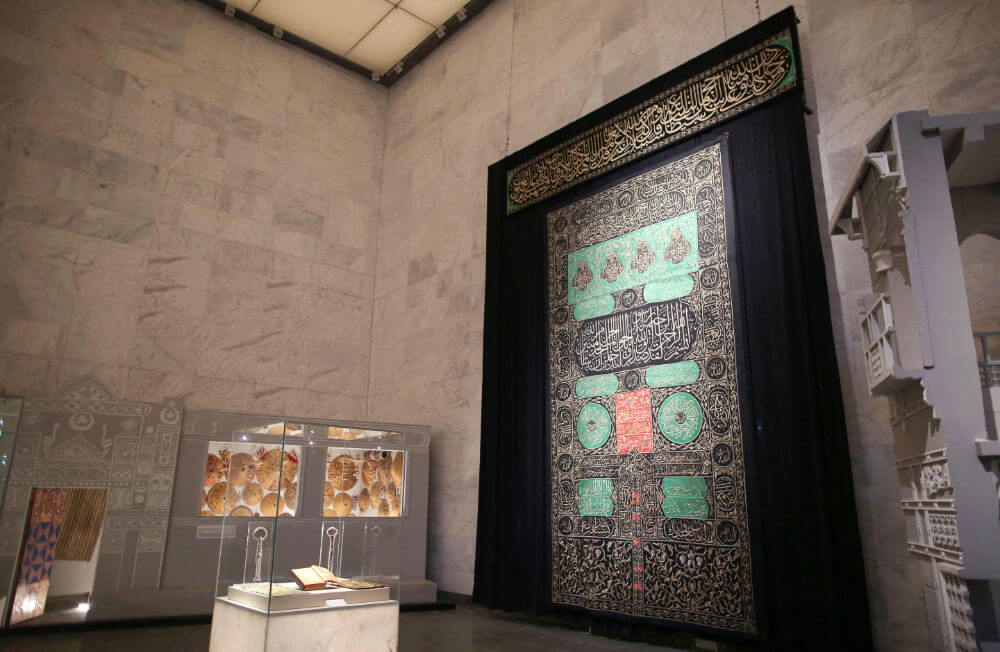
- Historic doors of the Kaaba, replaced during past renovations across different eras
- Pieces of the Kiswa and Kaaba cladding models, showing how the covering has changed over time
- A carved teak staircase, once used to access the interior of the Kaaba
- An Ottoman-era pulpit door from the Prophet’s Mosque
- Marble inscriptions and engraved boards documenting historical repairs and expansions
- Rare manuscripts, including a copy of the historic Uthmani Quran retrieved from the mosque libraries
- Architectural models comparing the Grand Mosque and Prophet’s Mosque across different centuries
- Artifacts dating back to the era of Abdullah ibn Zubair, in the early Islamic period
Multilingual information panels and on-site guides are available to walk visitors through the halls, and the museum is considered suitable for researchers, students, families, and pilgrims of all ages who want a deeper understanding of the Two Holy Mosques’ history.
Visiting Hours and How to Book an Appointment
Visiting hours have historically been Sunday to Thursday, 8:00 AM to 8:00 PM. Because the exhibition underwent renovation and reopened in a trial operations phase during 2025, opening days, hours, and booking requirements can change with relatively short notice, so it’s worth confirming current details before you travel.
A few practical points to keep in mind:
- Entry is by appointment or ticket booking through the official visits platform rather than pure walk-in access, so plan ahead rather than arriving unannounced.
- The exhibition closes for roughly 30–45 minutes around each of the five daily prayers, so time your visit to avoid arriving right at prayer time.
- Many visitors find the exhibition quieter and more comfortable after Asr prayer, avoiding both midday heat and peak crowds.
- If you’re travelling during Hajj season or the Ramadan Umrah rush, confirm availability in advance, since access arrangements for cultural sites around Makkah are sometimes adjusted during peak pilgrimage periods.
Because appointment slots, hours, and access rules can shift, many pilgrims prefer to have a local driver confirm current details on the day and adjust the itinerary if needed – something a private Ziyarat taxi driver familiar with the Umm Al-Jood area can typically help coordinate.
How to Get There: Transport Options Compared
Private Ziyarat Taxi (Recommended)
A private taxi is by far the most practical way to reach the Kiswah Museum. It picks you up directly from your hotel, takes you straight to the Umm Al-Jood district, waits while you tour the halls, and can continue on to other Ziyarat sites afterward — all without you needing to negotiate transport at each stop. This matters more here than at most Makkah attractions, because the museum is 10 km out on an industrial road with no pedestrian infrastructure and limited public transit nearby.
Makkah Ziyarat Taxi offers exactly this kind of door-to-door service for the Exhibition of the Two Holy Mosques Architecture, with an experienced Umm Al-Jood taxi driver, air-conditioned private vehicles, and flexible waiting time so you’re never rushed through the halls. You can book directly through https://makkahziyarat.taxi or message the team on WhatsApp at +966 57 4915 372 to arrange hotel pickup and a return trip.
Ride-Hailing Apps
Standard ride-hailing apps can reach the area, but availability in the Umm Al-Jood industrial zone is less consistent than in central Makkah, and drivers are not always familiar with the exact museum entrance or current appointment requirements. Getting a return ride from this location can also take longer than expected, especially around prayer times.
Group Tour Transport
If you’re travelling with an Umrah group, your tour operator may include a stop at the exhibition as part of a wider Ziyarat itinerary. This works well for larger groups but offers less flexibility on timing than a private taxi if you want to linger in a particular hall or combine the visit with additional stops of your own choosing.
Walking or Public Transport
Given the 10 km distance from the Haram and the lack of dedicated public transit to this specific site, walking or relying on general public transport is not realistic for most visitors, particularly in Makkah’s heat.
Combining the Museum with Other Ziyarat Sites
Because the Kiswah Museum sits outside the central Haram area, most visitors find it makes sense to pair the visit with other historical and religious sites in the same general direction, turning the trip into a half-day or full-day Ziyarat tour rather than a single stop. Popular combinations include:
- Jabal al-Noor and the Cave of Hira, where the Prophet Muhammad (peace be upon him) received the first revelation
- Jabal Thawr and the Cave of Thawr, associated with the migration (Hijrah) to Madinah
- Jannat al-Mu’alla, the historic cemetery in Makkah
- Masjid Ji’ranah, significant to the history of Umrah
- Masjid Aisha (Masjid al-Tan’eem), a common Miqat point for pilgrims entering Ihram again
A private, flexible multi-stop Ziyarat trip is generally the most efficient way to see several of these sites in one outing, since each location involves its own travel time and, in some cases, its own visiting considerations. Makkah Ziyarat Taxi’s private group and family taxi services are built around exactly this kind of door-to-door, multi-stop itinerary, so you can visit the Kiswah Museum alongside other historical landmarks at your own pace rather than on a fixed group schedule.
Sample Half-Day Itinerary
| Time | Stop | Notes |
|---|---|---|
| 8:30 AM | Hotel pickup | Private taxi collects you and your group |
| 9:00 AM | Exhibition of the Two Holy Mosques Architecture | Allow 60–90 minutes to tour all seven halls |
| 10:45 AM | Jabal al-Noor viewpoint / Cave of Hira area | Photo stop and, for those able, the hike to the cave |
| 12:15 PM | Masjid Ji’ranah or Jannat al-Mu’alla | Brief stop depending on your interests |
| 1:00 PM | Return to hotel | Rest before Dhuhr prayer |
This schedule can be adjusted for families with young children, elderly travellers, or anyone who prefers a slower pace — one of the main advantages of booking a private rather than a fixed group tour.
Visitor Tips and Etiquette
- Dress modestly, as you would elsewhere in Makkah, since this is a culturally and religiously significant site.
- Photography is generally permitted in the public halls, but avoid photographing other visitors without permission and follow any signage restricting photos in specific sections.
- Respect prayer-time closures by checking the schedule before you go, so you’re not left waiting at a locked entrance.
- Families with children will find the exhibition calm and educational, though younger children may need extra guidance through the more text-heavy historical sections.
- Elderly visitors and accessibility: the museum halls are largely on accessible, level flooring, but if mobility is a concern, let your private taxi driver know in advance so pickup and drop-off points can be planned close to the entrance.
- Weather: Makkah’s heat can be intense outside the museum building, so a private, air-conditioned taxi waiting between stops is considerably more comfortable than relying on outdoor waiting areas.
- Ramadan and Hajj travel: expect longer transit times across Makkah generally during these periods, and confirm appointment availability at the exhibition in advance.
FAQs
1. What is the Kiswah Museum in Makkah actually called?
Its official name is the Exhibition of the Two Holy Mosques Architecture. “Kiswah Museum” is the informal name many visitors use because the museum displays historic pieces of the Kiswa and sits near the Kiswa Factory.
2. Is the Kiswah Museum the same as the Kiswa Factory?
No. The Exhibition of the Two Holy Mosques Architecture is a public museum open to visitors, while the King Abdulaziz Complex for the Holy Kaaba Kiswa is the working factory where the Kiswa is produced, with much more restricted public access.
3. How far is the Kiswah Museum from Masjid al-Haram?
It is approximately 10 km away, in the Umm Al-Jood district, usually a 20 to 30-minute drive outside peak traffic.
4. What are the visiting hours?
Historically Sunday to Thursday, 8:00 AM to 8:00 PM, with closures of roughly 30–45 minutes around each prayer time. Hours have been subject to change following recent renovations, so confirm before visiting.
5. Do I need to book an appointment or buy a ticket in advance? Yes, entry is generally arranged through appointment or ticket booking via the official visits platform rather than casual walk-in access.
6. Is the exhibition open to non-Muslim tourists?
The exhibition itself is a public cultural and historical museum. Note that Makkah city overall is restricted to Muslims only, so this applies to all visitors entering the city, not just this specific site.
7. How do I get to the Kiswah Museum from my hotel?
The most practical option is a private taxi, since the site is outside walking distance and public transport coverage in the area is limited. Booking a private Ziyarat taxi through Makkah Ziyarat Taxi allows for direct hotel pickup and drop-off.
8. Can I combine the museum visit with other Ziyarat sites?
Yes. It’s commonly paired with Jabal al-Noor, the Cave of Hira, Jabal Thawr, the Cave of Thawr, Jannat al-Mu’alla, and Masjid Ji’ranah as part of a private, flexible multi-stop Ziyarat tour.
9. How much time should I allow for the visit?
Most visitors spend 60 to 90 minutes touring the seven halls, longer if travelling with a guide or taking time to read the historical panels in detail.
10. Is the museum suitable for families and elderly visitors?
Yes, the halls are calm, educational, and mostly on level flooring, making it a comfortable stop for families and older travellers, particularly when transport is arranged door-to-door.
11. What are the must-see exhibits inside?
Highlights include historic Kaaba doors, a carved teak staircase once used to access the Kaaba, an Ottoman-era pulpit door, marble inscriptions, and a copy of the historic Uthmani Quran.
12. Is photography allowed inside the exhibition?
Photography is generally permitted in the main halls, though visitors should be mindful of other guests and follow any posted restrictions in specific sections.
13. What is the best time of day to visit? Many visitors recommend going after Asr prayer to avoid both the midday heat and the busier morning crowds.
14. Can I visit during Hajj or Ramadan?
Yes, but expect longer transit times across the city and confirm appointment availability in advance, as access arrangements for cultural sites can be adjusted during peak pilgrimage periods.
15. How do I book a private taxi for the Kiswah Museum and nearby Ziyarat sites?
You can book directly through https://makkahziyarat.taxi or contact the team on WhatsApp at +966 57 4915 372 to arrange hotel pickup, waiting time at the museum, and stops at other historical sites in the same trip.
Final Thoughts
The Kiswah Museum — officially the Exhibition of the Two Holy Mosques Architecture — is one of the most rewarding cultural stops near Makkah for pilgrims and history-minded visitors alike, offering a rare, close-up look at the physical history of the Grand Mosque and the Prophet’s Mosque. Because it sits about 10 km outside the central Haram area with limited public transport access, the easiest and most comfortable way to visit is with a private driver who can handle hotel pickup, waiting time, and onward stops to nearby historical sites.
If you’d like help planning your visit, Makkah Ziyarat Taxi offers private, flexible transportation to the Exhibition of the Two Holy Mosques Architecture and other Islamic historical landmarks around Makkah, including Jabal al-Noor, the Cave of Hira, Jabal Thawr, Jannat al-Mu’alla, and Masjid Ji’ranah. Book online at https://makkahziyarat.taxi or reach out on WhatsApp at +966 57 4915 372 to arrange your itinerary.