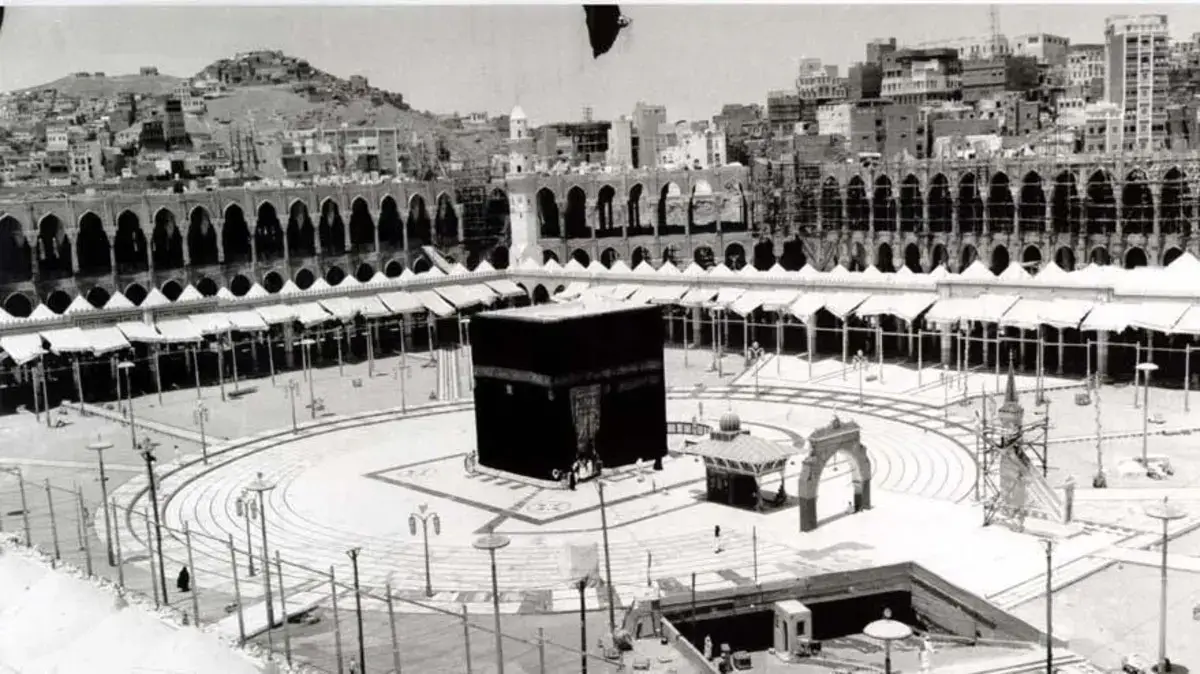
Makkah History: The Complete Guide to Mecca’s Origins, Islamic Heritage and Sacred Places
Makkah, also known as Mecca, is the holiest city in Islam and one of the world’s most significant religious destinations. Located in western Saudi Arabia, it is home to the Holy Kaaba, Masjid al-Haram, and historical landmarks connected to the life of Prophet Muhammad (peace be upon him).
The history of Makkah stretches from the ancient traditions of Prophet Ibrahim (Abraham) and Prophet Ismail (Ishmael) to the beginnings of Islam in the seventh century and the development of the modern city.
For Muslims worldwide, Makkah is more than a destination. It is the direction of daily prayer, the center of Hajj and Umrah, and a place where important chapters of Islamic history unfolded.
This guide explores the origins of Makkah, its religious importance, major historical events, famous Islamic sites, and practical ways to discover its heritage during your visit.
What Is the History of Makkah?
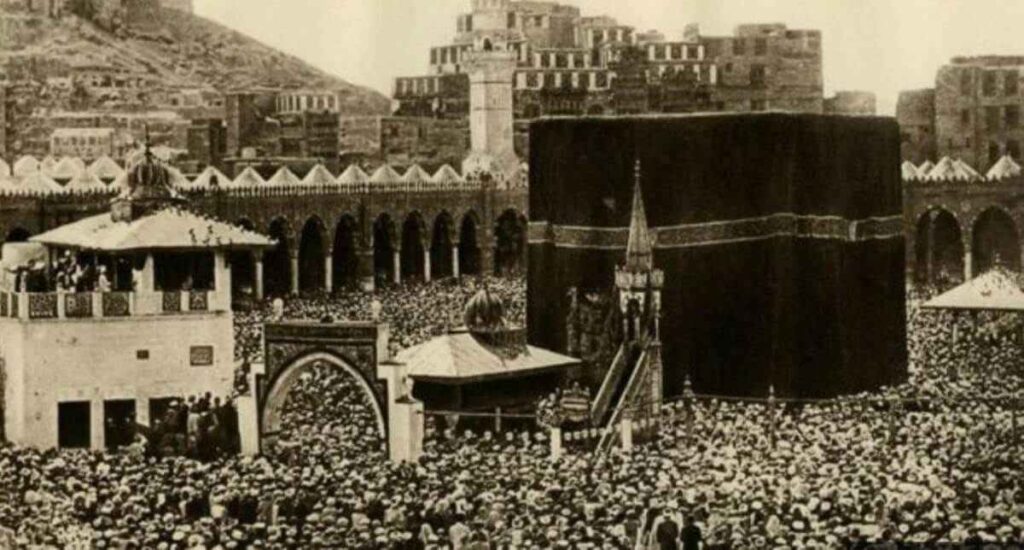
The history of Makkah is closely connected to the Kaaba, pilgrimage, and the emergence of Islam.
According to Islamic tradition, Prophet Ibrahim and his son Ismail raised the foundations of the Kaaba as a place dedicated to the worship of Allah. Over time, Makkah became a religious gathering place for Arabian tribes.
By the sixth century CE, the Quraysh tribe held a leading position in the city. Makkah developed commercial and religious importance, with the Kaaba at the center of community life.
Prophet Muhammad (peace be upon him) was born in Makkah around 570 CE. His first revelation took place in the Cave of Hira around 610 CE, marking the beginning of the Quranic revelation and the Islamic prophetic mission.
In 622 CE, the Prophet migrated to Madinah, an event known as the Hijrah. He returned to Makkah in 630 CE, after which the Kaaba was restored to the worship of one God.
Throughout subsequent centuries, Makkah remained a major center of Islamic pilgrimage, scholarship, and cultural exchange.
Today, it is a modern Saudi city that continues to welcome pilgrims from across the world.
Where Is Makkah Located?
Makkah lies in the Hejaz region of western Saudi Arabia, inland from the Red Sea and surrounded by rocky mountains and valleys.
Its setting shaped its historical development. Before modern roads, air travel, and infrastructure, travelers approached Makkah through routes across the Arabian Peninsula and beyond.
The city’s location connects it with several other important destinations:
- Jeddah: A major Red Sea gateway and international arrival point for pilgrims.
- Madinah: The city to which Prophet Muhammad migrated in 622 CE.
- Taif: A mountainous city linked to events in the Prophet’s life and the wider history of the Hejaz.
- Mina, Arafat, and Muzdalifah: The sacred places associated with the Hajj pilgrimage.
Makkah is also known as Umm al-Qura, commonly translated as the Mother of Cities, while Makkah al-Mukarramah means Honored Makkah.
The Ancient History of Makkah Before Islam
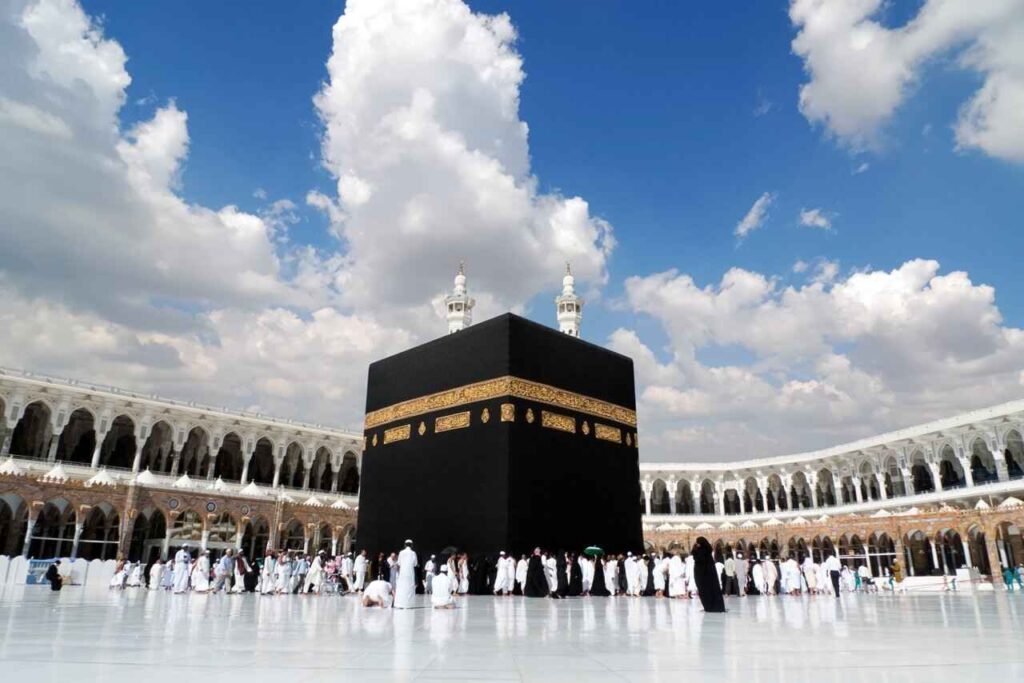
Prophet Ibrahim, Hajar, and Ismail
The earliest chapters of Makkah’s sacred history are preserved through the Quran and Islamic traditions.
According to these accounts, Prophet Ibrahim left Hajar and their infant son Ismail in a barren valley by Allah’s command.
The valley had little water or vegetation. As Hajar searched for water, she moved between the hills of Safa and Marwah.
Allah provided the spring of Zamzam, which became central to the story of Makkah’s settlement and enduring religious significance.
Her search is commemorated in the ritual of Sa’i, performed by pilgrims between Safa and Marwah during Hajj and Umrah.
This narrative belongs to Islamic religious tradition. The precise archaeological chronology of Makkah’s earliest settlement is less certain, and early historical claims should not be presented as independently established dates.
The Construction of the Kaaba
The Quran describes Prophet Ibrahim and Ismail raising the foundations of the Sacred House (Quran 2:127).
The Kaaba became the central sacred landmark around which Makkah’s religious identity developed.
According to Islamic belief, it was established for the worship of Allah alone.
The Kaaba’s importance continued through generations, although religious practices in pre-Islamic Arabia changed over time.
Makkah Under the Quraysh Tribe
Before Islam, the Quraysh became the leading tribe of Makkah.
Their responsibilities included aspects of the Kaaba’s administration and services for visiting pilgrims.
The city also participated in regional commerce and the social networks of western Arabia.
Traditional accounts describe important seasonal trading activities, tribal relationships, and gatherings connected with pilgrimage.
However, historians continue to debate the exact scale of Makkah’s pre-Islamic international trading role because surviving contemporary evidence is limited.
The Kaaba Before Islam
During the pre-Islamic period, the Kaaba was associated with religious practices that included the worship of idols.
Pilgrimage gatherings attracted Arabian tribes with different beliefs and customs.
The emergence of Islam transformed the religious life of Makkah and reestablished the Kaaba as a sanctuary dedicated to the worship of Allah alone.
The Birth of Prophet Muhammad in Makkah
Prophet Muhammad (peace be upon him) was born in Makkah around 570 CE, traditionally associated with the Year of the Elephant.
He belonged to the Banu Hashim clan of the Quraysh tribe.
His father, Abdullah, died before his birth, and his mother, Aminah, died when he was young. He was subsequently cared for by his grandfather, Abd al-Muttalib, and later his uncle, Abu Talib.
As he grew older, Muhammad became known for his honesty and trustworthiness.
He married Khadijah bint Khuwaylid, a respected businesswoman who later became the first person to believe in his prophetic mission.
Where Was Prophet Muhammad Born?
Traditional historical accounts associate the Prophet’s birthplace with an area near Masjid al-Haram in old Makkah.
The historical urban landscape has changed considerably, so visitors should be cautious about treating any modern structure as an independently authenticated representation of the original building.
For those interested in the Prophet’s early life, exhibitions dedicated to the Seerah provide valuable context.
The First Revelation in the Cave of Hira
One of the most important events in Makkah history occurred around 610 CE.
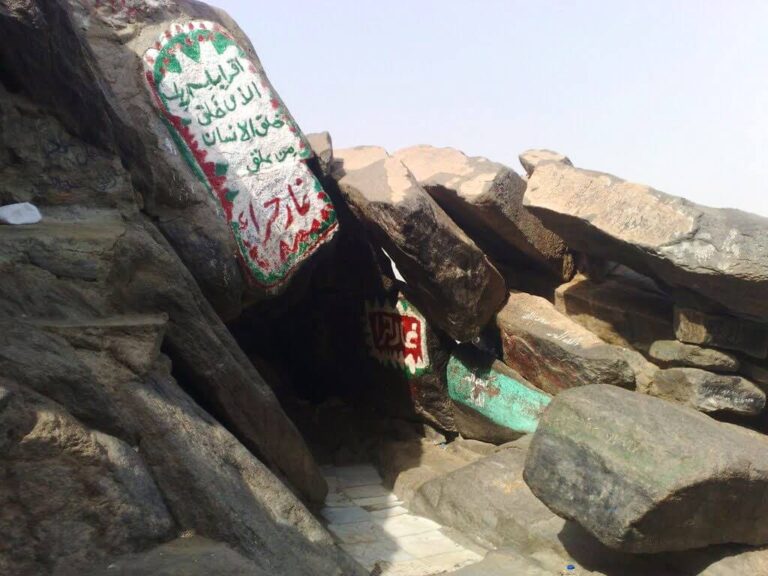
Prophet Muhammad frequently spent time in reflection and worship in the Cave of Hira, located on Jabal al-Noor, also called the Mountain of Light.
According to Islamic tradition, the Angel Jibril (Gabriel) appeared to him there and delivered the first revealed verses of the Quran, beginning with Surah Al-Alaq.
This event marked the beginning of his prophethood.
Where Is the Cave of Hira?
The Cave of Hira is located near the summit of Jabal al-Noor, northeast of Masjid al-Haram.
The mountain is approximately 4–5 kilometers from the Grand Mosque in straight-line geographical terms, although road journeys are longer.
Visitors can reach the mountain’s accessible base by road. Reaching the actual cave requires a steep climb over uneven terrain.
Visiting Jabal al-Noor Today
Jabal al-Noor remains among the most recognizable historical landmarks in Makkah.
The nearby Hira Cultural District offers educational exhibitions related to revelation and the Quran, making it an alternative for visitors who do not wish to climb.
A visit to the mountain or cave is not a required ritual of Hajj or Umrah.
For comfortable transportation to the mountain area, visitors can arrange a private Cave of Hira or Jabal al-Noor taxi through Makkah Ziyarat Taxi.
The Beginning of Islam in Makkah
After the first revelation, Prophet Muhammad began inviting people to worship Allah alone and to adopt principles of justice, compassion, and moral responsibility.
His message challenged established religious practices and social structures.
The earliest Muslims included Khadijah, Abu Bakr, Ali ibn Abi Talib, and Zayd ibn Harithah.
As the Muslim community grew, opposition from influential members of Quraysh increased.
Some early Muslims faced persecution, social exclusion, and economic hardship.
The Boycott of Banu Hashim
Traditional Islamic historical sources describe a boycott directed at Banu Hashim and Banu al-Muttalib, the clans associated with protecting the Prophet.
The boycott placed considerable pressure on families and supporters of the early Muslim community.
This period remains an important part of Makkah’s Islamic history.
The Year of Sorrow
Around 619 CE, Prophet Muhammad experienced the deaths of his wife Khadijah and his uncle Abu Talib.
Their deaths represented significant personal losses and weakened his support in Makkah.
This period is traditionally called the Year of Sorrow.
The Hijrah: Migration from Makkah to Madinah
In 622 CE, Prophet Muhammad migrated from Makkah to Yathrib, later known as Madinah.
The migration, called the Hijrah, became a turning point in Islamic history.
The Hijrah also serves as the reference point for the Islamic Hijri calendar.
The Historical Significance of the Cave of Thawr
During the migration, the Prophet and his companion Abu Bakr sought refuge in the Cave of Thawr, located on Jabal Thawr south of central Makkah.
The Quran refers to the Prophet and his companion in the cave in Surah At-Tawbah (9:40).
The location symbolizes the difficult circumstances surrounding the migration and the importance of trust in Allah.
Can Visitors See Jabal Thawr?
Yes. Jabal Thawr can be viewed from accessible surrounding areas.
However, reaching the cave itself involves a demanding mountain climb, which is not suitable for every visitor.
For most families, older travelers, and visitors with mobility limitations, a road-accessible viewpoint offers a more practical experience.
Makkah Ziyarat Taxi can assist with private transport to the accessible Jabal Thawr area as part of a historical sightseeing itinerary.
The Conquest of Makkah in 630 CE
The conquest of Makkah, known as Fath Makkah, occurred in 630 CE, corresponding to 8 AH.
Following the breakdown of the Treaty of Hudaybiyyah, Prophet Muhammad led Muslim forces toward Makkah.
The city came under Muslim control with comparatively limited fighting, although the event was not entirely without armed resistance.
The conquest marked a decisive moment in the history of Islam.
The Prophet removed idols from the Kaaba, reaffirming its dedication to the worship of Allah.
Makkah subsequently became the central spiritual destination of the growing Muslim community.
Why Is Makkah the Holiest City in Islam?
Makkah holds a unique place in Muslim faith and practice because of its connection with the Kaaba, Quranic revelation, Prophet Ibrahim, and Prophet Muhammad.
The Kaaba and the Qiblah
The Kaaba is located inside Masjid al-Haram.
Muslims throughout the world face the direction of the Kaaba during their five daily prayers. This direction is known as the Qiblah.
The Kaaba is not worshipped by Muslims; rather, it serves as the unified direction of worship toward Allah.
Masjid al-Haram
Masjid al-Haram, the Sacred Mosque, surrounds the Kaaba and is the central site for the rituals of Hajj and Umrah.
The mosque includes several important features:
- The Holy Kaaba
- Maqam Ibrahim, the Station of Ibrahim
- The area used for Tawaf, circling the Kaaba
- The Sa’i route between Safa and Marwah
- Facilities associated with Zamzam water
The mosque has undergone numerous phases of construction and expansion throughout Islamic history.
The Importance of Hajj and Umrah
Hajj is one of the Five Pillars of Islam and is obligatory once in a lifetime for Muslims who meet the necessary religious and practical conditions.
It takes place during the Islamic month of Dhu al-Hijjah.
Umrah is a pilgrimage involving ihram, Tawaf, Sa’i, and completing the prescribed concluding rites. It can be performed during permitted periods throughout the year, subject to official regulations.
Both pilgrimages connect Muslims to the sacred history of Makkah.
Makkah History After the Prophet Muhammad
Following the Prophet’s death in 632 CE, Makkah remained the spiritual center of Islamic pilgrimage.
While political centers developed in other cities, Makkah retained its exceptional religious importance.
The Rashidun, Umayyad, and Abbasid Periods
Early Muslim rulers supported the Grand Mosque and the infrastructure needed by pilgrims.
Over time, the mosque was expanded and rebuilt in different stages.
Makkah also attracted scholars, teachers, religious students, merchants, and visitors from throughout the Muslim world.
The city experienced political struggles and natural disasters, including episodes of flooding and damage that led to further reconstruction.
The Medieval Islamic Period
During the medieval period, Makkah remained connected to pilgrimage routes extending across Arabia, Africa, and Asia.
The arrival of pilgrims encouraged exchanges of languages, traditions, scholarship, and commercial goods.
Historical travel accounts, including those of Ibn Jubayr and Ibn Battuta, provide valuable descriptions of pilgrimage life during these centuries.
Makkah Under Ottoman Rule
From the early sixteenth century, Makkah formed part of the wider Ottoman political and administrative sphere, while local Sharifian leadership remained influential.
The Ottomans contributed to the maintenance of pilgrimage routes, religious infrastructure, and the Holy Mosque.
The broader history of Makkah during this period reflects relationships between imperial authorities, regional rulers, merchants, and pilgrims.
Makkah in the Modern Saudi Era
Makkah came under Saudi control in 1924, before the Kingdom of Saudi Arabia was officially established in 1932.
Throughout the Saudi era, extensive investments have transformed the city’s transportation networks, public services, and pilgrimage infrastructure.
Successive expansions of Masjid al-Haram have increased its ability to accommodate worshippers.
Modern Makkah combines historic religious significance with major hotels, roads, public transport, and facilities serving international pilgrims.
Historical Places to Visit in Makkah
Makkah contains many locations associated with the life of Prophet Muhammad, the earliest Muslim community, and centuries of pilgrimage.
Some are active places of worship. Others are historical landscapes, mountain sites, cemeteries, or cultural exhibitions.
1. Masjid al-Haram and the Holy Kaaba
Historical significance: The sacred center of Islam, connected to Prophet Ibrahim and the rituals of Hajj and Umrah.
What to experience: Prayer, Tawaf, the Kaaba, the Sa’i area, and an understanding of the mosque’s architecture.
Visitor advice: Allow time for crowd movement, observe official access instructions, and prioritize worship over sightseeing.
2. Cave of Hira and Jabal al-Noor
Historical significance: The traditional location of the first Quranic revelation.
Location: Northeast of central Makkah.
Visitor advice: The summit climb is strenuous. Visitors can see the mountain and explore nearby cultural attractions without climbing to the cave.
Transportation: A private Cave of Hira taxi can take visitors to an accessible arrival point, subject to road restrictions.
3. Cave of Thawr and Jabal Thawr
Historical significance: Associated with the Prophet’s migration to Madinah.
Location: South of Masjid al-Haram.
Visitor advice: The mountain climb is demanding. A roadside viewing stop is generally more practical for families.
Transportation: A private Jabal Thawr taxi is useful for combining this location with other historical sites.
4. Jannat al-Mu’alla Cemetery
Historical significance: An old cemetery associated with important people from Makkah’s early Islamic history, including Khadijah bint Khuwaylid according to Islamic historical accounts.
Visitor advice: Observe cemetery etiquette and follow local access rules. Photography and visiting arrangements may be restricted.
Transportation: Visitors may include the surrounding area in a short historical tour.
5. Mina and Masjid al-Khaif
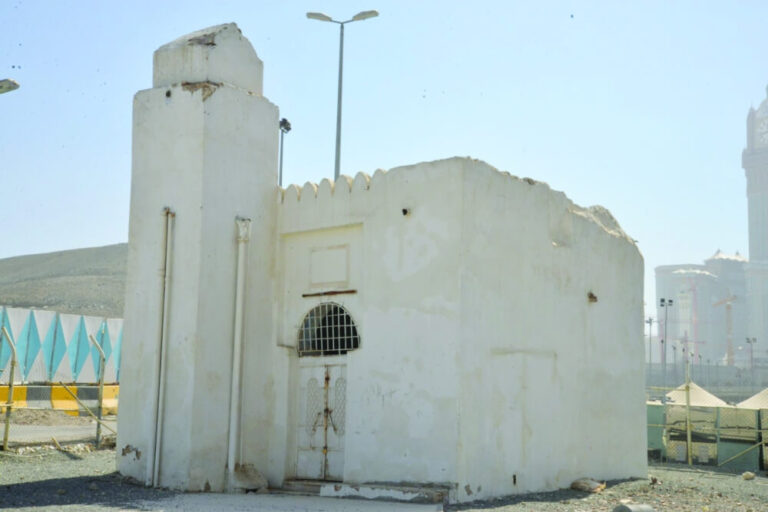
Historical significance: Mina is an important location in the Hajj journey. Masjid al-Khaif is a historic mosque associated with the religious heritage of Mina.
Visitor advice: Access and traffic arrangements can change substantially during Hajj.
Transportation: Mina taxi transfers must be planned according to the current permitted vehicle routes.
6. Arafat, Jabal al-Rahmah, and Masjid Nimrah
Historical significance: Arafat is the location of the central standing ritual of Hajj. Masjid Nimrah is associated with the Farewell Pilgrimage and the Prophet’s sermon.
Visitor advice: Outside Hajj, visitors may explore permitted areas to understand the geography and history of the pilgrimage.
Transportation: Private Arafat sightseeing transfers can be planned outside periods when authorities restrict normal vehicle access.
7. Muzdalifah
Historical significance: An essential location in the sequence of Hajj rituals, where pilgrims gather after departing Arafat.
Visitor advice: Explore its significance as part of a broader explanation of Mina, Arafat, and the pilgrimage route.
Transportation: Muzdalifah taxi sightseeing is subject to permitted access.
8. Jamarat
Historical significance: The location in Mina where pilgrims perform the symbolic stoning ritual during Hajj.
Visitor advice: It is not an ordinary tourist attraction during pilgrimage operations. Do not assume unrestricted access.
Transportation: Jamarat-area transfers require confirmation of current traffic and access regulations.
9. Masjid Aisha (Al-Tan’im Mosque)
Historical significance: Associated with Aisha, the wife of Prophet Muhammad, who entered ihram at Tan’im for Umrah.
Location: Approximately 7.5 kilometers north of Masjid al-Haram.
Visitor advice: It is a commonly used location for entering ihram for an additional Umrah by eligible pilgrims already in Makkah.
Transportation: Visitors can arrange a Masjid Aisha taxi for a direct hotel pickup and return journey.
10. Masjid Ji’ranah
Historical significance: Associated with events following the Battle of Hunayn and the Prophet’s entry into ihram for Umrah.
Visitor advice: This historic mosque can be included in a broader itinerary covering Makkah’s Islamic heritage.
Transportation: A private Masjid Ji’ranah taxi helps visitors reach the area without arranging multiple independent journeys.
Other Historical and Cultural Landmarks
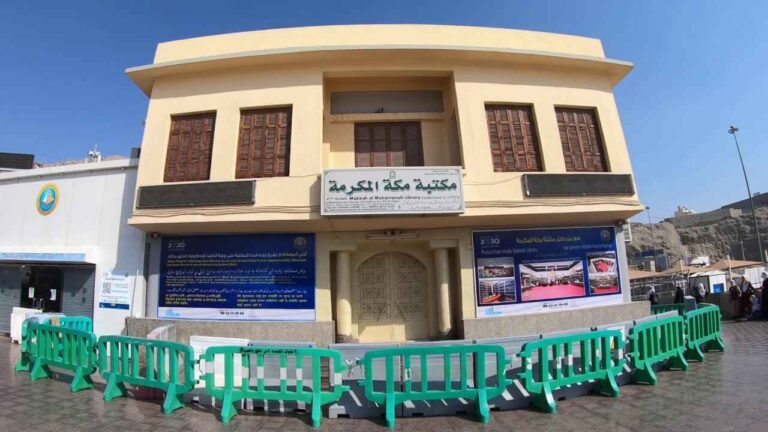
Visitors interested in learning more can also consider the Hira Cultural District, the Exhibition of the Two Holy Mosques Architecture, Masjid al-Jinn, the historical Hudaybiyyah area, and surviving parts of the Ain Zubaydah water system.
These places expand the story beyond individual events to the development of Makkah’s religious, architectural, and cultural heritage.
How Did Pilgrims Travel to Makkah in the Past?
For centuries, reaching Makkah required long journeys across difficult terrain.
Pilgrims traveled on foot, by animal transport, in caravans, and later using ships, railways, automobiles, and aircraft.
Major pilgrimage routes historically connected Makkah with regions such as Egypt, Syria, Iraq, Yemen, and the Indian Ocean.
Travel involved careful planning for food, water, shelter, and security.
Infrastructure projects helped make pilgrimage journeys more manageable.
One notable example is the Ain Zubaydah water system, associated with Zubaydah, the wife of Abbasid Caliph Harun al-Rashid.
The system supplied water along parts of the pilgrimage landscape and illustrates the engineering effort historically devoted to supporting visitors.
Today, travelers can reach Makkah through modern transport networks and explore historical locations using local vehicles.
Exploring Makkah History by Private Ziyarat Taxi
A private Makkah Ziyarat tour allows visitors to connect the stories they have studied with the places where those events are remembered.
Instead of coordinating separate journeys to different landmarks, visitors can plan a route around their interests, available time, and mobility requirements.
Makkah Ziyarat Taxi offers private transportation for families, groups, and individual travelers who wish to visit historical places in Makkah.
Suggested Half-Day Historical Tour
A practical half-day tour may include:
- Hotel pickup in Makkah.
- A visit to the accessible Jabal al-Noor area.
- A stop at the Jabal Thawr area.
- A drive through permitted sections of Mina, Muzdalifah, and Arafat.
- Return to the hotel or another agreed location.
The exact route and number of stops depend on traffic, access conditions, and the time allocated to each location.
Climbing the caves should be treated as a separate activity requiring substantially more time and preparation.
Suggested Full-Day Heritage Experience
Visitors with more time can combine a historical sightseeing route with selected mosques, cultural exhibitions, and breaks for meals and prayers.
A full-day itinerary may also include Jannat al-Mu’alla, Masjid Aisha, or Masjid Ji’ranah where appropriate.
For families with young children or older travelers, it is usually better to choose fewer stops and allow extra rest time.
Choosing a Comfortable Vehicle
Different groups have different transportation needs.
A sedan may be suitable for a small party, while families and larger groups may prefer an SUV or passenger van.
When arranging a private Ziyarat journey, confirm the passenger count, luggage requirements, air conditioning, and any accessibility needs before booking.
Vehicles such as the Toyota Camry, Hyundai Staria, Toyota Hiace, or other suitable models may be requested, but actual availability and suitability should be confirmed by the provider.
How to Book a Private Makkah Ziyarat Taxi
To plan a journey with Makkah Ziyarat Taxi:
- Share your hotel or pickup location.
- Provide your preferred travel date and pickup time.
- Mention the number of passengers.
- Select the historical locations you would like to visit.
- Confirm the vehicle, quoted price, route, waiting arrangements, and return destination.
For route assistance and booking enquiries, visit makkahziyarat.taxi or contact WhatsApp at +966 57 4915 372.
Practical Travel Tips for Visiting Historical Makkah
Choose Cooler Hours
Makkah experiences hot weather for much of the year.
Early morning visits are often more comfortable, especially when visiting mountain areas or outdoor landmarks.
Carry drinking water, wear comfortable footwear, and plan suitable rest breaks.
Understand That Ziyarat Is Not a Required Umrah Ritual
Ziyarat means visiting places, often those connected to religious history.
Exploring historical landmarks can be educational and meaningful, but visiting the Cave of Hira, Cave of Thawr, or other sightseeing locations is not a compulsory element of Hajj or Umrah.
Pilgrims should distinguish the prescribed pilgrimage rites from optional historical visits.
Respect Religious Sites
Dress appropriately, maintain a respectful atmosphere, and avoid obstructing worshippers or other visitors.
Do not damage rocks, buildings, inscriptions, graves, or other historic features.
Observe all posted photography restrictions and instructions from local authorities.
Check Current Hajj Restrictions
During Hajj, transport arrangements around Makkah and the holy sites are subject to special official regulations.
Ordinary taxi access may be limited or prohibited in certain areas.
Always check the latest rules through official Saudi pilgrimage channels before planning journeys.
Plan for Accessibility
Mountain trails are not equivalent to ordinary sightseeing stops.
For older travelers, young children, wheelchair users, or visitors with mobility concerns, select accessible landmarks and road-based viewpoints wherever possible.
Discuss the vehicle and route requirements with your transport provider in advance.
FAQs
1. What is the history of Makkah in Islam?
Makkah is connected to Prophet Ibrahim and Ismail, the Kaaba, the birth of Prophet Muhammad, and the beginning of Quranic revelation. It later became the central destination for Hajj and Umrah.
2. How old is Makkah?
Makkah’s sacred origins are associated with ancient religious traditions. However, there is no universally established archaeological founding date for the city, and specific ancient ages should not be stated as proven historical facts.
3. Who built the Kaaba first?
According to the Quran, Prophet Ibrahim and his son Ismail raised the foundations of the Kaaba. Some Islamic traditions describe an earlier history, but the Quranic account is the clearest foundational reference.
4. Why is Makkah important to Muslims?
Makkah contains the Kaaba, the direction Muslims face in prayer, and Masjid al-Haram. It is also the destination for Hajj and Umrah and the birthplace of Prophet Muhammad.
5. What was Makkah called before Islam?
Makkah is associated with names including Makkah, Bakkah, and Umm al-Qura in Islamic sources. Historical interpretation of these names and their precise geographical use varies.
6. When was Prophet Muhammad born in Makkah?
He is traditionally believed to have been born around 570 CE, in the period known as the Year of the Elephant.
7. Where did the first revelation occur?
According to Islamic tradition, the first Quranic revelation came to Prophet Muhammad in the Cave of Hira on Jabal al-Noor, near Makkah, around 610 CE.
8. What happened in Makkah in 630 CE?
In 630 CE, Prophet Muhammad and the Muslim community gained control of Makkah. The Kaaba was cleared of idols and rededicated to the worship of Allah.
9. What are the most important historical places in Makkah?
Major sites include Masjid al-Haram, the Kaaba, Cave of Hira, Jabal Thawr, Jannat al-Mu’alla, Mina, Arafat, Muzdalifah, and Masjid Aisha.
10. Can tourists visit historical places in Makkah?
Eligible Muslim visitors can explore many historical areas, subject to Saudi entry regulations and site-specific access rules. Makkah itself is restricted to Muslims.
11. Is visiting the Cave of Hira part of Umrah?
No. Visiting the Cave of Hira is not a required rite of Umrah or Hajj. It is a separate historical visit.
12. How long does a Makkah Ziyarat tour take?
A road-based historical sightseeing tour can often be arranged over several hours. A more extensive itinerary may require a full day, especially with cultural exhibitions or additional stops.
13. Can families book a private Makkah history tour?
Yes. Families can request private Ziyarat transportation with a suitable vehicle, agreed pickup location, and a flexible itinerary adapted to their needs.
14. Is Jabal al-Noor suitable for elderly visitors?
The mountain can be viewed from accessible nearby areas, but climbing to the Cave of Hira is steep and physically demanding. Elderly visitors or those with mobility concerns may prefer the lower viewing areas and cultural exhibitions.
15. How can I book a private taxi to historical places in Makkah?
You can contact Makkah Ziyarat Taxi through https://makkahziyarat.taxi or WhatsApp +966 57 4915 372. Share your travel date, pickup location, passenger count, and preferred historical sites to request a suitable itinerary and quote.
Conclusion: Discover the Living History of Makkah
The history of Makkah is a remarkable story of faith, pilgrimage, community, and transformation.
From the sacred traditions of Prophet Ibrahim and Ismail to the first revelation in the Cave of Hira, the Hijrah, and the conquest of Makkah, the city occupies an extraordinary place in Islamic history.
Its mountains, mosques, pilgrimage sites, and cultural landmarks help visitors understand how these events are connected to the physical landscape.
Whether you are visiting for Umrah, Hajj, or an educational journey, learning about Makkah’s past can bring greater context to your experience.
For a comfortable, flexible journey to the city’s historical landmarks, Makkah Ziyarat Taxi can help you plan private transportation with hotel pickup and a route suited to your group.
Website: https://makkahziyarat.taxi
WhatsApp bookings: +966 57 4915 372
Explore Makkah’s heritage thoughtfully, respect its sacred place