First-Time Pilgrim’s Guide: How to Plan Your Ziyarat in Makkah
By the Makkah Ziyarat Taxi team
If this is your first trip to Makkah, you may be carrying two feelings at once: deep excitement, and a quiet worry about getting it all right. Where do I go after Umrah? How long does it take? Will my parents cope with the heat? Do I need a guide? Is a group bus better, or a private car?
Those questions are normal, and every first-timer asks them. This guide answers them in plain language, so you can plan your Ziyarat in Makkah calmly and spend your energy on what matters: reflection, gratitude and worship.
How Do You Plan a Ziyarat in Makkah?
To plan a Ziyarat in Makkah, choose the sites you want to see, decide how you will travel, and fix a time of day that avoids the worst heat and crowds. Most pilgrims complete the main historical sites in a half-day of three to four hours. Early morning after Fajr, or the cooler hours after Asr, work best. Wear light, modest, comfortable clothing, carry water, and plan around prayer times. A private taxi lets you set your own pace, which matters most for families and elderly travelers.
The rest of this guide explains each step in detail.
What Does Ziyarat in Makkah Actually Mean?
In Makkah, Ziyarat (also spelled Ziyarah) means visiting places connected with the life of the Prophet Muhammad ﷺ, his Companions and the early history of Islam. These sites sit around the city, beyond Masjid al-Haram: caves, mountains, mosques and the sacred places of Hajj.
One point is worth stating clearly, because many first-timers are unsure. Visiting these places is not a requirement of Umrah or Hajj, and your pilgrimage is complete without it. Ziyarat is a way to connect with history, reflect on the Prophet’s ﷺ journey and increase your understanding. It is also not an act of worship in itself, so avoid practices that have no basis in the Sunnah, such as touching rocks for blessing, tying threads, or praying to a place. Observe, reflect, make dua to Allah alone, and move on.
Common Worries of First-Time Pilgrims (and Honest Answers)
“I don’t know the city.” You do not need to. Makkah’s historical sites are spread over a wide area, and the roads around the Haram are busy and sometimes closed. A local driver who knows the routes saves hours and stress.
“I’m afraid of getting lost or overcharged.” Agree the route, the number of stops, the waiting time and the total price before you set off. Reputable operators confirm these in writing, for example over WhatsApp.
“The heat worries me.” It should be taken seriously, and we cover it below. The solution is timing, water and an air-conditioned vehicle between stops.
“My parents can’t walk far.” Many Ziyarat stops need little or no walking. Some can be seen from the car or from the base of the mountain. More on this under accessibility.
“I only have one free day.” That is enough for the highlights. A well-planned half-day covers the main sites, and we give sample itineraries below.
“I’m not sure about the religious etiquette.” Keep it simple: be respectful, lower your voice, do not push, and follow the posted instructions at each site.
Which Ziyarat Sites Can You Visit in Makkah?
The table below gives rough distances from Masjid al-Haram and typical time on site. Actual travel time depends heavily on traffic and prayer times.
| Site | What it is | Approx. distance from Haram | Typical time |
|---|---|---|---|
| Jabal al-Noor and Cave of Hira | Where the first revelation came to the Prophet ﷺ | about 4 km | 20–30 min at the base; 1.5–3 hrs if climbing |
| Jabal Thawr and Cave of Thawr | Where the Prophet ﷺ and Abu Bakr (RA) sheltered during the Hijrah | about 4–5 km | 20–30 min at the base; a long, steep climb if ascending |
| Jannat al-Mu’alla | Historic cemetery of Makkah | about 2 km | 10–20 min |
| Mina | Valley of the Hajj rites; location of the Jamarat | about 5–7 km | 15–30 min |
| Jamarat | The three pillars of the stoning rite | within Mina | 10–15 min |
| Masjid al-Khaif | Historic mosque in Mina | within Mina | 10–15 min |
| Muzdalifah | Where pilgrims spend the night after Arafat | about 9–10 km | 10–15 min |
| Arafat and Jabal al-Rahmah | The plain of the standing on the day of Hajj | about 20 km | 20–40 min |
| Masjid Nimrah | Mosque at the western edge of Arafat | at Arafat | 10–15 min |
| Masjid Aisha (Tan’im) | Miqat for Umrah from within the Haram boundary | about 7 km | 15–30 min (more if taking Umrah) |
| Masjid Ji’ranah | Where the Prophet ﷺ entered ihram for Umrah | about 25 km | 20–30 min |
A short note on each place helps you decide where to spend your time.
Cave of Hira and Jabal al-Noor
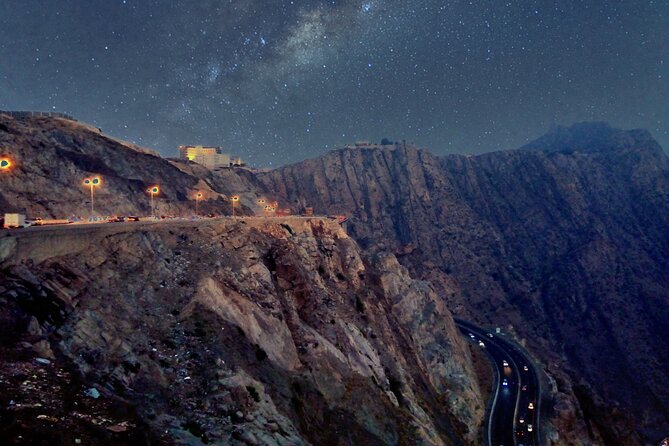
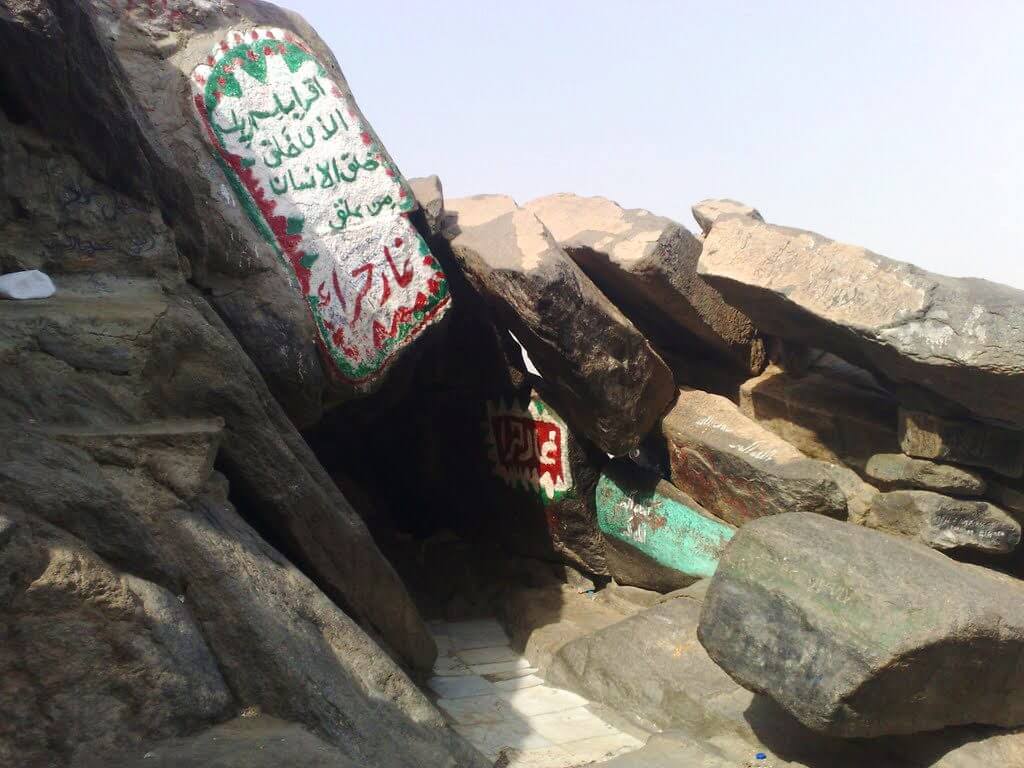
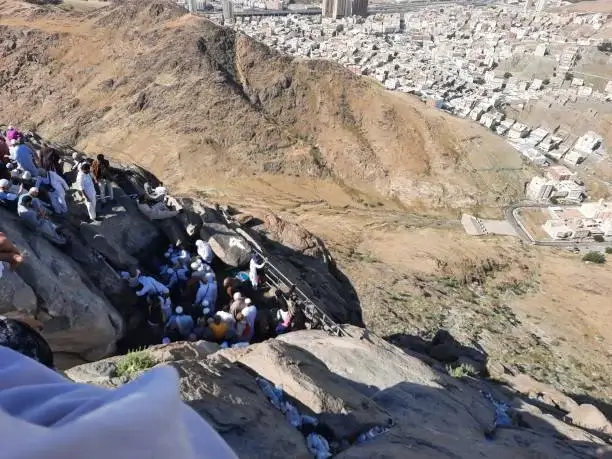
This is the mountain where the Prophet ﷺ would retreat to reflect before prophethood, and where Jibril (AS) first brought the revelation of the Quran. For most first-timers it is the most emotional stop on the trip. Whether to climb is a personal decision, and you will find guidance on that in the section on accessibility.
A private Cave of Hira taxi or Jabal al-Noor taxi can drop you at the base, wait while you take time, and bring you back, with no need to arrange anything yourself.
Cave of Thawr and Jabal Thawr
This is where the Prophet ﷺ and Abu Bakr (RA) hid for three nights while leaving Makkah on the Hijrah. The mountain is steep and the climb is hard, so most visitors view it from the base and read about it on site. A Cave of Thawr taxi or Jabal Thawr taxi makes it easy to combine with Hira in the same morning.
Jannat al-Mu’alla
Also called Al-Hajun, this is the historic cemetery where members of the Prophet’s ﷺ family and many Companions are buried, including Khadijah (RA). Entry to the cemetery is generally limited, and women are usually not permitted to enter, so visitors often make dua from outside the walls. Opening times are restricted, so check them before you plan. A Jannat al-Mu’alla taxi is useful here because the stop is short and parking near the Haram is difficult.
Mina, Jamarat and Masjid al-Khaif
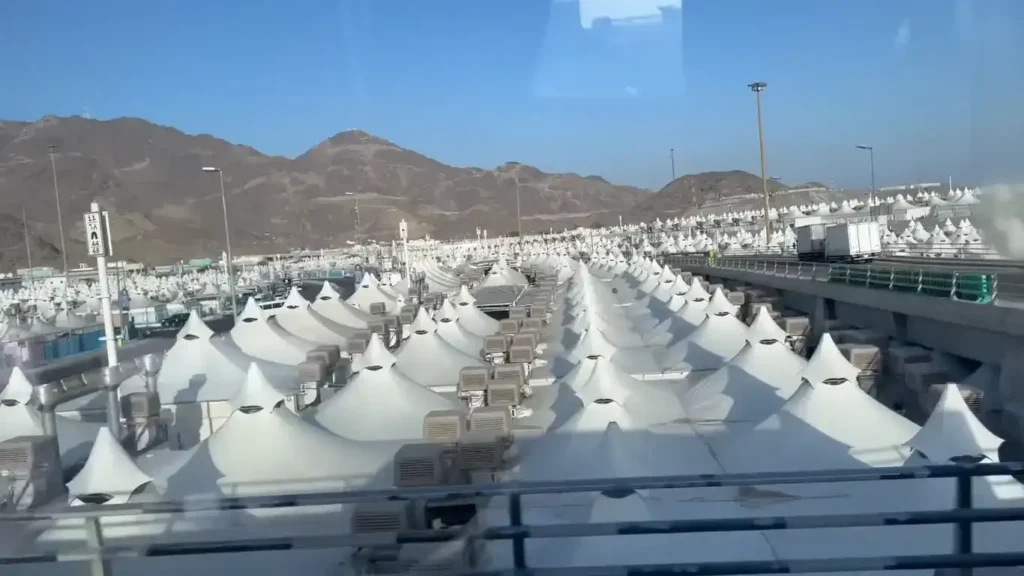
Mina is the tent valley of Hajj. Outside the Hajj days it is quiet, and you can see the camps, the Jamarat area and Masjid al-Khaif, where tradition says many prophets prayed. Pilgrims who plan to perform Hajj often visit in advance to understand the layout. A Mina taxi transfer, Jamarat taxi or Masjid al-Khaif taxi can cover these in a single loop.
Muzdalifah and Arafat
Muzdalifah is the open plain between Mina and Arafat. Arafat is where the central day of Hajj is spent, with Jabal al-Rahmah rising from the plain. Masjid Nimrah stands at the western edge of Arafat. You can see the whole sequence in order, Mina, Muzdalifah, Arafat, as a single drive. Booking an Arafat taxi transfer or a Muzdalifah taxi covers the route end to end.
During the days of Hajj, access to Mina, Muzdalifah and Arafat is controlled and open only to permitted pilgrims. At other times these places are generally accessible, but you should still check current rules before you go.
Masjid Aisha (Tan’im) and Masjid Ji’ranah
Masjid Aisha is the closest miqat for pilgrims already in Makkah who want to perform an additional Umrah. Masjid Ji’ranah is farther out and is where the Prophet ﷺ entered ihram for Umrah after Hunayn. If you plan to perform another Umrah, tell your driver in advance, so that the stop can be timed around your ihram, Umrah and return. A Masjid Aisha taxi or Masjid Ji’ranah taxi can wait while you do.
Other historical landmarks
The house where the Prophet ﷺ was born now holds a library, and some other early sites in the city have been redeveloped over the years. Much of what once stood has changed, and your driver can point out where significant places used to be. Treat history as something to read about as well as see.
Group Bus vs Private Taxi: Which Is Better for Ziyarat?
Both work. The right choice depends on your group, your budget and your stamina.
| Group bus or shared tour | Private taxi | |
|---|---|---|
| Cost per person | Usually lower | Higher per person for solo travelers, often better value for families |
| Schedule | Fixed by the operator | Set by you |
| Time at each stop | Short, same for everyone | As long or as short as you wish |
| Pickup | Often a meeting point | Hotel pickup and drop-off |
| Stops | Fixed list | Add, skip or reorder stops |
| Elderly or young children | Hard to pause for rests | Easy to rest, pray, or return early |
| Prayer times | Group decides | You decide |
| Privacy | Shared with strangers | Your own space, helpful for women and families |
Group buses make sense for solo travelers on a tight budget who are happy to follow a schedule. A private car is usually the better choice when you travel with children, parents or in-laws, when you want a quiet space to pray or rest, or when you want to build your own route.
The real difference is flexibility. In a group, if your mother needs ten extra minutes at Jabal al-Noor, or your child falls asleep, the whole bus waits or you are rushed. In a private car, the plan changes around you.
Vehicles also matter. For a couple or small family, a sedan such as a Toyota Camry is comfortable and economical. A Hyundai Staria or a GMC Yukon suits larger families with luggage or extra space. Toyota Hiace and Coaster-class vehicles suit bigger groups. Makkah Ziyarat Taxi operates a fleet that includes these vehicles, so you can match the car to your group, and you can see the options at makkahziyarat.taxi.
Best Time of Day and Year for Ziyarat
Best time of day
Makkah’s heat is intense for much of the year, and crowds follow the prayer schedule. That shapes the best hours.
- After Fajr until about mid-morning. The coolest and quietest time. Best for any site that involves standing or walking, including Jabal al-Noor.
- After Asr until before Maghrib. The heat begins to ease, and the light is soft, which suits photographs. A good second option.
- Late evening after Isha. Possible in summer for sites that stay accessible, but plan carefully, since some sites are better seen in daylight.
- Late morning to mid-afternoon. Usually the hardest period in the warm months. If you must go then, keep stops short and stay in the car between them.
Also avoid the period around Friday’s Jumu’ah prayer, when roads around the Haram become very congested. Because Makkah organizes its day around the five prayers, build your plan around prayer windows and not around the clock.
Best time of year
Summer temperatures in Makkah commonly pass 40°C, and a mountain climb in that heat is risky. Winter days are far milder, usually in the 20s. The Haram is at its busiest during Ramadan, especially the last ten nights, and in school holiday periods. Roads and parking are hardest then, and a car with a driver who knows the alternatives is very useful. In quieter months, you may find shorter waits and more flexible availability.
Hajj season
If you travel during Hajj, expect restrictions, permit checks and large crowd movements around Mina, Muzdalifah and Arafat. Ziyarat in those areas is only appropriate when you are performing Hajj through the proper channels. Otherwise, plan your sightseeing outside those dates.
How Long Does Ziyarat in Makkah Take?
- Half-day (3–4 hours): The classic route. Jabal al-Noor, Jabal Thawr, and a drive past Mina, Muzdalifah and Arafat, with brief stops.
- Extended half-day (5–6 hours): The above plus Jannat al-Mu’alla, Masjid al-Khaif, Masjid Nimrah and relaxed rest and prayer breaks.
- Full day (6–8 hours): The full list, including Masjid Aisha or Masjid Ji’ranah, with time for a meal and Umrah if desired.
- Climbing Hira: Allow around 1.5 to 3 hours for the round trip, depending on fitness and the heat. Add this to the above.
These are planning figures, not promises. Traffic, prayer times, crowds and your own pace all matter, which is another reason a flexible private trip works well.
What to Wear and Pack for Ziyarat
Clothing
- Men: Loose, light cotton clothing, with shoulders and knees covered. If you are in ihram, follow the rules of ihram.
- Women: A loose abaya or modest outfit in breathable fabric, with a scarf. Dark colors absorb heat, so lighter fabrics can help.
- Footwear: Closed, supportive, non-slip shoes or sports sandals, especially if you plan to climb. New shoes can cause blisters, so wear a pair you know.
- Head protection: A cap or umbrella for men and a light scarf for women, to protect against the sun.
What to carry
- Water, more than you think you need, and electrolyte sachets
- A small snack, such as dates
- Sunscreen and lip balm
- Wet wipes and tissues
- Small prayer mat or a light scarf for prayer
- Phone, power bank, and offline maps of Makkah
- Your passport or ID copy, hotel name and address, and your Nusuk app details
- Cash in small notes
- Any personal medication
- A small bag, ideally a crossbody or backpack, so your hands stay free
Leave valuables at the hotel. Keep your documents on you, because checkpoints are common.
Etiquette and Photography at Ziyarat Sites
- Keep your voice low and be patient with crowds.
- Follow signs and instructions from officials at each site.
- Do not climb on restricted structures, and do not litter.
- Photography rules vary. Photographing people, especially women and families, without permission is discouraged. Where signs prohibit photos, follow them.
- Use the trip for reflection and dua. A short moment of quiet at each place usually means more than hours of filming.
Ziyarat for Families, Elderly Travelers and Wheelchair Users
Most sites on the list can be experienced without strenuous effort.
- Families with children: Plan for breaks, snacks and shade. A private car lets you stop at short notice and leave early if children tire.
- Elderly travelers: Choose early or late hours, keep walking to a minimum, and view the mountains from the base. A driver who can park near entrances helps greatly.
- Wheelchair users: Mosques and viewpoints at street level are often easier than mountain sites. Mention your needs when booking, so the vehicle and the stops can be matched to them. Jabal al-Noor and Jabal Thawr are not suitable for wheelchairs beyond the base.
- Climbing Hira or Thawr: The paths are uneven and steep. Do not attempt the climb in midday heat, and do not go if you have heart, breathing or mobility concerns. There is no religious requirement to climb.
Sample Ziyarat Itineraries
The classic half-day (about 4 hours)
- Hotel pickup after Fajr
- Jabal al-Noor and Cave of Hira (view from the base or climb if you are fit)
- Jabal Thawr and Cave of Thawr (base)
- Drive through Mina, with a stop at the Jamarat area and Masjid al-Khaif
- Return to the hotel before Dhuhr
The relaxed family route (about 5 hours)
- Pickup after Asr
- Jannat al-Mu’alla (brief dua)
- Mina and Masjid al-Khaif
- Muzdalifah
- Arafat and Masjid Nimrah, with time to pray Maghrib
- Return to the hotel
The full-day route (6–8 hours)
- Early pickup after Fajr
- Hira and Thawr
- Mina, Muzdalifah, Arafat, Masjid Nimrah
- A break for lunch and prayer
- Masjid Ji’ranah or Masjid Aisha, for an additional Umrah if desired
- Return to the hotel in the evening
You can adjust any of these when you book. A flexible, multi-stop private trip is the main advantage of a private taxi.
How to Book a Private Ziyarat Taxi in Makkah
Booking is simple, and a few details help you get a good plan.
- Contact the operator. Message Makkah Ziyarat Taxi through makkahziyarat.taxi or on WhatsApp at +966 57 4915 372.
- Tell them your group. Share the number of travelers, children, elderly passengers, luggage and any wheelchair needs.
- Choose your sites and duration. Pick a half-day or full-day tour, or let the team suggest a route.
- Confirm pickup. Give your hotel name and a pickup time, preferably timed around prayer.
- Confirm the price and the stops before the trip, in writing.
- Meet your driver at the hotel entrance. After the trip, you are dropped back at your door.
This door-to-door approach, with hotel pickup and drop-off, means you do not have to manage meeting points, navigation or parking in crowded areas.
Common Mistakes First-Timers Make
- Going at midday in summer. The heat catches many visitors off guard.
- Trying to see everything in one short window. It is better to see fewer places calmly.
- Not agreeing price and route first. Settle both before the car moves.
- Wearing new or unsuitable shoes.
- Forgetting prayer times. Check them before you plan, so that stops do not clash with prayer.
- Not drinking enough water.
- Treating the visit as ritual. Ziyarat is for reflection and learning, not a required act.
- Leaving the planning to the last day. Booking ahead gives you better timing and choice of vehicle, particularly in busy seasons.
FAQs
What is Ziyarat in Makkah?
Ziyarat in Makkah means visiting the historical and religious sites connected with the Prophet ﷺ and early Islam, such as the Cave of Hira, the Cave of Thawr, Mina, Muzdalifah and Arafat. It is not a requirement of Umrah or Hajj.
How do I do Ziyarat in Makkah as a first-timer?
Choose your sites, pick a cool time of day, and arrange transport in advance. A private taxi with hotel pickup is the easiest way to see several sites in one trip without having to navigate.
How long does a Ziyarat tour in Makkah take?
The main sites usually take three to four hours. A fuller tour takes five to eight hours, depending on stops and traffic. Climbing Jabal al-Noor adds roughly one and a half to three hours.
What is the best time of day for Ziyarat in Makkah?
Early morning after Fajr, or the hours after Asr, are best. These avoid the strongest heat and the busiest prayer crowds.
What should I wear for Ziyarat in Makkah?
Wear loose, light, modest clothing and comfortable closed shoes. Bring a hat or scarf and carry water.
Is a private taxi better than a group bus?
For families, elderly travelers and anyone who wants a flexible pace, a private taxi is usually better. A group bus can suit solo travelers who prefer a lower price and a fixed schedule.
Can I visit multiple sites in one trip?
Yes. A multi-stop private trip can include several sites, such as Hira, Thawr, Mina, Muzdalifah and Arafat, in a single morning or day.
Is it necessary to climb Jabal al-Noor?
No. There is no religious requirement to climb. Many visitors view the mountain and the cave’s direction from the base.
Can elderly people and wheelchair users do Ziyarat?
Yes, with planning. Choose sites with easy access, visit at cooler hours and tell your driver about mobility needs when booking.
Can women visit Jannat al-Mu’alla?
Women are generally not permitted to enter the cemetery, so they usually make dua from outside the boundary. Rules and opening times can change, so confirm locally.
Can I visit Mina, Muzdalifah and Arafat any time?
Outside the Hajj days these areas are generally accessible. During Hajj, access is limited to permitted pilgrims.
Can I perform another Umrah during my Ziyarat trip?
Yes, many pilgrims do. Masjid Aisha (Tan’im) and Masjid Ji’ranah are the usual miqats. Tell your driver in advance, so the stop can wait for you.
Which vehicle should I choose?
A sedan such as a Toyota Camry suits couples or small families. A Hyundai Staria or GMC Yukon suits larger families. A Toyota Hiace or Coaster suits bigger groups.
Does the taxi pick up from my hotel?
Yes. Makkah Ziyarat Taxi offers hotel pickup and drop-off, so you start and end at your door.
How do I book a private Ziyarat taxi in Makkah?
Visit makkahziyarat.taxi or message the team on WhatsApp at +966 57 4915 372 with your hotel, group size and preferred sites.
Plan Your Ziyarat With Confidence
A first Ziyarat does not need to feel overwhelming. Choose a cool time, pack light and sensibly, keep prayer times in mind, and travel in the way that suits your family. For many pilgrims, that means a private car that waits, adapts and brings you back safely.
If you would like help building an itinerary, Makkah Ziyarat Taxi can plan a half-day or full-day private trip around your hotel, group and schedule. Visit makkahziyarat.taxi or message us on WhatsApp at +966 57 4915 372, and we will help you plan it.
May Allah accept your Umrah and your journey.