Birthplace of Prophet Muhammad in Makkah: A Complete Ziyarat Guide
For every pilgrim who walks the streets of Makkah, one question eventually comes to mind: where exactly was Prophet Muhammad ﷺ born? The answer lies just a few hundred meters from the Kaaba, on a quiet street once known as Suq al-Layl – a site that carries fourteen centuries of history, scholarly debate, and deep spiritual meaning for Muslims worldwide.
This guide explains the exact location of the Prophet’s ﷺ birthplace, its historical background, its status today, and practical guidance for pilgrims who want to include it in their Makkah Ziyarat itinerary – respectfully and knowledgeably.
Where Is the Birthplace of Prophet Muhammad ﷺ Located?
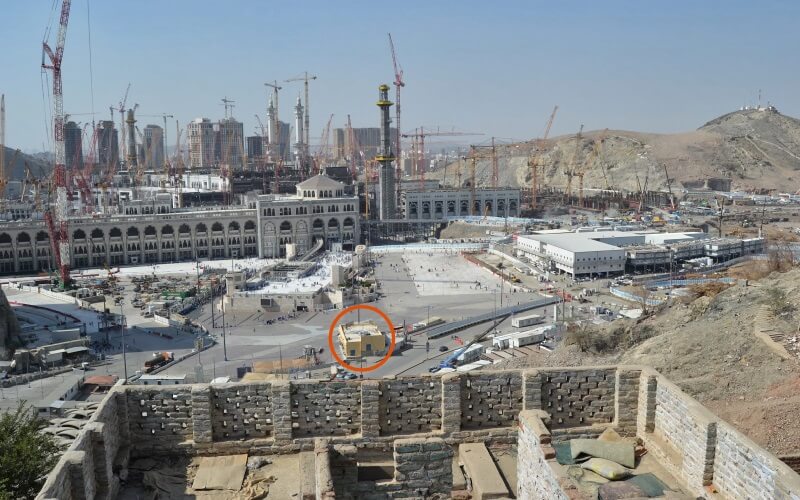
The Birthplace of Prophet Muhammad ﷺ, known in Arabic as Mawlid al-Nabi or Bayt al-Mawlid (the House of the Birth), is located in the area historically called Suq al-Layl, within the district then known as She’b Bani Hashim, on the eastern side of Masjid al-Haram.
The site sits roughly 400–500 meters from the Kaaba, close to the hills of Safa and Marwa. Leaving Masjid al-Haram from the Safa gate and walking a short distance in the direction of the old city, visitors reach the location where the house once stood.
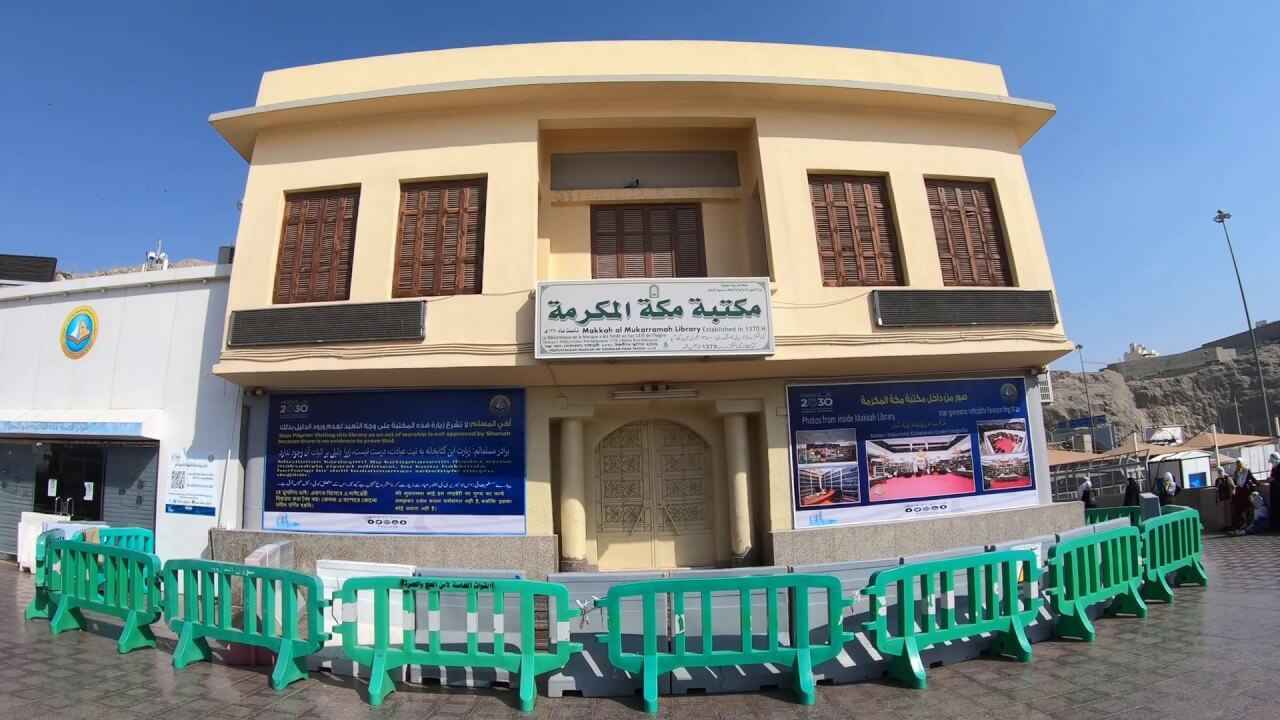
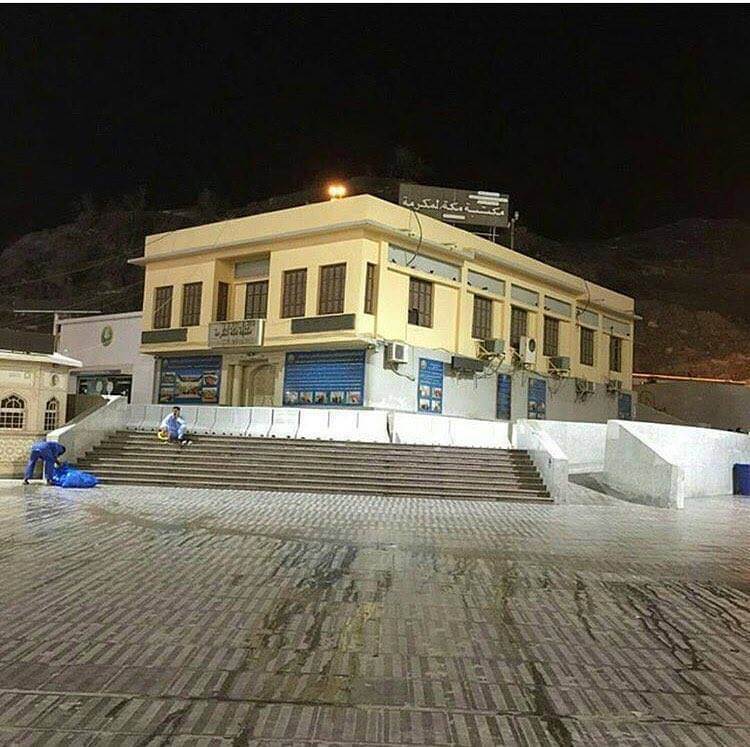
Today, the site is occupied by the Makkah Al-Mukarramah Library (Maktabah Makkah al-Mukarramah), a modest public library and educational building. There is no shrine, dome, or ritual marker at the location – a deliberate choice rooted in Islamic teachings that discourage venerating physical structures, even historically significant ones.
The History Behind the Site
The Prophet’s ﷺ Birth
Prophet Muhammad ﷺ was born in Makkah around 570–571 CE, in the period remembered in Islamic history as Aam al-Fil, the Year of the Elephant, named after the failed attack on the Kaaba by Abraha’s army and his war elephant. Islamic tradition holds that he was born on a Monday in the month of Rabi al-Awwal, a day the Prophet ﷺ himself referenced when asked about the virtue of fasting on Mondays, saying it was the day of his birth and the day he received revelation.
The house belonged to his father, Abdullah ibn Abdul Muttalib, who had inherited it from his own father, Abdul Muttalib, the chief of the Banu Hashim clan of the Quraysh tribe. Ownership later passed to Muhammad ﷺ himself before his migration to Madinah, after which the property changed hands within the extended family.
From Historic House to Public Library
Classical Makkan historians, including al-Azraqi in the ninth century, documented the location of the Mawlid in detail, describing it as common knowledge passed down through generations of Makkans – well enough known that it required no further verification at the time. Over the following centuries, the site was occasionally used as a place of prayer and remembrance, and various rulers commemorated it with modest structures.
In the twentieth century, after consultation with senior scholars, Saudi authorities established a public library on the site – a decision intended to preserve the historical location while avoiding the development of ritual practices around it, consistent with the principle of tawhid (the oneness of God) in Islamic belief.
Scholarly Discussion on the Exact Location
Islamic historians have generally agreed that the birthplace lies in Suq al-Layl, though some early scholars debated finer details, including a minority view placing it near Mount Safa – a claim most historians rejected as unreliable. The consensus among Makkan historians, supported by continuous oral transmission across generations, points firmly to the site now occupied by the Makkah Al-Mukarramah Library.
Why Is This Site Significant for Pilgrims?
For many scholars, the birthplace of the Prophet ﷺ is considered one of the most historically important locations in Makkah after the Kaaba itself. It represents the starting point of the Prophet’s ﷺ life – the household of Banu Hashim, the noble lineage tracing back through Ismail ﷺ and Ibrahim ﷺ, and the earliest chapter of the Seerah (Prophetic biography).
Historically, Muslims from Makkah, Madinah, and beyond would gather near this site, particularly around the 12th of Rabi al-Awwal, to reflect on the Prophet’s ﷺ life and recite salawat. While organized gatherings at the site are not part of official Ziyarat programs today, the location remains a point of historical and educational interest for visitors learning about early Islamic history.
Visiting the Birthplace Site Today: What to Expect
Because the site now functions as a public library, there is no formal “visitor entrance” in the way pilgrims might expect at other Ziyarat locations. There are no interior markers indicating a shrine-like structure, and many pilgrims walk past the building without realizing its historical significance unless they are specifically guided there.
A few practical points for anyone including this location in a Ziyarat itinerary:
- Distance from Masjid al-Haram: Approximately 400–500 meters, an easy walk from the Safa/Marwa area for those who are comfortable walking in Makkah’s heat.
- Best time to visit: Early morning or after Isha, when temperatures are lower and the surrounding streets are less congested – especially important during summer Umrah season and Ramadan.
- Etiquette: Visitors should approach the site with the same humility and respect shown at other historical locations in Makkah, without engaging in practices – such as touching the walls for blessings or offering prayers directed at the structure – that scholars caution against, since the location’s purpose today is educational, not ritual.
- Photography: As with most public buildings in Makkah’s old city, keep photography respectful and check for any posted restrictions before taking photos of the exterior.
- Accessibility: The surrounding streets are part of Makkah’s older, denser district, with uneven pavements in places – a consideration for elderly pilgrims or those with mobility needs.
Combining the Birthplace with a Wider Makkah Ziyarat Tour
Most pilgrims don’t visit the birthplace site in isolation – it naturally fits into a broader historical Ziyarat route through Makkah’s most significant Islamic landmarks. A well-planned half-day or full-day Ziyarat tour often includes:
- Jannat al-Mu’alla – the historic cemetery where members of the Prophet’s ﷺ family, including his wife Khadijah (RA), are buried, located a short drive from the old city.
- Cave of Hira (Jabal al-Noor) – where the first revelation of the Quran was received, requiring a scenic but steep climb outside the city.
- Cave of Thawr (Jabal Thawr) – the cave where the Prophet ﷺ and Abu Bakr (RA) took refuge during the migration to Madinah.
- Masjid Aisha and Masjid Ji’ranah – key Miqat points connected to Umrah rituals.
Because these sites are spread across different parts of Makkah – some in the dense old city, others on the outskirts near the mountains – walking between all of them isn’t practical, particularly for families, elderly pilgrims, or larger groups. This is where a private Ziyarat taxi becomes genuinely useful rather than just a convenience.
Getting There: Why a Private Ziyarat Taxi Makes Sense
Traveling between the birthplace site, Jannat al-Mu’alla, the Cave of Hira area, and other historical landmarks involves crossing busy roads, navigating one-way streets in the old city, and dealing with limited parking near Masjid al-Haram – especially during peak Umrah season, Ramadan, and Hajj periods.
Makkah Ziyarat Taxi offers private, air-conditioned transportation built specifically around this kind of historical Ziyarat route. Instead of arranging separate trips or relying on shared transport, pilgrims can book a private vehicle that:
- Picks up directly from the hotel, saving time and effort before setting out
- Follows a flexible, multi-stop route covering the birthplace area, Jannat al-Mu’alla, Cave of Hira, Cave of Thawr, and other sites in one organized trip
- Waits at each stop, rather than requiring pilgrims to rush
- Adjusts pace for families traveling with children, elderly relatives, or anyone needing a slower, more comfortable schedule
The fleet includes options suited to different group sizes, from a Toyota Camry or Mercedes sedan for couples and small families, to a Hyundai Staria or Toyota Hiace for larger families, and a GMC Yukon, Coaster, or full-size bus for larger groups traveling together. This range makes it straightforward to match the vehicle to the group rather than the group adjusting to the vehicle.
Pilgrims planning a half-day or full-day historical Ziyarat tour, including the birthplace area, can check available options and book directly through makkahziyarat.taxi, or message the team on WhatsApp at +966 57 4915 372 to arrange pickup times and confirm the route in advance.
Best Time to Include the Birthplace Site in a Ziyarat Trip
- Non-peak Umrah season (outside Ramadan and Hajj): Generally the most comfortable time, with lighter foot traffic around the old city streets and more flexibility in scheduling.
- Ramadan: The old city becomes significantly busier, particularly in the evenings. Morning visits, arranged with a private driver who knows the traffic patterns, tend to be more efficient.
- Hajj season: Movement around central Makkah is heavily restricted for non-Hajj-related travel. Pilgrims visiting outside their Hajj rites should plan Ziyarat trips either well before or after the Hajj days, and confirm current access rules before setting out.
- Summer months: Daytime heat in Makkah is intense. Early morning or post-Isha visits are strongly recommended, particularly for elderly travelers or those with young children.
FAQs
1. Where exactly was Prophet Muhammad ﷺ born?
He was born in Makkah, in a house in the Suq al-Layl area of the She’b Bani Hashim district, roughly 400–500 meters from the Kaaba, near Safa and Marwa.
2. Can I still visit the actual house where the Prophet ﷺ was born?
The original house no longer stands. The site is now occupied by the Makkah Al-Mukarramah Library, a public building without shrine-like features or ritual markers.
3. Why was a library built on the birthplace site instead of a memorial?
Saudi authorities, after consulting scholars, chose a public library to preserve the historical site while avoiding practices that could develop into ritual veneration of a physical structure, in line with Islamic teachings on tawhid.
4. Is it permissible to visit and pray at the birthplace site?
Visitors can view the site with historical interest and reflect on the Seerah, but scholars generally caution against directing prayers or seeking blessings from the structure itself.
5. How far is the birthplace site from Masjid al-Haram?
Approximately 400–500 meters, an easy walk from the Safa/Marwa side of the mosque for pilgrims comfortable walking short distances.
6. What is the significance of Rabi al-Awwal in relation to this site?
The Prophet ﷺ was born in Rabi al-Awwal, and the date is commonly associated with the birthplace site and the wider observance of the Seerah among Muslims.
7. Can the birthplace be combined with other Ziyarat sites in one trip?
Yes. It is commonly visited alongside Jannat al-Mu’alla, the Cave of Hira area, and Cave of Thawr as part of a broader historical Ziyarat tour of Makkah.
8. Is it better to walk or take a taxi between Ziyarat sites in Makkah?
Walking works for the birthplace site alone due to its proximity to Masjid al-Haram, but reaching sites like Jabal al-Noor or Jabal Thawr requires vehicle transport, making a private taxi the practical choice for a combined itinerary.
9. Is a private Ziyarat taxi suitable for families with children or elderly relatives?
Yes. A private vehicle allows the group to set its own pace, take breaks as needed, and avoid the physical strain of walking long distances between sites in Makkah’s heat.
10. How do I book a private Ziyarat taxi for a historical Makkah tour?
Pilgrims can book directly through makkahziyarat.taxi or contact the team on WhatsApp at +966 57 4915 372 to arrange hotel pickup, confirm the route, and choose a vehicle suited to their group size.
11. What is the best time of day to visit the birthplace site?
Early morning or after Isha prayer, when temperatures are cooler and the surrounding streets are quieter, especially during summer or Ramadan.
12. Are there entry fees to visit the birthplace site?
As the location functions as a public library, there is generally no formal entry fee for viewing the site from outside; hours and access can vary, so confirming current details locally before visiting is recommended.
13. Is the birthplace site included in official Umrah or Hajj rituals?
No. Visiting the birthplace site is a historical Ziyarat activity, separate from the obligatory rites of Umrah and Hajj.
14. Can a private taxi wait at each Ziyarat stop?
Yes. Private Ziyarat taxi services are designed around flexible, multi-stop routes where the driver waits at each location, rather than dropping pilgrims off on a fixed schedule.
Planning Your Visit
Understanding the true history behind the Birthplace of Prophet Muhammad ﷺ adds meaning to a walk through Makkah’s old city – a reminder of the earliest days of the Seerah, set against the backdrop of the modern city that has grown around it. Whether visited alone or as part of a wider historical Ziyarat route covering Jannat al-Mu’alla, the Cave of Hira, and Cave of Thawr, this site offers pilgrims a quiet, reflective stop close to the heart of Makkah.
For a comfortable, private, and flexible way to cover the birthplace area alongside Makkah’s other historical landmarks, visit makkahziyarat.taxi or message +966 57 4915 372 on WhatsApp to arrange hotel pickup and plan your itinerary.