
Masjid Ayesha Makkah Ziyarat Guide: History, Miqat Rules, and How to Get There
If you are already staying in Makkah and want to perform an additional Umrah, Masjid Aisha (also written as Masjid Ayesha or Masjid at-Tan’eem) is the miqat you are looking for. It sits roughly 7.5 kilometers from Masjid al-Haram in the Tan’eem district, on the road toward Madinah, and it is the closest boundary point where residents and visitors already inside the Haram limits can enter the state of ihram.
This guide covers everything a pilgrim needs before making the trip: the history behind the mosque, why it matters as a miqat, what to expect on site, the best way to travel there and back, and how to combine the visit with other Ziyarat sites in Makkah without wasting a day on logistics.
What Is Masjid Aisha?

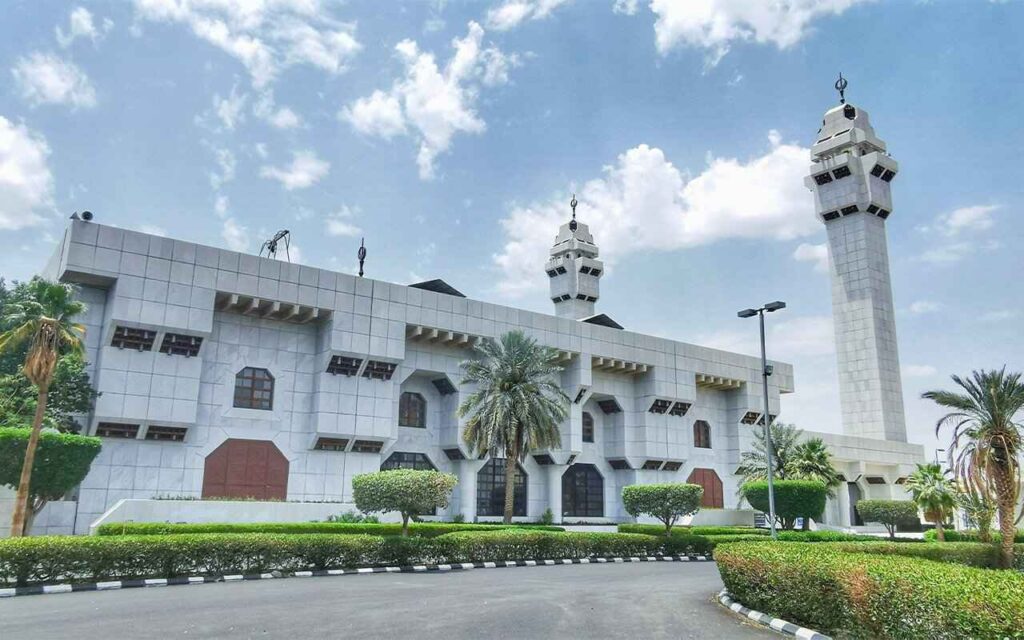
Masjid Aisha, known formally as Masjid at-Tan’eem, is a mosque built at the exact spot where Aisha (may Allah be pleased with her), the wife of Prophet Muhammad ﷺ, was instructed to begin her ihram for Umrah during the Farewell Pilgrimage. According to the hadith, Aisha had completed the rites of Hajj but had not yet performed a separate Umrah because her menstrual cycle had prevented her from doing tawaf earlier in the journey. Once she was able to perform tawaf, the Prophet ﷺ sent her brother, Abdur-Rahman, to take her to Tan’eem so she could enter ihram and complete an Umrah on her own.
That event is why Tan’eem became a permanent miqat for anyone already within the boundaries of the Haram who wishes to perform Umrah — and why the mosque built there carries Aisha’s name. Today it is one of the most visited religious landmarks in Makkah, particularly for pilgrims who want to perform more than one Umrah during a single trip.
Why Masjid Aisha Matters: The Miqat Explained
In Islamic pilgrimage, a miqat is a fixed geographical boundary beyond which a pilgrim intending Hajj or Umrah must already be in the state of ihram. There are several miqat points around Makkah for pilgrims arriving from different directions, but those points are designed for people coming from outside the Haram area.
Masjid Aisha exists for a different situation: pilgrims and residents who are already inside Makkah and want to perform an extra Umrah do not need to travel to a distant miqat. Instead, they travel just outside the Haram boundary to Masjid Aisha, put on ihram there, and return to Masjid al-Haram to begin tawaf.
Other miqat points for pilgrims already within the Haram limits include Ji’ranah (about 14 km away) and Hudaibiyah (about 16 km away), but Masjid Aisha remains the nearest and most commonly used because of its short distance and steady stream of transport.
Location and Distance from Masjid al-Haram
Masjid Aisha is located in the Tan’eem area, along the historic route sometimes called Tareeq al-Hijrah, roughly 7 to 7.5 kilometers from Masjid al-Haram. By private car, the journey typically takes between 10 and 20 minutes depending on traffic, which can build up significantly during Ramadan, peak Umrah season, and the days surrounding Hajj.
Because the round trip involves entering ihram, driving back into central Makkah, and heading straight to the Haram for tawaf and sa’i, timing and a reliable vehicle matter more here than at almost any other Ziyarat site. A shared taxi that makes unscheduled stops or a bus with a fixed departure time can add unnecessary stress to what should be a focused, unhurried act of worship. This is one of the main reasons pilgrims prefer booking a private Ziyarat taxi rather than relying on shared transport, since the driver waits while ihram is completed and takes the pilgrim directly back to the Haram without detours.
What to Expect When You Visit
Masjid Aisha is a large, modern mosque with dedicated facilities for pilgrims preparing for ihram, including:
- Separate bathing and ablution areas for men and women
- Changing rooms for putting on ihram garments
- Open prayer space to perform the sunnah prayer before entering ihram
- Parking areas for private vehicles, taxis, and buses
- Nearby shops selling ihram clothing, perfume-free soap, and basic travel essentials
Facilities can get crowded during Ramadan and the Hajj season, so pilgrims visiting during these peak periods should expect longer waiting times and plan for extra travel time on the return journey to the Haram.
Visitor Etiquette at Masjid Aisha
- Perform ghusl (ritual bath) or wudu before putting on ihram, following the sunnah.
- Men should wear the two unstitched white sheets; women should wear modest, loose clothing without covering the face or hands, consistent with their normal Umrah dress.
- Make the intention (niyyah) for Umrah and recite the talbiyah once ihram begins.
- Avoid using scented soap or perfume after entering ihram.
- Keep noise and crowding to a minimum out of respect for other worshippers preparing for their own Umrah.
Best Time to Visit Masjid Aisha
Early morning and late evening tend to be quieter, with shorter waits for the ablution and changing areas. Midday visits during summer can be extremely hot, since the walk between the parking area and the mosque entrance is exposed to direct sun. During Ramadan and the days leading up to Hajj, traffic on the route to Tan’eem increases substantially, so allowing extra time — or traveling with a private driver who knows alternate routes — helps avoid missing planned prayer times back at the Haram.
How to Get to Masjid Aisha
Pilgrims generally reach Masjid Aisha in one of the following ways:
- Private taxi or chauffeur service – A private vehicle picks up from the hotel, waits at Masjid Aisha while ihram is completed, and returns directly to Masjid al-Haram. This is the most convenient and time-efficient option, especially for families, elderly pilgrims, or anyone performing multiple Umrahs in one trip.
- Shared taxis or ride-hailing apps – Widely available but subject to surge pricing and unpredictable wait times, particularly during peak seasons.
- Public buses – SAPCO and similar bus services run routes to Tan’eem, though schedules are fixed and less flexible for pilgrims who need to complete ihram at their own pace.
- Walking – Technically possible for the physically fit but not recommended given the distance, heat, and traffic along the route, especially once wearing ihram.
For most pilgrims, a private Makkah Ziyarat taxi remains the simplest way to handle this trip, since the entire round trip — hotel to Masjid Aisha to Masjid al-Haram — can be arranged as a single, unhurried journey with a driver who waits on site. Travelers can book this kind of door-to-door service through Makkah Ziyarat Taxi, which offers private vehicles specifically for miqat trips and other Islamic historical site visits around Makkah.
Recommended Vehicles for the Trip
Because the Masjid Aisha trip usually involves changing clothes, carrying bags, and traveling as a family or small group, the choice of vehicle affects comfort:
- Sedan (Toyota Camry or similar): Suitable for individuals or couples traveling light.
- Family van (Toyota Hiace or Hyundai Staria): Ideal for families or small groups who need space for ihram bags and extra passengers.
- SUV (GMC Yukon or similar): A comfortable option for elderly pilgrims or those who prefer extra legroom and a smoother ride.
A private Ziyarat taxi service can match the vehicle to the group size, which is particularly useful for families traveling with children or elderly relatives who need a calmer, unhurried pace on the road.
Combining Masjid Aisha with Other Ziyarat Sites
Many pilgrims plan a broader Ziyarat itinerary alongside the Masjid Aisha trip, especially if they already have a private vehicle booked for the day. Popular combinations include:
- Jabal al-Noor and the Cave of Hira – where the first revelation of the Quran took place
- Jabal Thawr and the Cave of Thawr – linked to the Prophet’s ﷺ migration to Madinah
- Jannat al-Mu’alla – the historic cemetery in Makkah
- Masjid Ji’ranah – another miqat point with its own historical significance
- Masjid Nimrah and Masjid Al-Khaif – for pilgrims also covering Hajj-related sites in Arafat and Mina
Because these sites are spread across different parts of Makkah, a flexible, multi-stop private taxi is generally more practical than trying to coordinate several separate shared rides. A private driver can sequence the stops sensibly — for example, completing ihram at Masjid Aisha first, then visiting Jabal al-Noor and Jannat al-Mu’alla on the way back — so pilgrims spend their time on worship and sightseeing rather than waiting for transport.
Family, Elderly, and Group Travel Considerations
- Families with children: A private family taxi avoids the crowding of shared transport and allows stops for rest or bathroom breaks.
- Elderly or less mobile pilgrims: Door-to-door pickup from the hotel reduces walking distance, and a private vehicle can wait directly outside the mosque entrance rather than in a distant parking area.
- Larger groups: A private group taxi or van keeps everyone together for the ihram process, which matters when family members are entering ihram at the same time.
A Note on Booking Transportation
Makkah Ziyarat Taxi arranges private transportation for pilgrims heading to Masjid Aisha and other Islamic historical sites around the city, including hotel pickup and drop-off, flexible multi-stop Ziyarat trips, and half-day or full-day tours for families and groups. Rather than negotiating fares on the spot or waiting for a shared vehicle, pilgrims can plan the miqat trip and any additional Ziyarat stops in advance through makkahziyarat.taxi or by messaging the team directly on WhatsApp at +966 57 4915 372 to confirm timing, vehicle type, and pricing before the trip.
FAQs
1. What is Masjid Aisha used for?
Masjid Aisha is a miqat – a designated point where pilgrims already inside the Haram boundary enter ihram before performing an additional Umrah.
2. How far is Masjid Aisha from Masjid al-Haram?
It is approximately 7 to 7.5 kilometers away, generally a 10- to 20-minute drive depending on traffic.
3. Is Masjid Aisha the same as Masjid at-Tan’eem?
Yes, Masjid Aisha and Masjid at-Tan’eem refer to the same mosque, named after Aisha (may Allah be pleased with her).
4. Do I need to visit Masjid Aisha for my first Umrah?
No. Pilgrims arriving from outside Makkah enter ihram at their departure city or at the appropriate miqat along their travel route. Masjid Aisha is specifically for pilgrims already inside the Haram area who want an additional Umrah.
5. Can I walk to Masjid Aisha from central Makkah?
It is physically possible but not advisable given the distance, heat, and traffic, especially while wearing ihram. Most pilgrims travel by taxi, private car, or bus.
6. What should I bring to Masjid Aisha?
Ihram garments, unscented soap, a small bag for regular clothes, water, and comfortable sandals.
7. Is there a fee to enter Masjid Aisha?
No, the mosque itself is free to enter. Costs are generally limited to transportation and any items purchased nearby, such as ihram clothing.
8. How long does the whole trip take?
Including travel, changing into ihram, and returning to Masjid al-Haram, most pilgrims budget around 1.5 to 3 hours, longer during Ramadan or Hajj season.
9. Can families or elderly pilgrims easily visit Masjid Aisha?
Yes, especially when using a private family taxi or SUV that allows door-to-door pickup and a comfortable pace rather than relying on crowded shared transport.
10. Is it better to book a private taxi or use a ride-hailing app?
A private Ziyarat taxi is generally more convenient for this specific trip, since the driver waits on-site during the ihram process and takes pilgrims directly back to the Haram, whereas ride-hailing apps may involve waiting for a new driver on the return leg.
11. Can I combine Masjid Aisha with other Ziyarat sites in one trip?
Yes. A private multi-stop Ziyarat taxi can combine the Masjid Aisha visit with stops such as Jabal al-Noor, the Cave of Hira, Jabal Thawr, or Jannat al-Mu’alla in a single, flexible itinerary.
12. What is the best time of day to visit?
Early morning or evening is generally quieter and cooler than midday, particularly in summer months.
13. Are there restroom and changing facilities at Masjid Aisha?
Yes, the mosque has separate facilities for men and women to bathe, perform wudu, and change into ihram.
14. Is Masjid Aisha crowded during Ramadan?
Yes, it is significantly busier during Ramadan and the days around Hajj, so pilgrims should allow extra travel time and expect longer waits at the facilities.
15. How do I book transportation to Masjid Aisha?
Pilgrims can arrange a private Ziyarat taxi through Makkah Ziyarat Taxi or by contacting the team on WhatsApp at +966 57 4915 372 to confirm pickup time, vehicle, and route.
Final Thoughts
Masjid Aisha holds a special place in Islamic history as the miqat where Aisha (may Allah be pleased with her) entered ihram on the instruction of the Prophet ﷺ, and it continues to serve millions of pilgrims each year who want to perform an additional Umrah while staying in Makkah. Because the trip involves precise timing, a change of clothing, and an immediate return to the Haram, comfortable and reliable transportation makes a real difference to the experience.
For pilgrims who want a hassle-free journey — from hotel pickup, to waiting at Masjid Aisha during ihram, to a direct drop-off back at Masjid al-Haram — a private Ziyarat taxi remains the most practical choice. Contact Makkah Ziyarat Taxi on WhatsApp at +966 57 4915 372 or visit makkahziyarat.taxi to arrange your Masjid Aisha trip or a broader Ziyarat itinerary around Makkah.