Gates of Masjid al-Haram Makkah: Complete Visitor Guide (2027)
Masjid al-Haram, also called the Grand Mosque or Haram Sharif, is Islam’s holiest mosque. Located in the heart of Makkah, Saudi Arabia, it surrounds the Holy Kaaba, the direction Muslims face during their daily prayers.
Every year, millions of Muslims travel to Makkah to perform Umrah, Hajj, and daily prayers at Masjid al-Haram. With its vast prayer halls, courtyards, multiple levels, and numerous entrances, understanding the mosque’s gate system makes visiting easier.
The gates of Masjid al-Haram are more than architectural entrances. They help organize the movement of pilgrims, provide access to worship areas, connect different sections of the mosque, and make navigation more manageable for families, older visitors, and people with disabilities.
According to the Saudi Press Agency’s April 28, 2025 report, the Grand Mosque had 243 managed gates, including five principal gates: King Abdulaziz, King Fahd, King Abdullah, Umrah, and Al-Fatah. Saudi Press Agency+1
This guide explains their names, gate numbers, historical significance, and practical uses, along with advice for reaching Masjid al-Haram from your hotel or continuing your journey to the historical Ziyarat places of Makkah.
How many gates are there in Masjid al-Haram?
The latest official published count identified in this research is 243 managed gates, as reported by Saudi Press Agency on April 28, 2025. Historical sources and earlier guides may provide different figures because the mosque has undergone successive expansion projects and gate classifications have changed.
The five main gates are:
| Major gate | Gate number | Key identification |
|---|---|---|
| King Abdulaziz Gate | 1 | Ajyad-side main entrance |
| King Fahd Gate | 79 | Major entrance associated with the King Fahd expansion |
| King Abdullah Gate | 100 | Main entrance of the King Abdullah expansion |
| Umrah Gate | 62 | Northwest side of the older mosque area |
| Al-Fatah Gate | 45 | Historic Gate of Victory |
Major gate names and numbers are supported by the Saudi Press Agency’s April 2025 report. Saudi Press Agency
Five main gates of Masjid al-Haram
1. King Abdulaziz Gate — Gate 1
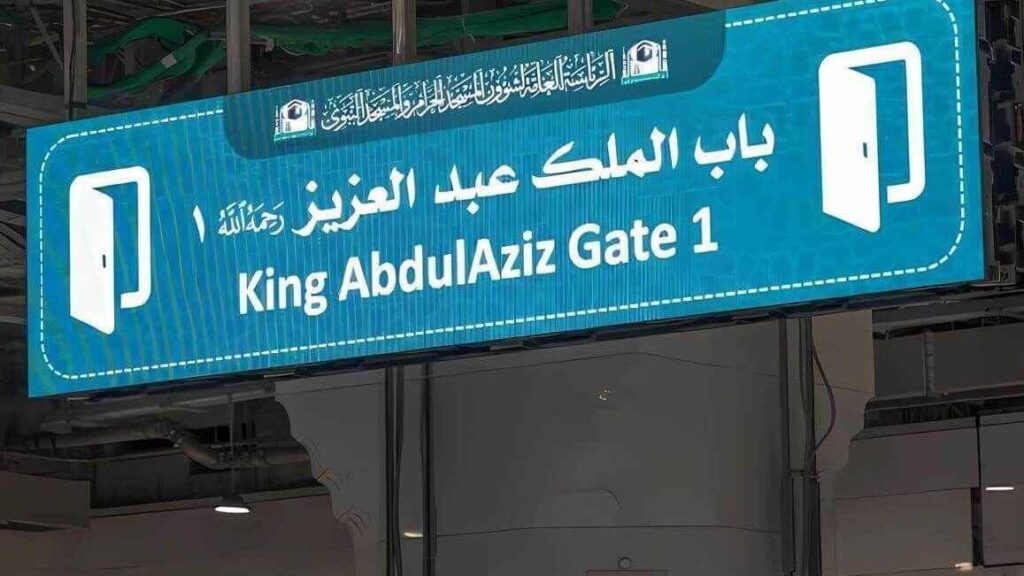
King Abdulaziz Gate (باب الملك عبدالعزيز) is one of the most recognizable entrances to Masjid al-Haram. Located on the Ajyad side, it serves worshippers approaching from the southern part of the mosque complex.
The entrance connects visitors with important prayer areas and is among the routes officially identified for reaching the Mataf, where pilgrims perform Tawaf around the Kaaba.
2. King Fahd Gate – Gate 79
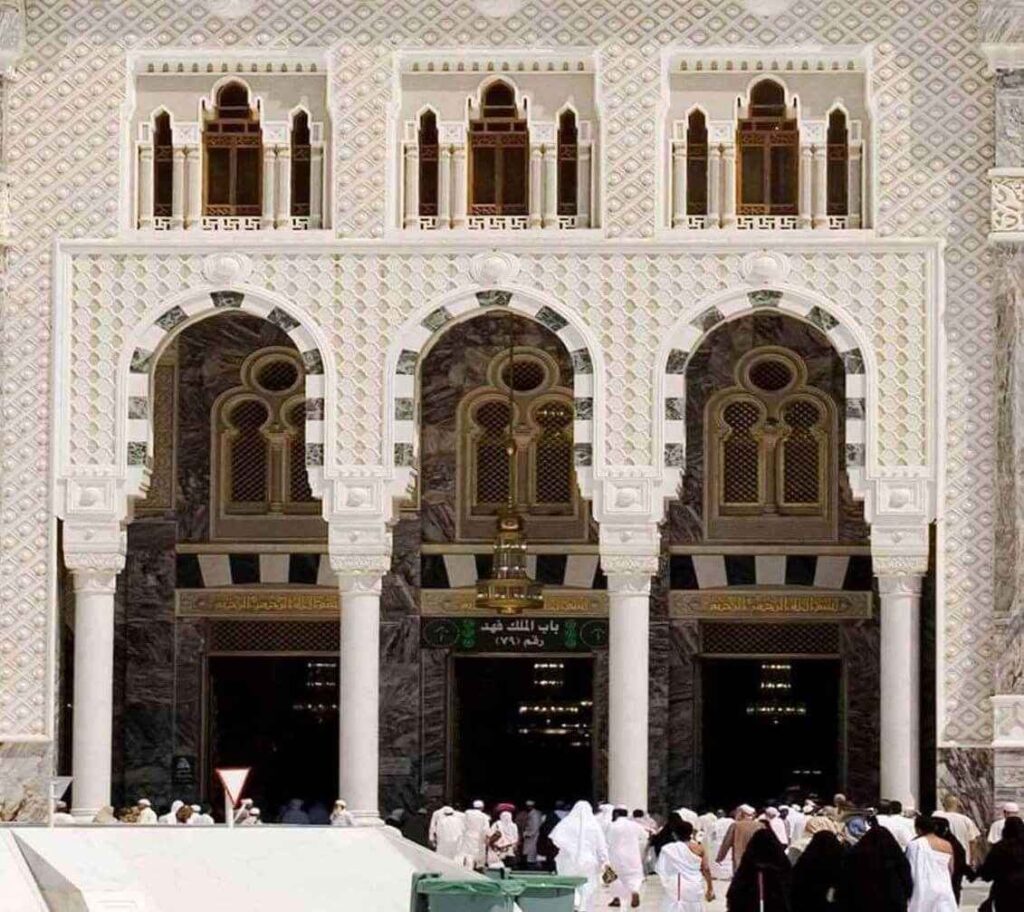
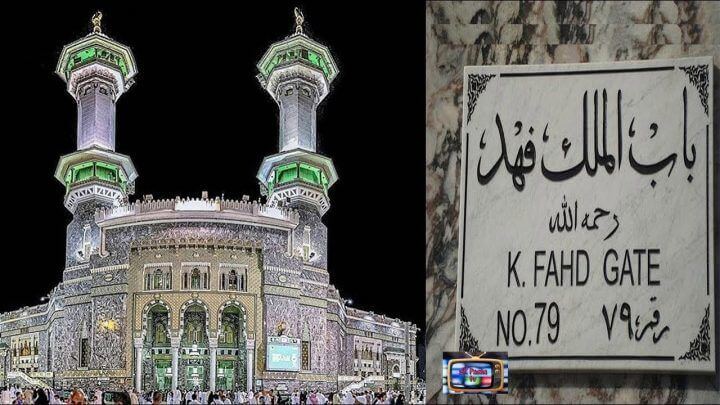
King Fahd Gate (باب الملك فهد) is another principal entrance, associated with the second major Saudi expansion of the mosque.
It is especially important for pilgrims approaching from the western side. Saudi authorities also identify King Fahd Gate as a route toward the Mataf, subject to visitor-management instructions and operational restrictions.
3. King Abdullah Gate – Gate 100
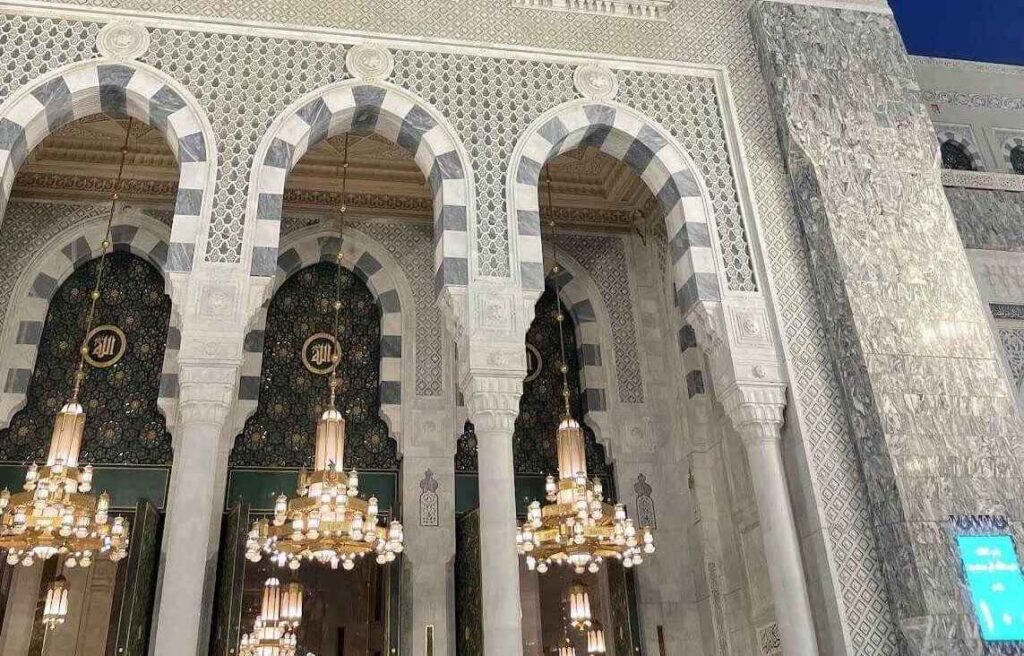
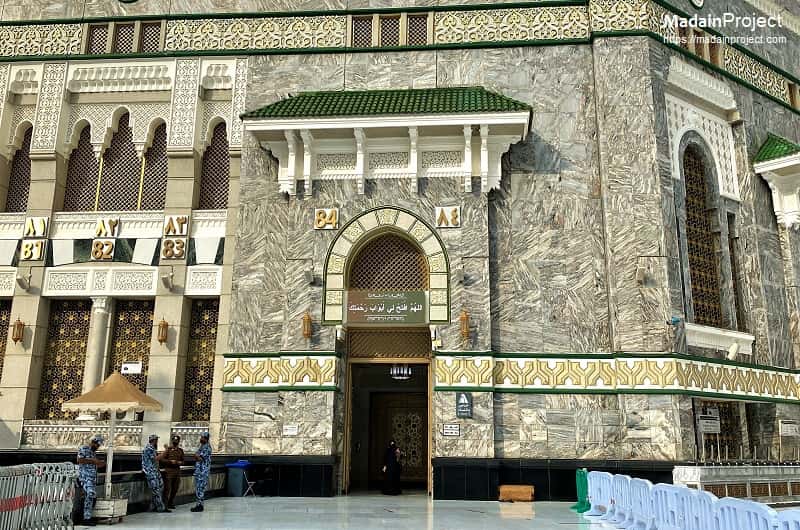
King Abdullah Gate (باب الملك عبدالله) is the monumental entrance to the King Abdullah expansion on the northwestern side of the mosque complex.
Its large entrance arches and surrounding architecture reflect the scale of the modern Grand Mosque expansion. It is a useful reference point for visitors attending prayers in the expanded northern section. Madain Project (en)
4. Umrah Gate – Gate 62
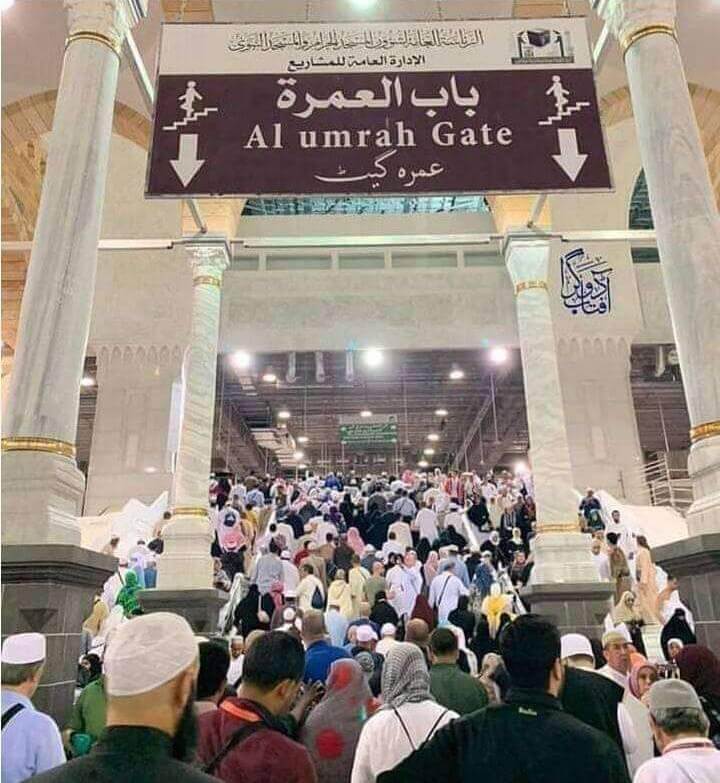
Umrah Gate (باب العمرة) is an important entrance associated with the northwest side of the older mosque complex, west of the Kaaba.
The entrance has been reconstructed during expansion works. Although some older online references list it as Gate 63, the official Saudi Press Agency report identifies the principal Umrah Gate as Gate 62. Visitors should rely on the gate numbers displayed at the mosque. Saudi Press Agency+1
5. Al-Fatah Gate – Gate 45
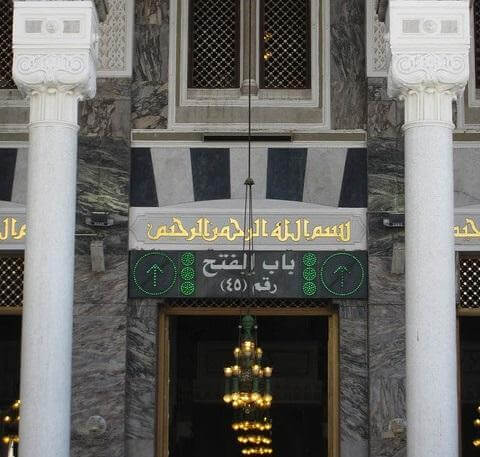
Al-Fatah Gate (باب الفتح) means the Gate of Victory. It is one of the historic gate names retained at Masjid al-Haram.
The name is traditionally connected in some accounts to the conquest of Makkah, although the specific historical claim linking this present gate location with the Prophet’s entry is not firmly established. It remains one of the five official principal gates. Madain Project (en)+1
Other important gates of Masjid al-Haram
Beyond the five main gates, several smaller entrances have significant historical names and provide access to specific parts of the Grand Mosque.
Al-Safa Gate – Gate 12
Bab al-Safa (باب الصفا) is located near Safa, the starting point of the Sa’i ritual performed during Umrah and Hajj.
This entrance is particularly relevant for pilgrims moving through the Mas’a, the designated passage between Safa and Marwah.
Al-Safa is one of the gates officially identified for exiting the Mas’a area. Saudi Press Agency
Al-Marwah Gate – Gate 23
Bab al-Marwah (باب المروة) is located near Marwah, where the seventh and final passage of Sa’i ends.
It is useful for visitors completing Sa’i and leaving the mosque from the Marwah side. The surrounding area includes access routes to different mosque levels.
Al-Nabi Gate – Gate 14
Bab al-Nabi (باب النبي), meaning the Gate of the Prophet, is situated near the eastern side of the Mas’a.
Named in honor of Prophet Muhammad (peace be upon him), it is among the entrances historically associated with this part of the mosque.
Bab Ali – Gate 17
Bab Ali (باب علي) is named after Ali ibn Abi Talib, the cousin and son-in-law of Prophet Muhammad (peace be upon him).
It is situated on the eastern side of the mosque, near the Sa’i gallery.
Bab Bani Shaibah – Gate 22
Bab Bani Shaibah (باب بني شيبة) carries the name of the family historically entrusted with the keys of the Kaaba.
The modern gate should not be confused with the original freestanding Bab Bani Shaibah arch, which once stood nearer the Kaaba and was removed during earlier development.
Bab al-Salam – Gate of Peace
Bab al-Salam (باب السلام), meaning the Gate of Peace, is among the historically important entrance names of Masjid al-Haram.
Older descriptions locate it in the area between Safa and Marwah, closer to Marwah. However, historic gate names and modern access routes should not be treated as interchangeable.
Additional named gates
Other gates documented in the historical reference include Bab Ajyad (5), Bab Bilal (6), Bab Hunain (9), Bab Ismail (10), Bab Abbas (20), Bab Arafat (35), Bab Umar (49), Bab Aisha (70), Bab Asma (71), Bab Abu Bakr (74), Bab Umm Hani (87), Bab Maimouna (88), and Bab Hafsah (90).
These names commemorate places, members of the early Muslim community, and important figures in Islamic history. Historical identification does not guarantee that every entrance is currently available for general entry. Madain Project (en)
Which Masjid al-Haram gate should you use?
Choosing the most suitable gate depends on your destination, where you approach the mosque, and the access instructions in effect.
| Your purpose | Useful gate or route to check |
|---|---|
| Reach the Mataf for Tawaf | King Abdulaziz Gate 1 or King Fahd Gate 79 |
| Reach northern prayer areas | King Abdullah Gate 100 |
| Approach from Ajyad | King Abdulaziz Gate 1 and surrounding entrances |
| Exit after completing Sa’i | Al-Marwah Gate 23 or other designated Mas’a exits |
| Leave near Safa | Al-Safa Gate 12 |
| Access upper-level Mataf routes | Ajyad, Shubaikah or Al-Arqam bridges |
| Require wheelchair access | Designated accessible gates and bridges |
The Saudi authorities identify several of these routes in their official visitor guidance, but entrance availability may change according to the number of worshippers. Saudi Press Agency
How to find your gate without getting lost
A useful approach is to identify your entrance before entering the mosque and use the same gate as a reference point when arranging to meet your family after prayers.
As of November 2026, the Grand Mosque also has interactive directional signs and QR-code-enabled maps. These help visitors locate services and routes within the mosque complex. Electronic guidance screens can display gate availability and crowd information. Saudi Press Agency+1
History of the gates of Masjid al-Haram
The architectural history of the gates reflects the gradual development of Masjid al-Haram.
In its earliest periods, the area around the Kaaba was not enclosed by the monumental entrances seen today. Historical descriptions refer to passages associated with surrounding neighborhoods and tribes rather than the numbered gate system used now.
As the Muslim community grew, the mosque underwent successive expansions under different rulers. Entrances became more defined as the surrounding prayer areas were enlarged.
Later Ottoman and Saudi developments transformed the mosque’s architectural appearance. Large entrances, multiple floors, bridges, elevators, and escalators became essential for accommodating increasing numbers of worshippers.
The King Fahd expansion and the subsequent King Abdullah expansion introduced significant additional prayer spaces and monumental entrances.
Today, the gate system serves both religious and practical purposes. It helps visitors reach worship spaces while supporting safe pedestrian movement across the enormous mosque complex. Madain Project (en)+1
Wheelchair-accessible gates and facilities
Masjid al-Haram provides dedicated facilities to help older worshippers and visitors with disabilities.
According to the official General Authority for the Care of the Affairs of the Grand Mosque and the Prophet’s Mosque, the following gates have ramps and accessibility provisions:
These entrances are identified in the authority’s accessibility information. Al Haramain
Other accessible routes include Shubaikah Bridge, Ajyad Bridge, Marwah Bridge, and Al-Arqam Bridge, with designated elevators and escalators in relevant areas.
For wheelchair users, it is advisable to confirm the most appropriate route on arrival rather than assuming the closest gate will provide access to the intended prayer area.
Families accompanying elderly pilgrims should also allow extra time for movement between different levels of the mosque.
Reaching Masjid al-Haram by taxi
Masjid al-Haram is surrounded by hotels, commercial buildings, pedestrian routes, and major roads connecting different parts of Makkah.
Visitors staying outside walking distance may prefer a private taxi for their journey toward the Haram area.
A private transfer can be especially convenient for families traveling with children, elderly relatives, or several passengers.
How hotel pickup works
With Makkah Ziyarat Taxi, travelers can arrange private transportation from their hotel or another agreed pickup location.
The process is straightforward:
- Share your hotel name or pickup location.
- Provide the number of passengers and preferred departure time.
- Tell the operator whether you are visiting Masjid al-Haram or planning a wider Makkah Ziyarat journey.
- Confirm the vehicle, fare, and permitted drop-off point.
- Meet your driver at the agreed location.
Private vehicles cannot necessarily stop directly beside a specific mosque gate. Road restrictions, pedestrian-only sections, and traffic management determine the nearest permitted drop-off points.
For transport arrangements, visit Makkah Ziyarat Taxi or contact the booking team on WhatsApp at +966 57 4915 372.
Continue your journey to Makkah’s historic Ziyarat places
Many pilgrims combine a visit to Masjid al-Haram with a separate sightseeing journey to important locations connected with Islamic history.
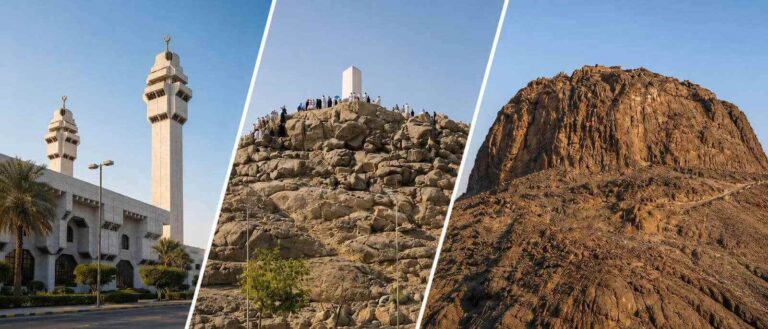
Jabal al-Noor and Cave of Hira
Known for the Cave of Hira, associated with the first revelation received by Prophet Muhammad (peace be upon him). Visitors can arrange transport to an authorized access point near the mountain; reaching the cave involves a demanding climb.
Jabal Thawr
This mountain is associated with the Prophet’s migration to Madinah and the Cave of Thawr. Visitors can appreciate its historical significance without attempting the difficult climb.
Jannat al-Mu’alla
A historic cemetery in Makkah associated with important members of the early Muslim community. Visitors should respect cemetery rules and any access restrictions.
Masjid Aisha (Tan’im)
A well-known location associated with entering Ihram for certain pilgrims intending to perform Umrah while already in Makkah.
Other sites of interest include Mina, Arafat, Muzdalifah, Masjid Nimrah, Masjid al-Khaif, and Masjid Ji’ranah.
These locations are connected to different aspects of Hajj, Umrah, and Islamic heritage. Their religious functions and visiting arrangements vary; not every location is freely accessible throughout the year.
A private multi-stop Ziyarat journey allows families to choose which permitted sites to visit and how much time to spend at each location.
Choosing a vehicle for your journey
A sedan can be convenient for smaller parties, while families and groups may prefer a larger vehicle.
Depending on availability, travelers may ask about vehicles such as Toyota Camry sedans, Hyundai Staria family vans, Toyota Hiace vans, or larger SUVs.
Before booking, confirm the vehicle’s passenger capacity, luggage space, air-conditioning, and total fare.
Practical tips for visiting Masjid al-Haram
Crowd conditions can change considerably around the five daily prayers, during Ramadan, and throughout the Hajj season.
Arriving with a simple plan can make the visit more comfortable.
- Check the nearest suitable gate before leaving your hotel.
- Follow the electronic entrance signs and staff instructions.
- Keep your hotel location and meeting point accessible on your phone.
- Allow additional time during busy prayer periods.
- Avoid stopping in busy walkways to take photographs.
- Use designated wheelchair routes when required.
- Carry drinking water for outdoor travel and dress appropriately for the weather.
- Arrange your taxi pickup at a permitted location outside restricted pedestrian areas.
Hajj season may involve additional permits, transport restrictions, and access regulations. Always follow the rules in force for your travel dates.
FAQs
1. How many gates are in Masjid al-Haram?
The Saudi Press Agency reported 243 managed gates in April 2025. The number can differ in older references because of expansions and changes in gate classifications. Saudi Press Agency
2. What is the main gate of Masjid al-Haram?
Masjid al-Haram has five principal gates, rather than a single main entrance: King Abdulaziz, King Fahd, King Abdullah, Umrah, and Al-Fatah.
3. What is Gate 1 in Makkah?
Gate 1 is King Abdulaziz Gate, located on the Ajyad side of the Grand Mosque.
4. What is Gate 79 in Masjid al-Haram?
Gate 79 is King Fahd Gate, one of the mosque’s five principal entrances.
5. Which gate is closest to the Kaaba?
The best approach to the Kaaba depends on the section of the mosque you enter and the active crowd-control arrangements. King Abdulaziz and King Fahd gates are among the officially identified routes toward the Mataf.
6. Which gate is used for Umrah?
There is no single mandatory entrance for every Umrah pilgrim. Umrah Gate is one of the five main gates, but pilgrims may be directed through different entrances depending on operational instructions.
7. What is the number of Umrah Gate?
The official Saudi Press Agency report identifies Umrah Gate as Gate 62. Some older guides list Gate 63, so visitors should check current signs. Saudi Press Agency
8. Which gate is near Safa and Marwah?
Al-Safa Gate 12 is near Safa, while Al-Marwah Gate 23 is associated with the Marwah end of the Sa’i area.
9. Is there a wheelchair-friendly gate at Masjid al-Haram?
Yes. Several designated gates have ramps, including Gates 68, 74, 79, 84, 89, 90, 93, and 94, according to the mosque authority’s accessibility guidance.
10. Can taxis stop at the entrance of Masjid al-Haram?
Taxis can use permitted drop-off areas around the mosque, but access to an individual gate is not guaranteed. Passengers may need to walk from the authorized drop-off point.
11. Are all Masjid al-Haram gates open all the time?
No fixed assumption should be made about every gate being open. Entrances may be temporarily restricted or assigned different directions of movement as crowds change.
12. Which gate should families use?
Families should choose an available entrance that provides convenient access from their hotel or arrival point. Agreeing on a meeting location is particularly useful when traveling with children.
13. Is King Abdullah Gate the same as King Abdulaziz Gate?
No. King Abdulaziz Gate is Gate 1, while King Abdullah Gate is Gate 100. They serve different sides and sections of the mosque.
14. Can I book a private taxi to visit Makkah Ziyarat places after Umrah?
Yes. Private transportation can be arranged for permitted historical sites such as Jabal al-Noor, Jabal Thawr, and Jannat al-Mu’alla. Availability and access arrangements should be confirmed before travel.
15. How can I find the correct gate in Makkah?
Use the numbered entrance signs, official guidance displays, and interactive maps available around the Grand Mosque. Staff can also direct visitors to appropriate routes.
Final thoughts
Understanding the gates of Masjid al-Haram can make a meaningful difference to your experience in Makkah.
For pilgrims performing Umrah, knowing the entrances associated with the Mataf, Safa, and Marwah can simplify navigation. For families and elderly visitors, identifying accessible entrances and meeting points is equally important.
The most useful gate is not necessarily the largest or most famous. It is the entrance that provides the safest and most convenient access to your intended destination under the conditions on the day of your visit.
If you are planning transportation around Makkah or would like to explore the city’s important Islamic historical sites after visiting the Grand Mosque, Makkah Ziyarat Taxi offers private travel arrangements for individuals, families, and groups.