
Cave of Hira (Ghar Hira) Makkah Ziyarat Guide
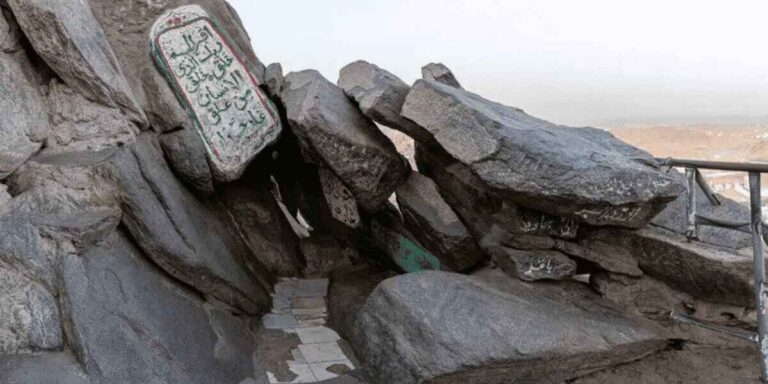
The Cave of Hira, known in Arabic as Ghar Hira, sits near the summit of Jabal al-Noor — the “Mountain of Light” — on the outskirts of Makkah. It is the site where Prophet Muhammad ﷺ received the first revelation of the Quran through Angel Jibreel, making it one of the most spiritually significant locations in Islamic history. For Umrah and Hajj pilgrims, a visit to the Cave of Hira is often considered one of the most meaningful parts of their Ziyarat itinerary in Makkah.
This guide covers everything a visitor needs to know: the history and religious importance of the cave, how to get there, what the climb involves, the best time to visit, and practical transportation options — including how to book a private Ziyarat taxi for a comfortable, hassle-free journey.
What Is the Cave of Hira?

The Cave of Hira is a small, narrow cave located near the peak of Jabal al-Noor, roughly 4–5 kilometers northeast of the Masjid al-Haram. Before Prophethood, Muhammad ﷺ would regularly retreat to this cave for quiet reflection and worship, away from the noise of Makkah. It was here, at the age of 40, that he received the first verses of Surah Al-Alaq — the beginning of the Quranic revelation — through Angel Jibreel.
Because of this event, the Cave of Hira holds deep historical and spiritual meaning for Muslims worldwide, even though visiting it is not a religious obligation of Umrah or Hajj. Many pilgrims choose to visit as an act of reflection and to connect more closely with the earliest moments of Islamic history.
Religious Significance of Jabal al-Noor and the Cave of Hira
Jabal al-Noor, the mountain on which the cave is located, translates to “Mountain of Light” — a name reflecting the light of revelation that began there. The cave itself is small, roughly 3.5 meters long and 1.7 meters wide, just large enough for a person to sit or lie down.
While the cave is not part of the official Umrah or Hajj rituals, it is widely regarded as a place of historical importance and quiet reflection. Visitors often use the time at the summit to reflect on the beginning of the Quranic message and the circumstances under which the Prophet ﷺ received his first revelation.
Location and Distance From Masjid al-Haram

The Cave of Hira is located on Jabal al-Noor, approximately 4–5 kilometers from Masjid al-Haram, on the road toward Mina and the airport. The mountain itself rises around 640 meters above sea level, and the cave sits close to its summit.
By private taxi, the drive from Masjid al-Haram to the base of Jabal al-Noor typically takes 10–15 minutes, depending on traffic and time of day. From the parking area at the base, visitors then climb on foot to reach the cave.
The Climb to the Cave of Hira
Reaching the Cave of Hira requires climbing approximately 600–700 steps up a rocky mountain path. There is no cable car, elevator, or vehicle access to the summit — the climb must be done entirely on foot. For most visitors in reasonable health, the ascent takes 45 minutes to 1.5 hours, and the descent slightly less, depending on pace and rest stops.
What to Expect on the Climb
- Uneven, rocky terrain with steep sections in places
- No shade for most of the route, especially in the middle of the day
- Limited resting points, though small shops near the base sell water and light refreshments
- Physical exertion — the climb is considered moderately strenuous
Who Should Be Cautious
The climb is not recommended for elderly visitors, individuals with heart or joint conditions, young children, or wheelchair users, as the path is narrow, uneven, and has no accessibility infrastructure. Families traveling with anyone who has mobility concerns may prefer to view the mountain from the base and continue their Ziyarat tour to other historical sites instead.
Best Time to Visit the Cave of Hira
Because the climb is physically demanding and largely unshaded, timing matters significantly for comfort and safety.
- Early morning (right after Fajr) — cooler temperatures and fewer crowds
- Late afternoon, closer to sunset — cooling temperatures and often scenic views over Makkah
- Avoid midday, especially during summer months, when temperatures can be extremely high
- During Ramadan and peak Umrah season, the site becomes considerably more crowded, so early morning visits are strongly recommended
Weather in Makkah can be intense, particularly between May and September. Visitors should carry water, wear comfortable walking shoes, and avoid the climb during the hottest hours of the day regardless of the season.
Visiting Hours
The Cave of Hira and Jabal al-Noor are open to visitors throughout the day and there is no formal entry fee. However, since it is an open mountain trail rather than a managed facility, visitors should plan their trip around daylight hours and cooler temperatures rather than fixed opening times.
Etiquette When Visiting
- Maintain respectful, quiet behavior, particularly near the cave itself
- Avoid littering along the path or at the summit
- Be mindful of other pilgrims, especially on narrow sections of the trail
- Photography is generally acceptable, but visitors should be considerate of others seeking a quiet moment of reflection at the cave entrance
- Carry out any trash brought up the mountain
How to Get to the Cave of Hira From Makkah
There are a few ways visitors typically reach Jabal al-Noor:
- Private taxi — the most flexible and comfortable option, allowing pickup directly from your hotel and drop-off at the base of the mountain, with waiting time while you complete the climb
- Public transport or shared transport — less predictable in terms of timing and comfort, particularly for families or larger groups
- Walking — not practical given the distance from central Makkah
For most pilgrims — especially families, elderly travelers accompanying the group, or those with limited time — a private Makkah Ziyarat taxi is the most convenient way to reach Jabal al-Noor. A private driver can wait at the base while you complete the climb, then continue on to other Ziyarat sites such as the Cave of Thawr, Jabal Thawr, or Jannat al-Mu’alla without the hassle of arranging transport at each stop.
Travelers can book a private Ziyarat taxi through Makkah Ziyarat Taxi for door-to-door service, including hotel pickup and drop-off, with drivers familiar with the best routes and timing around the Cave of Hira.
Recommended Vehicle Types
Depending on group size and comfort preferences, different vehicle options suit different travelers:
- Sedan (e.g., Toyota Camry) — ideal for solo travelers or couples
- Family Van (e.g., Hyundai Staria, Toyota Hiace) — comfortable for families or small groups with luggage
- SUV (e.g., GMC Yukon) — a more spacious, premium option for those wanting extra comfort
- Larger vehicles (Coaster, Bus) — suited to bigger groups traveling together for a full-day Ziyarat tour
A private, air-conditioned vehicle is particularly valuable given Makkah’s climate, allowing visitors to cool down before and after the climb rather than waiting in the sun for shared or public transport.
Combining the Cave of Hira With Other Ziyarat Sites
Many visitors plan a half-day or full-day Ziyarat tour that includes multiple historically significant sites alongside the Cave of Hira, such as:
- Cave of Thawr and Jabal Thawr — where the Prophet ﷺ and Abu Bakr took refuge during the migration to Madinah
- Jannat al-Mu’alla — the historic cemetery in Makkah
- Masjid Aisha (Masjid Tan’eem) — a common Miqat point for Umrah
- Masjid Ji’ranah — another important Miqat location
- Masjid Nimrah and Masjid Al-Khaif — significant sites connected to Hajj
Because these locations are spread across different parts of Makkah, a private, flexible, multi-stop Ziyarat tour is generally far more practical than arranging separate transport for each site. This is one of the main advantages of booking through a dedicated Ziyarat taxi service — the itinerary can be built around your pace, prayer times, and rest needs, rather than a fixed group schedule.
Family, Group, and Elderly Travel Considerations
Given the physical demands of the Jabal al-Noor climb, families and groups should plan carefully:
- Families with young children may want to split the group, with some members completing the climb while others wait comfortably in the vehicle
- Elderly travelers are generally advised to view the mountain from the base rather than attempt the climb, especially in hot weather
- Large groups benefit from a private vehicle sized appropriately (van, SUV, or bus) so everyone travels together comfortably
- Wheelchair users should be aware that neither the mountain trail nor the summit area is wheelchair accessible
A private family or group taxi allows the itinerary to be adjusted on the spot — for example, waiting longer at the base, skipping the climb for some members, or combining the visit with a more accessible site instead.
Hajj and Ramadan Considerations
During Hajj season and Ramadan, Makkah experiences a dramatic increase in visitors, and Jabal al-Noor is no exception. Crowds at the base and along the trail can be significantly heavier, parking near the mountain becomes limited, and temperatures during Hajj (which follows the lunar calendar and can fall in summer months) may be extreme.
During these peak periods:
- Book transportation in advance rather than arranging it last-minute
- Plan visits for early morning to avoid both heat and crowds
- Allow extra time for traffic around Makkah, particularly near Mina and the roads leading to Jabal al-Noor
- Stay well-hydrated and consider whether the climb is advisable given crowd density
Photography Tips
The summit of Jabal al-Noor offers sweeping views over Makkah, making it a popular spot for photography. For the best experience:
- Visit during early morning or late afternoon for cooler temperatures and softer light
- Carry a phone or camera with sufficient battery, as the climb can take over an hour round trip
- Be respectful of other visitors’ space near the cave entrance when taking photos
Booking a Private Ziyarat Taxi for the Cave of Hira
Given the distance from the city center, the physical demands of the climb, and the value of flexible timing, most pilgrims find that a private Ziyarat taxi is the most practical way to visit the Cave of Hira. A private booking typically includes:
- Hotel pickup and drop-off
- Waiting time at the base of Jabal al-Noor while you complete the climb
- The option to continue directly to other Ziyarat sites afterward
- Vehicles suited to solo travelers, couples, families, or larger groups
- Flexible timing around prayer schedules and rest needs
Makkah Ziyarat Taxi offers private Cave of Hira taxi service and Jabal al-Noor taxi transfers as part of its broader Makkah Islamic historical site tours, along with door-to-door pickup and multi-stop Ziyarat itineraries covering the Cave of Thawr, Jabal Thawr, Jannat al-Mu’alla, and other key locations. Whether you’re traveling alone, with family, or in a group, a private vehicle removes the uncertainty of public transport and lets you build the day around your own pace.
To arrange a private Ziyarat taxi to the Cave of Hira or plan a full Makkah Ziyarat itinerary, you can book through https://makkahziyarat.taxi or reach out directly via WhatsApp at +966 57 4915 372 for pricing and scheduling assistance.
FAQs
1. What is the Cave of Hira?
The Cave of Hira is a small cave near the summit of Jabal al-Noor in Makkah, known as the site where Prophet Muhammad ﷺ received the first Quranic revelation.
2. How far is the Cave of Hira from Masjid al-Haram?
The Cave of Hira is located approximately 4–5 kilometers from Masjid al-Haram, on Jabal al-Noor.
3. Is visiting the Cave of Hira part of Umrah or Hajj rituals?
No, visiting the Cave of Hira is not a religious obligation of Umrah or Hajj. It is a historical Ziyarat site that many pilgrims choose to visit for reflection.
4. How many steps are there to reach the Cave of Hira?
The climb involves approximately 600–700 steps along a rocky mountain trail from the base to the cave near the summit.
5. How long does it take to climb Jabal al-Noor?
Most visitors take between 45 minutes and 1.5 hours to reach the top, depending on fitness level and pace, with a similar or shorter time for the descent.
6. Is the climb suitable for elderly people or young children?
The climb is physically demanding, with uneven terrain and no shade, and is generally not recommended for elderly visitors, young children, or those with mobility or health concerns.
7. Is there a cable car or vehicle access to the Cave of Hira?
No, there is no cable car or vehicle access. The cave can only be reached on foot via the mountain trail.
8. What is the best time to visit the Cave of Hira?
Early morning or late afternoon are best, avoiding the intense midday heat, particularly during summer months and Ramadan.
9. Is there an entry fee to visit the Cave of Hira?
No, there is no entry fee, as it is an open mountain site rather than a managed facility.
10. What should I bring for the climb?
Comfortable walking shoes, water, sun protection, and a fully charged phone or camera are recommended.
11. Can I combine a visit to the Cave of Hira with other Ziyarat sites?
Yes, many pilgrims combine it with the Cave of Thawr, Jabal Thawr, Jannat al-Mu’alla, and other historical sites as part of a half-day or full-day Ziyarat tour.
12. How do I get to the Cave of Hira from my hotel?
The most convenient option is a private Ziyarat taxi with hotel pickup, which can wait at the base of the mountain while you complete the climb.
13. Is the site wheelchair accessible?
No, the trail and summit are not wheelchair accessible due to the uneven, rocky terrain.
14. Is it crowded during Ramadan or Hajj season?
Yes, the site becomes significantly busier during Ramadan and Hajj, so early morning visits and advance transportation booking are recommended.
15. How can I book a private taxi to Jabal al-Noor?
You can book a private Ziyarat taxi through makkahziyarat.taxi or via WhatsApp at +966 57 4915 372.