Can We Perform Umrah From Masjid Aisha? A Complete Guide
Yes. Masjid Aisha (also called Masjid al-Ta’neem) is a recognized place to enter Ihram for Umrah, but only for people who are already inside Makkah — residents, hotel guests, and pilgrims who have already completed one Umrah and wish to perform another. It is not the Miqat for pilgrims arriving from outside Makkah for their first Umrah; those travelers must enter Ihram at their designated Miqat (such as Dhul Hulayfah, Qarn al-Manazil, Yalamlam, Juhfah, or Dhat Irq) before reaching the city.
If you’re staying in Makkah for Umrah, Hajj, or simply as a visitor and want to perform an additional Umrah on behalf of yourself or a loved one, Masjid Aisha is almost always the easiest and closest option. Below is everything you need to know: the history, the ruling, the practical logistics, and how to get there and back comfortably.

1. What Is Masjid Aisha?
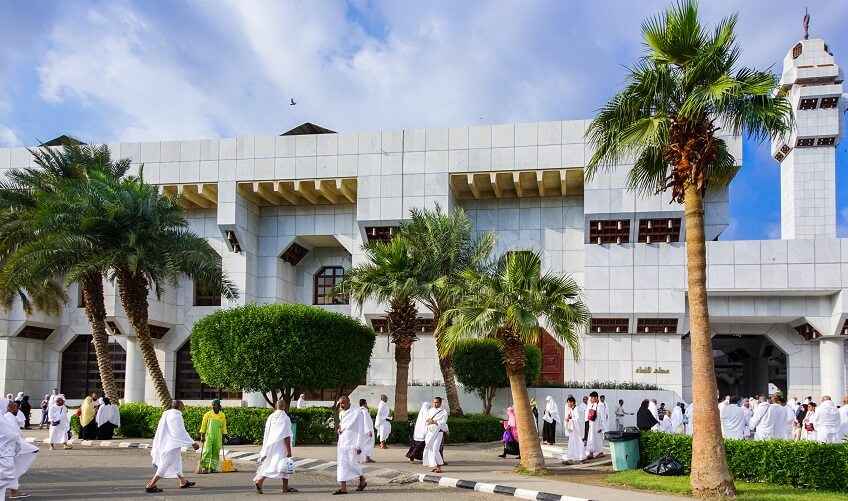
Masjid Aisha, known in Arabic as Masjid al-Ta’neem, is a mosque located in the area of Ta’neem, just outside the boundary of the Haram in Makkah. It sits in what scholars call the “Hill” area — technically outside the sacred precinct but still very close to Masjid al-Haram. Because of this location, it has become the most commonly used starting point for anyone already inside Makkah who wants to enter the state of Ihram and perform Umrah.
Many pilgrims simply call it the “Umrah Mosque,” since its main purpose, day after day, is to serve as a departure point for people renewing their intention for Umrah.
2. The History Behind Masjid Aisha
The mosque takes its name from Aisha (may Allah be pleased with her), the wife of the Prophet Muhammad ﷺ. During the Farewell Pilgrimage, Aisha began her Hajj rites but was unable to complete a separate Umrah because she was menstruating at the time. After she completed the Hajj rituals, she mentioned to the Prophet ﷺ that the other women in the group would be returning home having performed both Hajj and Umrah, while she would only have performed Hajj.
In response, the Prophet ﷺ instructed her brother, Abdur-Rahman ibn Abu Bakr, to take her to Ta’neem so she could enter Ihram there and perform Umrah before returning to Makkah. This event, recorded in the authentic hadith collections, is the foundation for Ta’neem’s status as a valid place to begin Umrah for those already within the Haram boundary.
Recommended: Taxi Fare from Haram to Masjid Ayesha
3. Is Masjid Aisha a Miqat? The Religious Ruling Explained
This is where a lot of confusion happens, so it’s worth being precise.
The Prophet ﷺ designated five official Miqat boundaries for pilgrims arriving from outside Makkah: Dhul Hulayfah, Al-Juhfah, Qarn al-Manazil, Yalamlam, and Dhat Irq. Masjid Aisha is not one of these five official Miqats.
However, for people who are already inside Makkah — because they live there, are staying there for an extended period, or have already completed one Umrah and want to perform another — the rule is different. Islamic scholarship holds that anyone inside the Haram who wants to perform Umrah must first exit the Haram boundary and enter Ihram from a point in the Hill area before returning. Masjid Aisha, being the nearest such point, is the practical and widely accepted choice, alongside a few alternatives like Ji’ranah, Arafat, and Hudaybiyyah.
Contemporary scholars, including Sheikh Ibn Baz, have affirmed that it is permissible to perform an additional Umrah from Ta’neem, even on behalf of a deceased relative, following the example set by Aisha. The reasoning is straightforward: the Prophet’s instruction to Aisha carried no indication that it applied only to her specific case, so it is treated as a general permission for anyone in a similar situation.
In short: Masjid Aisha is a valid and religiously supported Miqat for a second (or third, or further) Umrah — but only for people already in Makkah, not for first-time arrivals from outside the city.
4. Who Can Perform Umrah From Masjid Aisha?
Masjid Aisha is the right choice for:
- Pilgrims who have already completed one Umrah and are staying in Makkah, and want to perform another
- Residents of Makkah who wish to perform Umrah
- Visitors staying in hotels near Masjid al-Haram for an extended trip
- Women who were unable to perform Umrah earlier in their trip due to menstruation and now want to complete it before leaving
- Families performing an additional Umrah on behalf of a deceased or unable relative
- Hajj pilgrims who, after completing their Hajj rites, want to perform a separate Umrah before departing Makkah
5. Who Should NOT Use Masjid Aisha as Their Miqat
If you are traveling to Makkah for the first time on this trip — meaning you have not yet entered the Haram boundary — you must enter Ihram at your assigned Miqat before you pass it, based on your route of travel (for example, Qarn al-Manazil for those arriving from Taif or via air routes assigned to it, Yalamlam for those from Yemen or southern routes, or Dhul Hulayfah for those coming from Madinah). Passing your Miqat without Ihram, with the intention of performing Umrah, is not permissible, and doing so knowingly may require a Fidyah (compensation).
Masjid Aisha only applies once you are already inside Makkah and want a subsequent Umrah.
6. Step-by-Step: How to Perform Umrah From Masjid Aisha
- Prepare before you leave your hotel. Many pilgrims perform ghusl (ritual bath) and wear their Ihram clothing before heading to Masjid Aisha, though it is also common to change at the mosque itself, which has facilities for this purpose.
- Travel to Masjid Aisha. This is the one step where most pilgrims need help, since it requires exiting the Haram boundary and returning — something that’s far easier with a private taxi than trying to coordinate public transport or a long walk in Ihram clothing.
- Enter Ihram at or near the mosque. Make the intention (Niyyah) for Umrah and recite the Talbiyah.
- Return to Masjid al-Haram while continuing to recite the Talbiyah.
- Perform Tawaf around the Kaaba (seven circuits).
- Perform Sa’i between Safa and Marwah (seven trips).
- Complete the Umrah by trimming or shaving the hair (Halq or Taqsir).
Because steps 2 and 4 involve a round trip outside the Haram, most pilgrims — especially families, elderly travelers, and those visiting during hot weather or crowded seasons — prefer to book a private Ziyarat taxi rather than relying on shared transport, so they can go directly to Masjid Aisha, wait comfortably if needed, and return straight to Masjid al-Haram without unnecessary delays while in Ihram.
7. Distance and Travel Time From Masjid al-Haram
Masjid Aisha is located approximately 7–8 kilometers from Masjid al-Haram, making it one of the closest Hill points to the Grand Mosque. By private vehicle, the round trip typically takes between 30 minutes and an hour, depending on traffic and the time of day. During peak Umrah season or Ramadan, travel times can increase significantly due to congestion, so many pilgrims prefer to go either very early in the morning or late at night.
8. Best Time to Visit Masjid Aisha
- Early morning (after Fajr): Cooler temperatures and lighter traffic
- Late night: Popular for avoiding daytime heat, especially in summer
- Avoid peak Ramadan hours and just before major prayer times, when traffic around both Masjid Aisha and Masjid al-Haram can be heavy
- During Hajj season, expect higher congestion on the route as many pilgrims perform additional Umrahs after completing Hajj rites
9. Facilities Available at the Mosque
Masjid Aisha is well-equipped for pilgrims preparing to enter Ihram. It typically includes:
- Separate prayer areas and changing facilities for men and women
- Ablution (wudu) areas and washrooms
- Nearby shops selling Ihram clothing, prayer mats, and travel essentials
- Ample parking space for taxis and private vehicles
Entry to the mosque itself is free, and there is no fee for using it as a Miqat point.
10. Getting to Masjid Aisha: Transportation Options
Pilgrims generally have a few options for reaching Masjid Aisha:
- Shared taxis or public transport: Often unpredictable in timing and less comfortable when traveling in Ihram, especially with family members or elderly relatives
- Walking: Not practical given the distance and the desert climate
- Private Ziyarat taxi: The most convenient option for most pilgrims, since it allows for hotel pickup, a direct route to Masjid Aisha, a short wait if you’re preparing your Ihram at the mosque, and a direct drop-off back at Masjid al-Haram
This is exactly the kind of trip that Makkah Ziyarat Taxi is built for. A private Makkah Ziyarat Taxi can pick you up directly from your hotel, take you to Masjid Aisha to enter Ihram, wait while you prepare, and bring you straight back to the Haram — all in one smooth, unhurried trip, without the stress of negotiating shared transport while dressed in Ihram. For families or groups, a private vehicle also means everyone travels together rather than being split up.
11. Travel Tips for Families, Elderly Pilgrims, and Groups
- Families: A private family taxi means children and elderly relatives don’t have to wait around for shared transport, and the group can move at its own pace.
- Elderly or less mobile pilgrims: A door-to-door private taxi minimizes walking and waiting, which matters a great deal when someone is already in Ihram or fasting.
- Groups performing multiple Umrahs: Some families perform several Umrahs on behalf of different deceased relatives during one trip. A flexible, multi-stop private taxi service makes it easy to make several trips to Masjid Aisha without repeatedly arranging new transport.
- Hot weather: Choose an air-conditioned private vehicle and travel during cooler hours where possible.
- Ramadan and Hajj season: Book transportation in advance, since demand for taxis rises sharply during these periods.
For any of these situations, arranging a private Ziyarat taxi in advance through Makkah Ziyarat Taxi or via WhatsApp at +966 57 4915 372 helps avoid last-minute stress, particularly during busy seasons.
12. Common Mistakes to Avoid
- Crossing back into the Haram before entering Ihram. Ihram must be entered before returning toward Masjid al-Haram, not after.
- Assuming Masjid Aisha works for a first-time Umrah from outside Makkah. It does not — your original Miqat still applies if you haven’t yet performed any Umrah on this trip.
- Underestimating travel time during peak hours. What takes 30 minutes at night can take much longer during midday traffic or Ramadan crowds.
- Traveling without a plan for the return trip. Some pilgrims arrange a taxi to Masjid Aisha but struggle to find transport back while in Ihram; booking a round trip with a private driver avoids this entirely.
FAQs
Q: Can we perform Umrah from Masjid Aisha?
Yes, but only if you are already inside Makkah – as a resident, a long-stay visitor, or someone who has already performed one Umrah and wants to perform another. It is not valid as a Miqat for first-time arrivals from outside Makkah.
Q: Is Masjid Aisha an official Miqat like the other five?
No. The five official Miqats (Dhul Hulayfah, Juhfah, Qarn al-Manazil, Yalamlam, and Dhat Irq) are for pilgrims arriving from outside Makkah. Masjid Aisha is a recognized point in the Hill area for people already inside Makkah performing an additional Umrah.
Q: Why is it called Masjid Aisha?
It is named after Aisha, the wife of the Prophet Muhammad ﷺ, who entered Ihram there on his instruction to perform Umrah after being unable to do so earlier due to menstruation.
Q: How far is Masjid Aisha from Masjid al-Haram?
Approximately 7–8 kilometers, making it one of the closest valid points for entering Ihram from within Makkah.
Q: How long does the round trip take?
Usually 30 minutes to an hour by private vehicle, though this can increase during traffic-heavy periods like Ramadan or Hajj season.
Q: Can I perform Umrah from Masjid Aisha more than once?
Yes. Many pilgrims perform multiple Umrahs during a single trip, including on behalf of deceased relatives, using Masjid Aisha as their Miqat each time.
Q: Do I need to change into Ihram clothing at the mosque, or can I wear it from my hotel? Both are common. Some pilgrims prefer to shower and change before leaving their hotel; others prefer to use the changing facilities at Masjid Aisha itself.
Q: Is there an entry fee for Masjid Aisha?
No, entry to the mosque is free.
Q: What happens if I enter Ihram after passing Masjid Aisha on the way back to the Haram?
Ihram must be entered before you begin heading back toward Masjid al-Haram. Entering it late may raise questions about the validity of your Umrah, so it’s best to enter Ihram at or very near the mosque itself.
Q: Is Masjid Aisha suitable for elderly or less mobile pilgrims?
Yes, especially when using a private door-to-door taxi service, since it minimizes walking and reduces the physical strain of arranging transport while in Ihram.
Q: What is the best time of day to visit? Early morning or late at night, to avoid heat and heavy traffic, particularly during Ramadan and the Hajj season.
Q: Can families travel together to Masjid Aisha?
Yes, and a private family taxi is generally the most practical way to do so, since it keeps the group together and allows flexibility around prayer times and rest stops.
Q: What vehicles are suitable for a trip to Masjid Aisha?
For individuals or couples, a private sedan works well. For families or small groups, a van such as a Hyundai Staria or Toyota Hiace offers more comfort, while larger groups may prefer a GMC Yukon or a coaster-style vehicle.
Q: How do I book a private taxi to Masjid Aisha?
You can arrange a private Ziyarat taxi through Makkah Ziyarat Taxi or by messaging WhatsApp: +966 57 4915 372 to arrange hotel pickup, the Masjid Aisha visit, and drop-off back at Masjid al-Haram.
Final Thoughts
Masjid Aisha holds a genuinely special place in Islamic history and remains, to this day, the most practical starting point for anyone already in Makkah who wants to perform an additional Umrah. The ruling is clear: if you’re already inside the Haram boundary, Ta’neem is a valid and well-supported Miqat; if you’re arriving in Makkah for the first time on this trip, your assigned Miqat still applies.
The religious side of this journey is straightforward once you understand it. The logistical side — getting to Masjid Aisha, entering Ihram, and returning to Masjid al-Haram — is where most pilgrims want a bit of extra comfort and reliability, especially with family members, elderly relatives, or during busy seasons.
If you’d like help arranging a private, door-to-door trip to Masjid Aisha or any other Islamic historical site in Makkah, you can reach out to Makkah Ziyarat Taxi at https://makkahziyarat.taxi or via WhatsApp: +966 57 4915 372 for hotel pickup, flexible scheduling, and a comfortable ride throughout your Ziyarat.