
Makkah Al-Mukarramah Guide: History, Holy Sites, Ziyarat Places & Travel Tips
Makkah Al-Mukarramah – often simply called Makkah or Mecca — is the holiest city in Islam and the spiritual heart of over a billion Muslims worldwide. It is the birthplace of the Prophet Muhammad (peace be upon him), the location of the Kaaba, and the destination every Muslim faces five times a day in prayer. Each year, millions of pilgrims travel here to perform Umrah and Hajj, and to visit the historic sites connected to early Islamic history.
This guide covers everything a first-time visitor, returning pilgrim, or traveling family needs to know about Makkah: its religious significance, the most important Ziyarat (visitation) sites, how to get around the city, and practical travel tips for a smooth and meaningful journey.
Overview of Makkah Al-Mukarramah

Makkah is located in the Hejaz region of western Saudi Arabia, roughly 70 kilometers inland from the Red Sea port city of Jeddah. It sits in a narrow valley surrounded by rocky hills, a geography that has shaped both its history and its urban layout. Today, Makkah is a modern city built around one center of gravity: Masjid Al-Haram, the Grand Mosque that houses the Kaaba.
Only Muslims are permitted to enter Makkah, and the city operates under special regulations during the Hajj and Ramadan seasons to manage the extraordinary number of visitors. Outside the mosque itself, Makkah also contains dozens of sites tied to the life of the Prophet Muhammad and the early history of Islam, many of which pilgrims visit as part of a Ziyarat (a visit to a place of religious or historical significance).
Masjid Al-Haram and the Kaaba

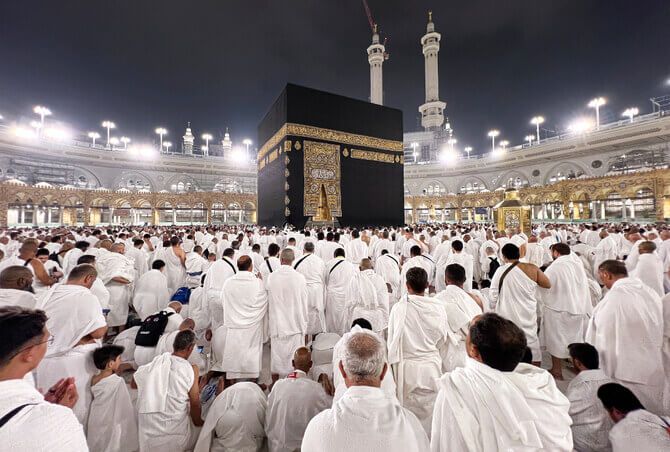
At the center of Makkah stands Masjid Al-Haram, the largest mosque in the world and the site of the Kaaba — the cube-shaped structure draped in black cloth (the Kiswah) that Muslims face during prayer. The Kaaba is believed to have been rebuilt by the Prophet Ibrahim (Abraham) and his son Ismail as the first house of worship dedicated to the oneness of God.
Within and around the mosque complex are several other significant points, including Maqam Ibrahim (the Station of Abraham), the wells of Zamzam, and the pathway between Safa and Marwah where pilgrims perform Sa’i, retracing the steps of Hajar as she searched for water for her son Ismail. Umrah and Hajj rituals — Tawaf (circling the Kaaba seven times) and Sa’i — both take place within this complex.
Why Makkah Is Sacred in Islam
Makkah’s sanctity comes from several intersecting layers of history and belief:
- It is the location of the Kaaba, the direction (Qibla) all Muslims face in prayer.
- It is the birthplace of the Prophet Muhammad and the site of the first revelations of the Quran.
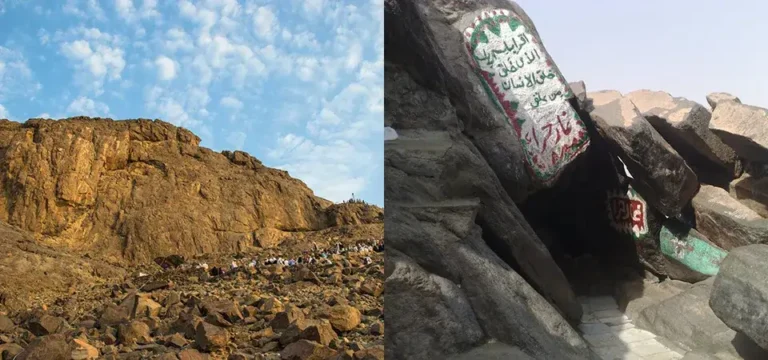
- It contains Jabal al-Noor and the Cave of Hira, where the Prophet received his first revelation.
- It is the destination of Hajj, one of the Five Pillars of Islam, obligatory once in a lifetime for those who are able.
- It is home to Jannat al-Mu’alla, one of the oldest and most significant Islamic cemeteries.
For pilgrims, visiting these connected sites — beyond the rituals of Umrah and Hajj themselves — deepens their understanding of early Islamic history and the life of the Prophet.
Getting to Makkah
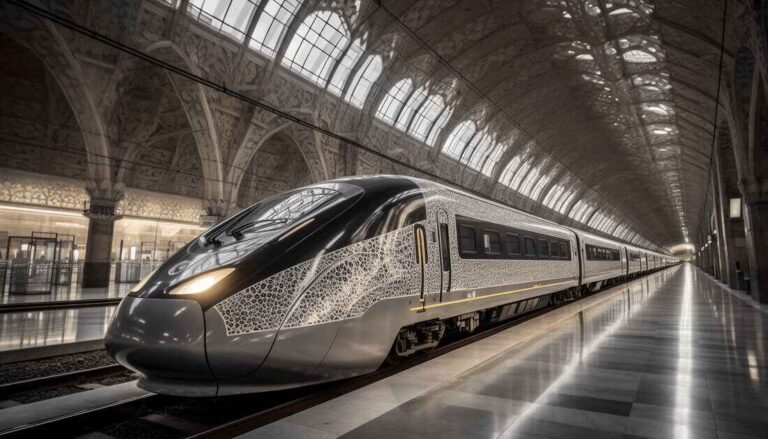
Most international pilgrims arrive through King Abdulaziz International Airport in Jeddah, which has a dedicated Hajj Terminal built specifically to process the seasonal influx of pilgrims. From Jeddah, Makkah is roughly a 60–90 minute drive depending on traffic and the time of year. Some pilgrims also arrive via Madinah, visiting the Prophet’s Mosque first before traveling onward to Makkah, a journey of around 4–5 hours by road or roughly one hour by the Haramain High-Speed Railway.
Once travelers reach Jeddah or Madinah, arranging reliable ground transportation becomes the next priority — particularly for families and groups carrying luggage, or pilgrims arriving late at night. Many visitors choose to arrange a private transfer in advance so a driver is waiting at arrivals, avoiding the uncertainty of finding transport after a long flight.
Key Islamic Historical & Ziyarat Sites in Makkah
Beyond Masjid Al-Haram, Makkah is home to several sites of deep historical and spiritual meaning. Visiting them is not a ritual obligation, but it is a deeply valued tradition among pilgrims who want to connect more closely with the story of Islam’s early years.
Cave of Hira (Jabal al-Noor)
The Cave of Hira sits near the summit of Jabal al-Noor (“the Mountain of Light”), located a few kilometers northeast of Masjid Al-Haram. This is where the Prophet Muhammad received the first verses of the Quran through the Angel Jibreel (Gabriel). Reaching the cave requires a steep climb of roughly an hour or more on foot, so it is best suited to visitors in reasonably good physical condition, ideally attempted in the cooler hours of early morning or evening.
Because the mountain itself has no direct road to the summit, most visitors take a taxi to the base of Jabal al-Noor and then continue on foot. Arranging a Cave of Hira taxi or Jabal al-Noor taxi in advance means a driver can wait at the base and take you back to your hotel afterward, rather than searching for return transport after a tiring climb.
Cave of Thawr (Jabal Thawr)
South of Makkah city lies Jabal Thawr, home to the Cave of Thawr where the Prophet Muhammad and Abu Bakr took shelter during their migration (Hijrah) to Madinah, hiding from those pursuing them. Like Jabal al-Noor, this is a steep and physically demanding climb, generally considered more strenuous than Hira, and it is not recommended for elderly visitors or those with mobility limitations.
Given the distance from the city center and the difficulty of public transport to this area, most visitors book a Cave of Thawr taxi or Jabal Thawr taxi with a private driver who understands the route and can safely manage waiting time at the base of the mountain.
Jannat al-Mu’alla
Located close to Masjid Al-Haram, Jannat al-Mu’alla is a historic cemetery where many of the Prophet’s family members and early companions are believed to be buried, including his first wife, Khadijah bint Khuwaylid. Unlike the mountain sites, this location is easily accessible and often visited briefly on the way to or from other Ziyarat stops. Visitors are expected to observe quiet, respectful conduct, as is customary at Islamic burial sites.
Masjid Aisha (Masjid al-Tan’eem)
Masjid Aisha, also known as Masjid al-Tan’eem, is the nearest Miqat (entry boundary for Ihram) to Makkah, located a short drive from the city center. Pilgrims wishing to perform an additional Umrah during their stay typically travel here to enter the state of Ihram before returning to Masjid Al-Haram. A Masjid Aisha taxi is one of the most frequently requested transfers among returning Umrah pilgrims, since the round trip is quick but essential to the ritual.
Masjid Ji’ranah
Masjid Ji’ranah lies further from the city, in the direction of Taif, and is another Miqat point historically associated with the Prophet’s distribution of war spoils after the Battle of Hunayn. Because of the distance, a Masjid Ji’ranah taxi with a private driver is generally more practical than relying on shared transport.
Masjid Nimrah and Masjid Al-Khaif
Masjid Nimrah, near Arafat, and Masjid Al-Khaif, in Mina, are both closely tied to the annual Hajj pilgrimage. Masjid Nimrah is associated with the sermon delivered on the Day of Arafat, while Masjid Al-Khaif holds historical significance as a site where earlier prophets are believed to have prayed. Visitors typically see these sites as part of a broader Hajj-related tour rather than a standalone city trip.
Hajj-Related Sites: Mina, Arafat, Muzdalifah & Jamarat
For pilgrims performing Hajj, several additional locations outside the city form the core of the pilgrimage route:
- Mina – a vast tent city a few kilometers from Makkah where pilgrims stay during the days of Hajj.
- Arafat — the plain where pilgrims gather on the Day of Arafat, considered the spiritual peak of Hajj.
- Muzdalifah – located between Mina and Arafat, where pilgrims spend a night under the open sky and collect pebbles for the ritual of stoning the Jamarat.
- Jamarat – the site of the symbolic stoning of the pillars representing Satan.
Because these locations see extremely heavy foot and vehicle traffic during the Hajj season, transportation must be planned carefully. Many pilgrims arrange a Mina taxi transfer, Arafat taxi transfer, or Muzdalifah taxi through a trusted private provider well ahead of the season, since availability becomes limited as Hajj approaches. Similarly, a dedicated Jamarat taxi service can help pilgrims manage the physically demanding movement between sites, particularly for elderly travelers or those in larger family groups.
Getting Around Makkah: Transportation Options
Makkah offers several ways to get around, each with trade-offs:
- Public buses connect major areas but can be crowded and slow, especially during peak Umrah and Hajj periods.
- Ride-hailing apps are widely used but wait times and driver availability can be unpredictable near the Haram during busy hours.
- Private Ziyarat taxis offer a fixed, pre-arranged, and flexible option — particularly valuable for visiting multiple historical sites in one trip, for families traveling with children or elderly relatives, and for pilgrims who prefer not to negotiate transport on the spot.
For most first-time visitors and families, a private Makkah Ziyarat taxi is the most practical choice. It removes the guesswork of navigating an unfamiliar city, allows the itinerary to be adjusted on the go, and ensures a driver familiar with the routes to Jabal al-Noor, Jabal Thawr, Jannat al-Mu’alla, and the Hajj sites.
Booking a Private Ziyarat Taxi
Booking a private Ziyarat taxi in Makkah is usually straightforward:
- Decide on your itinerary — a half-day Ziyarat tour typically covers two or three closer sites (such as Jannat al-Mu’alla and Masjid Aisha), while a full-day tour can include the more distant or physically demanding stops like Jabal al-Noor and Jabal Thawr.
- Choose your vehicle — sedans suit couples or small families, while a Hyundai Staria, Toyota Hiace, GMC Yukon, or minibus/coaster suits larger families or groups traveling together.
- Confirm hotel pickup — a reliable provider will collect you directly from your hotel lobby and return you there at the end of the trip.
- Agree on the route and stops — flexible, multi-stop itineraries let you spend more time at sites that matter most to you.
Makkah Ziyarat Taxi provides exactly this kind of service: private, air-conditioned vehicles, professional drivers familiar with every major Ziyarat route, and flexible half-day and full-day tours that can be tailored around your schedule. Whether you need a single Cave of Hira taxi trip, a full historical sites tour, or transfers to Mina, Arafat, and Muzdalifah during Hajj, the service can be arranged in advance through makkahziyarat.taxi or by messaging WhatsApp: +966 57 4915 372 directly to discuss your itinerary and vehicle options.
Best Time to Visit Makkah
- Ramadan sees some of the highest visitor numbers of the year, as many Muslims travel specifically to perform Umrah during the month of fasting. Streets and the mosque grounds are significantly busier, and transportation should be arranged well in advance.
- Hajj season (the annual pilgrimage) is the busiest and most tightly regulated period, with special permits required and transportation to Mina, Arafat, and Muzdalifah organized under strict scheduling.
- Outside these peak periods, particularly in the cooler months, Makkah is noticeably quieter, making it easier to visit historical sites like Jabal al-Noor and Jabal Thawr without extreme crowds or heat.
Summer months bring intense heat, often exceeding 40°C (104°F), which makes early morning or late evening visits to outdoor and mountain sites far more comfortable than midday trips.
Travel Tips for Families, Groups & Elderly Pilgrims
- Families with young children generally do best with a private vehicle rather than public transport, allowing stops for rest, food, or prayer without disrupting a fixed bus schedule. A private family taxi with child-friendly scheduling avoids long waits in the heat.
- Groups traveling together — whether extended families or Umrah groups — often benefit from a larger vehicle such as a Hiace or Coaster, keeping everyone together rather than splitting across multiple cars. A private group taxi simplifies coordination significantly.
- Elderly pilgrims should be aware that Jabal al-Noor and Jabal Thawr both involve strenuous climbs unsuitable for those with limited mobility; visiting the base of these mountains and nearby, more accessible sites like Jannat al-Mu’alla is a reasonable alternative.
- Wheelchair users should confirm accessibility needs directly with their transportation provider, as terrain at several historical sites — particularly the mountain locations — is not wheelchair accessible beyond the base.
Visitor Etiquette & Practical Advice
- Dress modestly at all times, and maintain Ihram requirements if you are in that state.
- Keep noise to a minimum at Jannat al-Mu’alla and other burial sites, out of respect.
- Photography is generally acceptable at most historical sites, though visitors should avoid photographing other pilgrims without permission, particularly women.
- Carry water and sun protection for outdoor Ziyarat stops, especially during the hotter months.
- Confirm your driver and vehicle details in advance for peace of mind, particularly during high-traffic periods like Ramadan and Hajj.
- Allow extra travel time during peak seasons, as road closures and crowd management around the Haram can affect journey times significantly.
Planning Your Ziyarat Trip
Whether you’re visiting Makkah for the first time or returning for another Umrah, a well-planned Ziyarat trip adds real depth to the experience — connecting the rituals of worship to the history behind them. A door-to-door Ziyarat tour with a private driver removes much of the friction of navigating an unfamiliar city: no waiting for shared transport, no uncertainty about routes to Jabal al-Noor or Jabal Thawr, and no rush between sites.
If you’d like help planning a half-day or full-day itinerary — including luxury vehicle options for larger groups or families — you can reach out via WhatsApp at +966 57 4915 372 or visit makkahziyarat.taxi to arrange hotel pickup and a flexible route built around the sites that matter most to you.
FAQs
1. What does “Makkah Al-Mukarramah” mean?
It translates roughly to “Makkah the Honored” or “Makkah the Ennobled,” a traditional honorific used to reflect the city’s sacred status in Islam.
2. Can non-Muslims visit Makkah?
No. Entry to Makkah is restricted to Muslims only, and this is enforced at checkpoints on all roads leading into the city.
3. How far is Jabal al-Noor (Cave of Hira) from Masjid Al-Haram?
It is located a few kilometers northeast of the Grand Mosque, generally a short taxi ride to the base of the mountain, followed by an uphill walk of about an hour or more to reach the cave itself.
4. Is climbing to the Cave of Thawr difficult?
Yes. The climb to Jabal Thawr is steep and physically demanding, generally considered more strenuous than the climb to Jabal al-Noor, and is not recommended for elderly visitors or those with health concerns.
5. What is the best way to travel between Ziyarat sites in Makkah?
A private Ziyarat taxi is generally the most convenient option, since it allows a flexible, multi-stop itinerary with hotel pickup and drop-off, rather than relying on public transport schedules.
6. How long does a full Ziyarat tour of Makkah take?
A full-day tour covering the major historical sites, including the more distant mountain locations, typically takes a full day, while a half-day tour can cover two or three closer sites such as Jannat al-Mu’alla and Masjid Aisha.
7. What is Masjid Aisha used for?
It is the nearest Miqat point to Makkah, where pilgrims wishing to perform an additional Umrah during their stay enter the state of Ihram before returning to Masjid Al-Haram.
8. Do I need to book Ziyarat transportation in advance during Hajj?
Yes. During Hajj and Ramadan, demand for transportation to sites like Mina, Arafat, and Muzdalifah rises sharply, so arranging transport well ahead of time is strongly recommended.
9. What vehicles are available for family or group Ziyarat trips?
Options typically range from sedans for couples or small families to larger vehicles such as a Hyundai Staria, Toyota Hiace, GMC Yukon, or a minibus/coaster for bigger groups.
10. Is Jannat al-Mu’alla open to visitors?
Yes, it is accessible and commonly visited, though visitors are expected to maintain quiet, respectful conduct as is customary at burial sites.
11. What is the best time of year to visit Makkah’s historical sites?
Outside of Ramadan and Hajj season, particularly in the cooler months, Makkah is quieter and more comfortable for visiting outdoor sites like Jabal al-Noor and Jabal Thawr.
12. How do I get from Jeddah Airport to Makkah?
Most pilgrims travel by road, a journey of roughly 60–90 minutes depending on traffic, with private transfer arrangements offering the most predictable experience, especially after long international flights.
13. Are Ziyarat taxi services available for elderly or less mobile pilgrims?
Yes. Private providers can adjust itineraries to prioritize accessible sites and minimize walking, though the steep mountain climbs to Jabal al-Noor and Jabal Thawr remain physically demanding regardless of transport arrangements.
14. Can I book hotel pickup and drop-off for a Ziyarat tour?
Yes, most private Ziyarat taxi services, including Makkah Ziyarat Taxi, offer direct hotel pickup and drop-off as part of their standard service.
15. How do I book a private Ziyarat taxi in Makkah?
You can arrange a private taxi in advance through makkahziyarat.taxi or by messaging WhatsApp at +966 57 4915 372 to confirm your itinerary, vehicle, and pickup details.