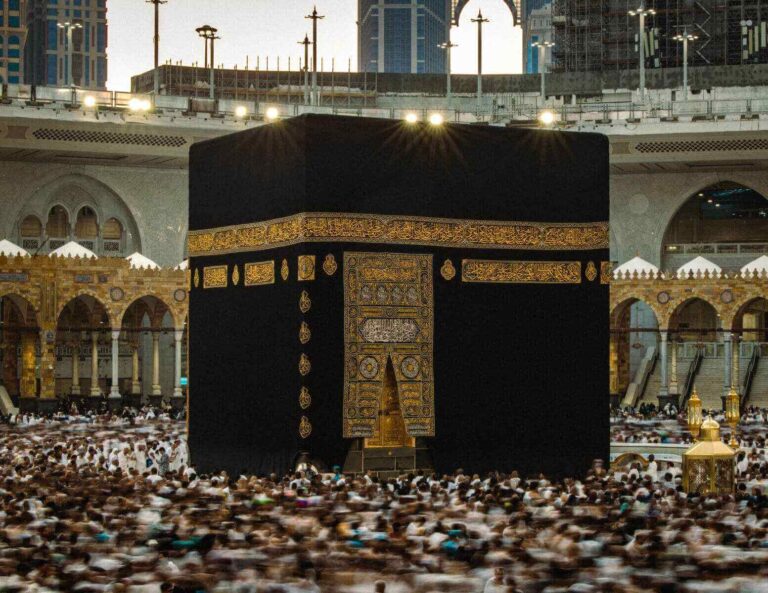

Muzdalifah Makkah Ziyarat Guide: History, Rituals, and How to Visit
Muzdalifah is one of the most spiritually significant stops on the Hajj journey – an open, level plain between Arafat and Mina where millions of pilgrims spend a single night under the stars. For anyone researching Hajj rituals, planning a pilgrimage, or exploring the historic sites around Makkah, understanding Muzdalifah’s location, meaning, and practical logistics is essential.
This guide explains what Muzdalifah is, why it matters in Islam, what happens there during Hajj, how far it is from Masjid al-Haram, and how visitors and pilgrims can travel there comfortably – including how a private Ziyarat taxi can make the journey far easier for families, elderly pilgrims, and first-time visitors.
What Is Muzdalifah?
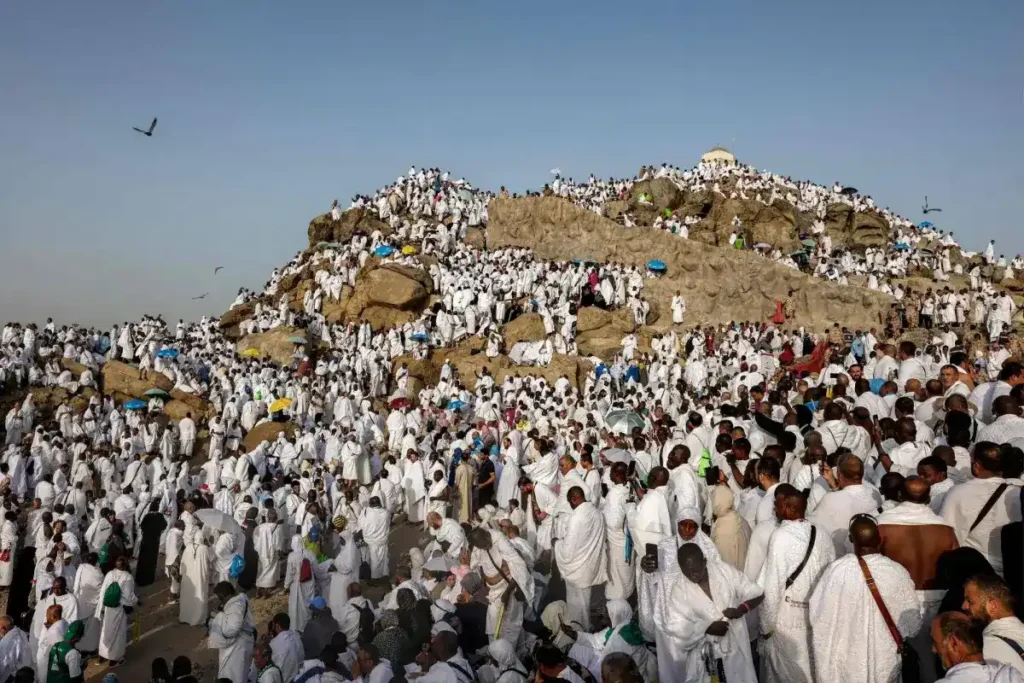
Muzdalifah (Arabic: مزدلفة), also known as Al-Mash’ar al-Haram (“the Sacred Monument”), is an open, unbuilt plain located in the Hejazi region of Saudi Arabia, in the Makkah Province. It sits geographically between two other key Hajj sites – Arafat and Mina – roughly 9 to 10 kilometers from Masjid al-Haram in central Makkah.
Unlike Mina, which is filled with the famous white tent city, Muzdalifah has no tents or permanent shelters. Pilgrims rest directly on the open ground, under the sky, which is part of what gives the site its unique atmosphere of simplicity, humility, and equality among worshippers from every background and nationality.
The area stretches roughly four kilometers, from the Valley of Muhassar to the Ma’zamayn mountains, and its boundaries are marked with large signposts so pilgrims know exactly where the sacred zone begins and ends.
Where Is Muzdalifah Located?
Muzdalifah lies southeast of Mina, along the route connecting Arafat to Mina. In practical terms:
- Distance from Masjid al-Haram (Makkah): approximately 9–10 km
- Distance from Mina: approximately 5–6 km
- Distance from Arafat: approximately 9 km
- Typical travel time by vehicle (outside Hajj peak congestion): 15–25 minutes
During the days of Hajj, of course, actual travel times increase significantly due to the sheer volume of pilgrims moving between Arafat, Muzdalifah, and Mina at the same time — a factor that makes route planning and reliable transportation especially important.
The Religious and Historical Significance of Muzdalifah
Muzdalifah’s importance in Islam is rooted both in Quranic instruction and in the example (Sunnah) of the Prophet Muhammad (peace be upon him).
Allah instructs believers in the Quran to remember Him at Al-Mash’ar al-Haram after departing from Arafat, a verse widely understood by scholars to refer to Muzdalifah. This is why the site is also called “the Sacred Monument” — it holds a distinct, named place in Islamic scripture connected directly to the Hajj rites.
Historically, Muzdalifah is also linked to the story of Prophet Ibrahim (Abraham) and his son Prophet Isma’il (Ishmael), whose journey toward building the Kaaba is remembered throughout the Hajj rituals. Their obedience and devotion form part of the spiritual foundation pilgrims reconnect with as they move through Arafat, Muzdalifah, and Mina.
During his Farewell Pilgrimage, the Prophet Muhammad (peace be upon him) departed from Arafat after sunset calmly and without rushing, famously reminding his companions that righteousness lies in tranquility, not haste. This same measured, reflective spirit is what pilgrims are encouraged to carry with them on the journey to Muzdalifah today.
What Happens at Muzdalifah During Hajj?
Muzdalifah is visited on the night of the 9th of Dhul Hijjah, the second day of Hajj, immediately after pilgrims depart from the plain of Arafat at sunset. The key rituals performed here include:
1. Combining Maghrib and Isha Prayers
Upon arrival, pilgrims pray the Maghrib (sunset) and Isha (night) prayers together, combining them into one continuous act of worship and shortening the Isha prayer from four units to two — a concession specific to the Hajj journey.
2. Spending the Night Under the Open Sky
Following the Prophet’s example, pilgrims rest on the open ground until the Fajr (dawn) prayer. There are no tents at Muzdalifah, which is intentional: the experience reflects humility, simplicity, and the equality of all pilgrims before Allah, regardless of nationality, wealth, or status.
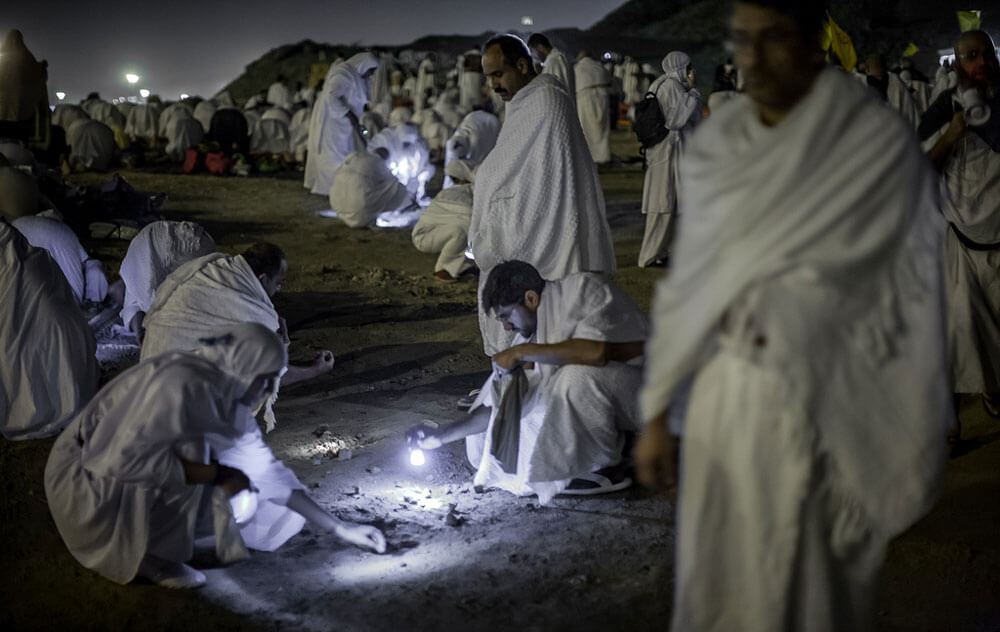
3. Collecting Pebbles for the Jamarat
One of the most practical tasks pilgrims complete at Muzdalifah is gathering small pebbles — typically between 49 and 70 stones, depending on how many days of stoning they intend to perform — which will later be used in the symbolic stoning of the Jamarat pillars in Mina.
4. Departing for Mina
After the Fajr prayer and a period of remembrance (dhikr) and supplication, pilgrims proceed to Mina to continue the remaining rites of Hajj, including the stoning of Jamarat al-Aqabah and the sacrifice (Qurbani).
It is Sunnah to remain in Muzdalifah until after Fajr; however, elderly pilgrims, those with health limitations, and caregivers accompanying vulnerable family members are permitted to depart earlier, typically after midnight, in line with recognized scholarly allowances.
Visiting Muzdalifah Outside of Hajj Season
Because Muzdalifah is intrinsically tied to the Hajj rituals, it is not a typical Umrah Ziyarat stop in the way that the Cave of Hira, Jabal al-Noor, or Jannat al-Mu’alla are. Access to the site is closely managed by Saudi authorities and is primarily organized around official Hajj logistics during the Hajj season itself.
That said, many Umrah pilgrims, returning Hajjis, and history-minded travelers are interested in seeing the plain, understanding its layout, and learning about the rituals performed there as part of a broader Islamic historical tour of Makkah’s outskirts. If you are planning a trip that includes Mina, Arafat, and the surrounding Hajj route, it is worth discussing your specific interest with a knowledgeable local driver who understands current access conditions, since these can change from season to season.
How to Travel to Muzdalifah Comfortably
Given Muzdalifah’s location outside central Makkah and the scale of pilgrim movement during Hajj, transportation planning matters. Most pilgrims experience one of three travel scenarios:
- Official Hajj transport: Provided as part of an organized Hajj package, moving pilgrims collectively between Arafat, Muzdalifah, and Mina according to a fixed group schedule.
- Walking: Some pilgrims choose to walk between sites, particularly between Muzdalifah and Mina, given the relatively short distance — though this requires good physical stamina and is not suitable for elderly pilgrims, young children, or anyone with mobility limitations.
- Private transportation: For travelers who need more flexibility — families with children, elderly parents, or anyone wanting a more comfortable and less crowded experience — a private Ziyarat taxi offers door-to-door convenience without depending on shared group schedules.
For those extending their trip beyond the core Hajj days — visiting Mina, Arafat, and Muzdalifah as part of a wider historical and religious tour of Makkah — booking a private Makkah Ziyarat taxi through Makkah Ziyarat Taxi allows you to move between sites at your own pace, with hotel pickup and drop-off included, rather than waiting on crowded shared transport.
Muzdalifah, Mina, and Arafat: How They Connect
Understanding Muzdalifah is easier when you see it as part of a sequence. The three sites form a triangle just outside Makkah, each with a distinct role in Hajj:
| Site | Role in Hajj | Approx. Distance from Masjid al-Haram |
|---|---|---|
| Arafat | Standing (Wuquf) on the Day of Arafah — the central pillar of Hajj | ~20 km |
| Muzdalifah | Overnight stay, combined prayers, collecting pebbles | ~9–10 km |
| Mina | Stoning of Jamarat, sacrifice, days of Tashreeq | ~5–7 km |
Because pilgrims move through all three locations within a very short window of time, having reliable, private transport for the days surrounding Hajj — or for a broader Ziyarat tour that includes these historic areas along with sites like the Cave of Hira, Jabal al-Noor, the Cave of Thawr, and Jannat al-Mu’alla — makes a noticeable difference in comfort, especially for families and older pilgrims.
Practical Tips for Pilgrims Regarding Muzdalifah
- Stay hydrated and rested before Arafat departure. The journey to Muzdalifah follows a physically and spiritually intense day at Arafat, so conserve energy where possible.
- Bring a simple mat or ground cover. Since there are no tents, most pilgrims bring a light mat or blanket to sit and rest on.
- Collect pebbles carefully and in the correct quantity. Many pilgrims collect slightly more than needed as a precaution, though scholars generally recommend gathering only what is required.
- Move calmly, not hurriedly. Following the Prophet’s example of tranquility during the journey from Arafat to Muzdalifah is itself considered part of the spiritual practice.
- Elderly and unwell pilgrims should plan for early departure. If you are traveling with elderly parents or family members with health conditions, discuss the permissible early-departure allowance with your Hajj group leader in advance.
- Keep essential documents and medication with you. With large crowds and long walking distances, having your Hajj permit, ID, and any necessary medication easily accessible is important.
- Photography should be respectful and minimal. Muzdalifah is a place of quiet reflection for millions of people; keep phone use and photography discreet and considerate of others around you.
Best Time to Visit and Weather Considerations
Muzdalifah is visited specifically on the night of the 9th of Dhul Hijjah each year, meaning the date shifts annually according to the Islamic lunar calendar. Because Hajj can fall during the hotter months of the Saudi calendar in some years, pilgrims should prepare for high daytime temperatures and cooler nights in the open plain. Light, breathable clothing, sun protection during the day, and a layer for the cooler pre-dawn hours are all worth packing.
During Ramadan and the regular Umrah season, Muzdalifah itself is not part of standard Umrah rituals, but travelers interested in the wider historical Hajj route sometimes arrange to see the area as part of an extended Ziyarat tour, subject to current access arrangements.
Family, Group, and Accessibility Considerations
Families traveling with children, elderly parents, or pilgrims with limited mobility face particular challenges at Muzdalifah given the crowd density, uneven open ground, and distance involved. A few points worth planning around:
- Wheelchair and mobility support: If you are traveling with a family member who needs mobility assistance, arrange this in advance with your Hajj group, since the terrain at Muzdalifah is open ground rather than a paved facility.
- Group coordination: Large families or groups should agree on a clear meeting point in advance, since visibility can become difficult after dark despite the area’s lighting.
- Private family or group taxis: Outside the specific overnight Hajj ritual, when moving between related historic sites around Makkah — including Mina, Jamarat, Masjid Nimrah, and Masjid Al-Khaif — a private family taxi or private group taxi gives families the flexibility to travel together without splitting up across shared transport.
Booking a Private Ziyarat Taxi for the Makkah Holy Sites
Whether you are completing your Hajj rites or extending your trip to explore the historic and religious landmarks connected to it, private transportation removes much of the uncertainty around timing, crowding, and comfort.
Makkah Ziyarat Taxi offers private, air-conditioned vehicles and professional drivers for visitors and pilgrims traveling around Makkah’s holy sites, including:
- Mina Taxi Transfer
- Arafat Taxi Transfer
- Muzdalifah Taxi
- Jamarat Taxi
- Cave of Hira Taxi and Jabal Al Noor Taxi
- Cave of Thawr Taxi and Jabal Thawr Taxi
- Jannat al-Mu’alla Taxi
- Masjid Aisha Taxi, Masjid Ji’ranah Taxi, Masjid Nimrah Taxi, and Masjid Al-Khaif Taxi
- Hotel pickup and drop-off, with flexible multi-stop and half-day or full-day Ziyarat tours
Vehicles range from comfortable sedans to spacious family vans and SUVs, suited to solo travelers, couples, families, and larger groups alike. Every trip is arranged door-to-door, so there’s no need to coordinate shared transport schedules or walk long distances in the heat.
For bookings, custom itineraries, or questions about current routes and timings, you can reach the team directly via WhatsApp at +966 57 4915 372.
FAQs
1. What is Muzdalifah in Hajj?
Muzdalifah is an open plain between Arafat and Mina where Hajj pilgrims spend the night of the 9th of Dhul Hijjah, combining Maghrib and Isha prayers and collecting pebbles for the stoning ritual at Jamarat.
2. How far is Muzdalifah from Makkah?
Muzdalifah is approximately 9–10 kilometers from Masjid al-Haram, roughly a 15–25 minute drive under normal traffic conditions.
3. How far is Muzdalifah from Mina?
Muzdalifah is about 5–6 kilometers from Mina, making it the closest of the three Hajj sites to the tent city.
4. Why do pilgrims sleep in the open at Muzdalifah instead of using tents?
Sleeping under the open sky at Muzdalifah follows the practice of the Prophet Muhammad (peace be upon him) and symbolizes humility, simplicity, and equality among all pilgrims regardless of status or nationality.
5. What do pilgrims collect at Muzdalifah?
Pilgrims collect small pebbles — typically 49 to 70 stones — which are later used in the ritual stoning of the Jamarat pillars in Mina.
6. Can elderly or unwell pilgrims leave Muzdalifah early?
Yes. Elderly pilgrims, those with health limitations, and their caregivers are generally permitted to depart Muzdalifah after midnight rather than waiting until Fajr, in line with recognized scholarly allowances.
7. Is Muzdalifah part of Umrah?
No. Muzdalifah is specifically a Hajj ritual site and is not part of standard Umrah rites, though it can be included in an extended historical Ziyarat tour of the Hajj route outside of the pilgrimage days, subject to current access.
8. What prayers are performed at Muzdalifah?
Pilgrims combine and shorten the Maghrib and Isha prayers upon arrival at Muzdalifah, a concession specific to the Hajj journey.
9. Is there accommodation or shelter at Muzdalifah?
No, unlike Mina, Muzdalifah has no tents or built accommodation. Pilgrims rest directly on the open ground.
10. What is the meaning of “Al-Mash’ar al-Haram”?
It translates to “the Sacred Monument” and is another name for Muzdalifah, referenced in the Quran in connection with remembrance of Allah after departing from Arafat.
11. How do pilgrims travel between Arafat, Muzdalifah, and Mina?
Most pilgrims travel via organized Hajj group transport, though some walk short distances between sites. Travelers wanting more flexibility for related Ziyarat visits can arrange private transportation, such as a Muzdalifah taxi or Mina taxi transfer, for greater comfort.
12. What should I bring to Muzdalifah?
A simple mat or ground cover, water, any required medication, your Hajj identification documents, and light layers for temperature changes between day and night.
13. Can families travel together comfortably around the Hajj sites?
Yes. Families often prefer arranging a private family taxi or group taxi so that everyone can travel together without being separated across different shared transport groups.
14. Is it possible to visit Muzdalifah outside the Hajj season?
Access to Muzdalifah is primarily organized around Hajj logistics, so general sightseeing outside of Hajj is limited; it’s best to check current conditions with a knowledgeable local driver if this interests you as part of a wider historical route tour.
15. What vehicles are available for Ziyarat transport around Makkah?
Options typically range from sedans like the Toyota Camry to family vans such as the Hyundai Staria and Toyota Hiace, and larger SUVs like the GMC Yukon, depending on group size and comfort preferences.
Final Thoughts
Muzdalifah may be a simple, open plain without buildings or monuments, but its role in the Hajj journey is anything but minor. It is a place of pause between the intensity of Arafat and the rites of Mina — a night of rest, remembrance, and quiet equality shared by millions of pilgrims from every corner of the world.
Whether you’re preparing for Hajj, planning a broader historical tour of Makkah’s sacred sites, or simply want to understand the significance of each stop along the pilgrimage route, having reliable, comfortable transportation makes the experience considerably easier — especially for families, elderly travelers, and those visiting multiple sites in a single day.
For private, flexible transport to Muzdalifah, Mina, Arafat, and the wider Makkah Ziyarat sites, you can book directly through Makkah Ziyarat Taxi or reach the team on WhatsApp at +966 57 4915 372 to arrange your itinerary.