Private Transport from Kudai & Hijrah Street Hotels for Makkah Ziyarat: The Complete Guide
If you’re staying at a hotel in Kudai or along Hijrah Street, you’re closer to Makkah’s most meaningful Ziyarat sites than you might think — and further from the confusion of trying to reach them without a plan. This guide explains exactly how to arrange private transport from this part of the city, what a typical Ziyarat loop looks like when you start from the south, and how to avoid the common mistakes that leave pilgrims standing on a curb in the heat waiting for a taxi that never shows.
Kudai and Hijrah Street sit on Makkah’s southern approach, a growing hotel corridor that has become popular with Umrah groups, families, and independent travelers who want a quieter base slightly outside the immediate Haram perimeter. The trade-off for that quiet is distance: you can’t simply walk to Jabal al-Noor or Mina the way you might from a hotel in Ajyad or Ibrahim Al Khalil. Private transport isn’t a luxury here — it’s the practical way to see the sites.
How to Book Private Transport from Kudai or Hijrah Street

The fastest way to arrange a Ziyarat taxi from a Kudai or Hijrah Street hotel is to book a private driver in advance through a service that specializes in Makkah Ziyarat routes, rather than relying on street taxis or ride-hailing apps once you arrive. A private booking through Makkah Ziyarat Taxi lets you confirm your hotel pickup point, choose your vehicle, and set your route – whether that’s a short trip to Jabal al-Noor or a full-day loop covering Mina, Arafat, and Muzdalifah – before you even leave your room. Bookings and itinerary questions can be handled directly over WhatsApp at +966 57 4915 372.
Why Kudai and Hijrah Street Are Different From Central Makkah
Most first-time visitors assume every Makkah hotel sits within walking distance of Masjid al-Haram. In reality, Makkah has expanded well beyond its historic core, and neighborhoods like Kudai and the hotels along Hijrah Street serve travelers who prioritize value, space, or proximity to the southern roads leading toward Mina, Arafat, and the Jeddah–Makkah highway.
Staying here has real advantages: rooms tend to be more affordable, traffic congestion near the hotel itself is lighter, and — importantly for Ziyarat purposes — you’re often better positioned for routes heading toward Arafat, Mina, and Masjid Nimrah than someone staying deep inside the central zone. The trade-off is that reaching Masjid al-Haram, Jabal al-Noor, or Jabal Thawr requires a vehicle rather than a walk, which is exactly where a private Ziyarat taxi becomes useful.
Understanding the Southern Approach to Makkah
Kudai and Hijrah Street form part of what’s often called Makkah’s southern approach — the corridor pilgrims typically pass through when arriving from Jeddah or heading out toward the Hajj sites of Mina, Muzdalifah, and Arafat. This positioning matters for trip planning in two ways:
- Outbound Ziyarat trips (toward Jabal al-Noor, Jabal Thawr, Jannat al-Mu’alla) generally mean heading north and east, back toward and around the Haram.
- Hajj-route Ziyarat trips (Mina, Arafat, Muzdalifah, Masjid Nimrah, Masjid Al-Khaif) head further south and east, often on faster, less congested roads than the routes near the Haram.
A private driver familiar with this layout can sequence your stops so you’re not doubling back across the city, which matters more than most visitors expect once Makkah’s traffic patterns are factored in.
Ziyarat Sites Reachable From Kudai and Hijrah Street
Cave of Hira and Jabal al-Noor
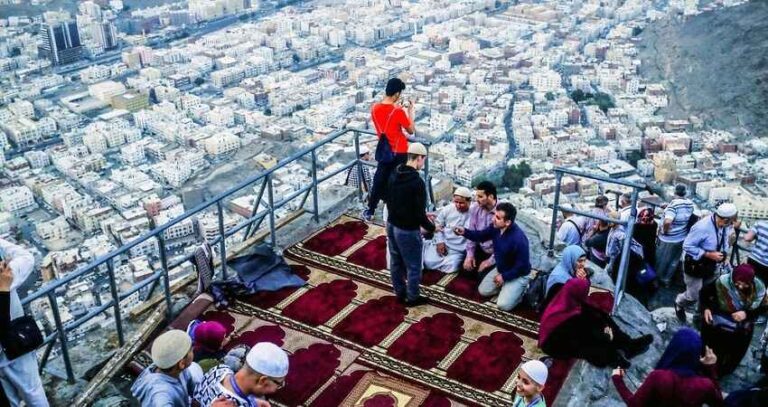
The mountain where the Prophet Muhammad ﷺ received the first revelation is one of the most requested Ziyarat stops for Umrah pilgrims. From Kudai or Hijrah Street, it’s a drive of roughly 20–30 minutes depending on traffic, since Jabal al-Noor sits on the northeastern edge of the city. The mountain itself requires a walk of one to two hours round trip to reach the cave, so this stop needs to be planned with enough time, and it’s not considered wheelchair accessible. A private Cave of Hira taxi means your driver can wait at the base while you make the climb, rather than needing to arrange separate pickup and drop-off.
Cave of Thawr and Jabal Thawr
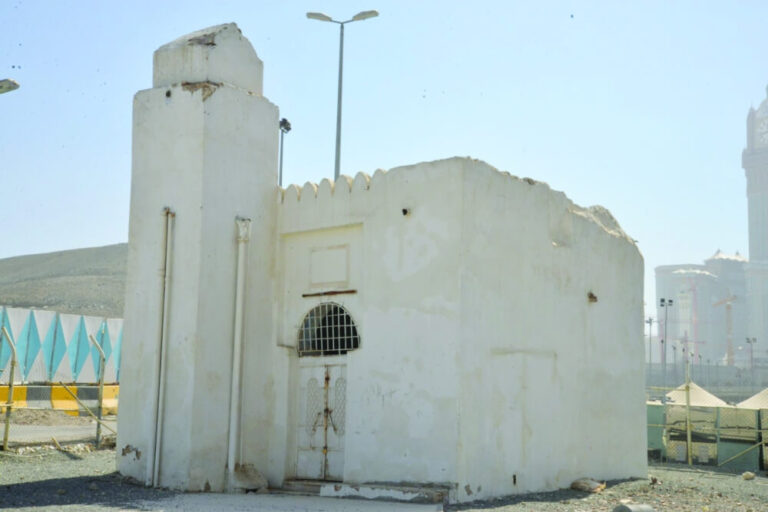
Located south of the Haram, the Cave of Thawr is where the Prophet ﷺ and Abu Bakr took shelter during the migration to Madinah. It’s a steeper, more demanding climb than Jabal al-Noor and generally recommended only for visitors in good physical condition. From the Kudai area, the drive itself is comparatively short given the site’s southern location, though the mountain approach still requires careful timing and appropriate footwear. A Jabal Thawr taxi with a driver who knows the parking and trailhead area saves considerable time compared to arranging transport on the spot.
Jannat al-Mu’alla
This historic cemetery near the Haram holds the graves of several of the Prophet’s ﷺ family members and companions, and it’s a common short stop for pilgrims wanting a quiet moment of reflection. It’s typically combined with other central Ziyarat stops rather than visited on its own.
Mina, Arafat, and Muzdalifah
For pilgrims performing Hajj, or Umrah visitors wanting to see the Hajj sites outside of the pilgrimage season, Mina, Arafat, and Muzdalifah are essential stops. Their location toward the southeast of Makkah actually makes them relatively convenient from Kudai and Hijrah Street compared with hotels deep in the city center. A Mina taxi transfer or Arafat taxi transfer booked in advance is particularly useful here, since these areas can become extremely congested during peak Hajj days and having a pre-arranged private driver avoids the uncertainty of finding transport on short notice.
Masjid Nimrah, Masjid Al-Khaif, and Masjid Aisha
These mosques each carry specific historical and ritual significance — Masjid Nimrah near Arafat, Masjid Al-Khaif in Mina, and Masjid Aisha (Masjid Tan’im) as the common meeqat point for pilgrims entering a new state of Ihram from within Makkah. Because they sit in different directions from the city center, visiting more than one in a single outing is far more practical with a private vehicle than with public transport or repeated taxi bookings.
Building a Ziyarat Loop From Kudai
One of the biggest advantages of starting from Kudai or Hijrah Street is how naturally a Ziyarat loop can be structured. Rather than visiting sites in a scattered order, a private driver can plan a route that groups nearby stops together and minimizes backtracking. A typical half-day loop from this area might look like:
- Hotel pickup in Kudai or Hijrah Street
- Masjid Aisha (Masjid Tan’im) for those needing to enter Ihram
- Jannat al-Mu’alla for a brief stop
- Jabal al-Noor and the Cave of Hira
- Return to the hotel, or continue on to central Makkah
A full-day loop can extend this to include Jabal Thawr, or, on a separate trip, the Hajj-route sites of Mina, Arafat, and Muzdalifah. Because these two groups of sites sit in roughly opposite directions from Kudai, most visitors find it more efficient to treat them as two separate outings rather than trying to combine everything into one long day. This is exactly the kind of route planning a private group taxi booking can help arrange in advance.
Kudai to Arafat: What Pilgrims Need to Know
For visitors specifically searching for a Kudai to Arafat private transfer, a few practical points are worth knowing:
- The drive typically takes longer during Hajj season due to road closures and pilgrim traffic, sometimes significantly so.
- Outside of Hajj season, the drive is considerably faster and more predictable.
- Private vehicles generally have more flexibility around road restrictions than large tour buses, though all vehicles are still subject to official traffic management during peak periods.
- Booking a private transfer in advance is strongly recommended for Hajj-season travel, since availability tightens dramatically as the pilgrimage approaches.
Because conditions around Arafat and Mina change substantially between regular days and Hajj days, it’s worth confirming current routing directly with your driver or booking service rather than relying on a fixed travel-time estimate.
Private Taxi vs. Ride-Hailing Apps vs. Group Tours
Visitors staying in Kudai or along Hijrah Street generally have three transport options for Ziyarat, and each comes with real trade-offs.
Ride-hailing apps work reasonably well for simple point-to-point trips within the city but become unreliable for Ziyarat routes, where drivers may not know the specific mountain trailheads, meeqat points, or Hajj-site pickup zones, and where waiting at a remote stop for a return ride is often not practical.
Group bus tours can be economical but run on a fixed schedule and route, offering little flexibility for families with young children, elderly members, or anyone who simply wants more time at a particular site.
Private Ziyarat taxis sit in between — offering the local knowledge of a specialized driver with the flexibility of your own schedule. This is typically the most practical option for hotel pickup and drop-off, multi-stop routes, and door-to-door service, particularly for families and small groups who want a driver that waits at each stop rather than one who drops passengers and departs.
Choosing the Right Vehicle for Your Group
The right vehicle depends mostly on group size and how much luggage or equipment (such as a wheelchair or stroller) you’re traveling with.
- Sedan (Camry or similar): Comfortable for solo travelers, couples, or up to three passengers with light luggage.
- Hyundai Staria or similar family van: A good middle option for families of four to six, offering more legroom for longer Ziyarat loops.
- Toyota Hiace: Suited to larger families or small groups traveling together who want everyone in one vehicle.
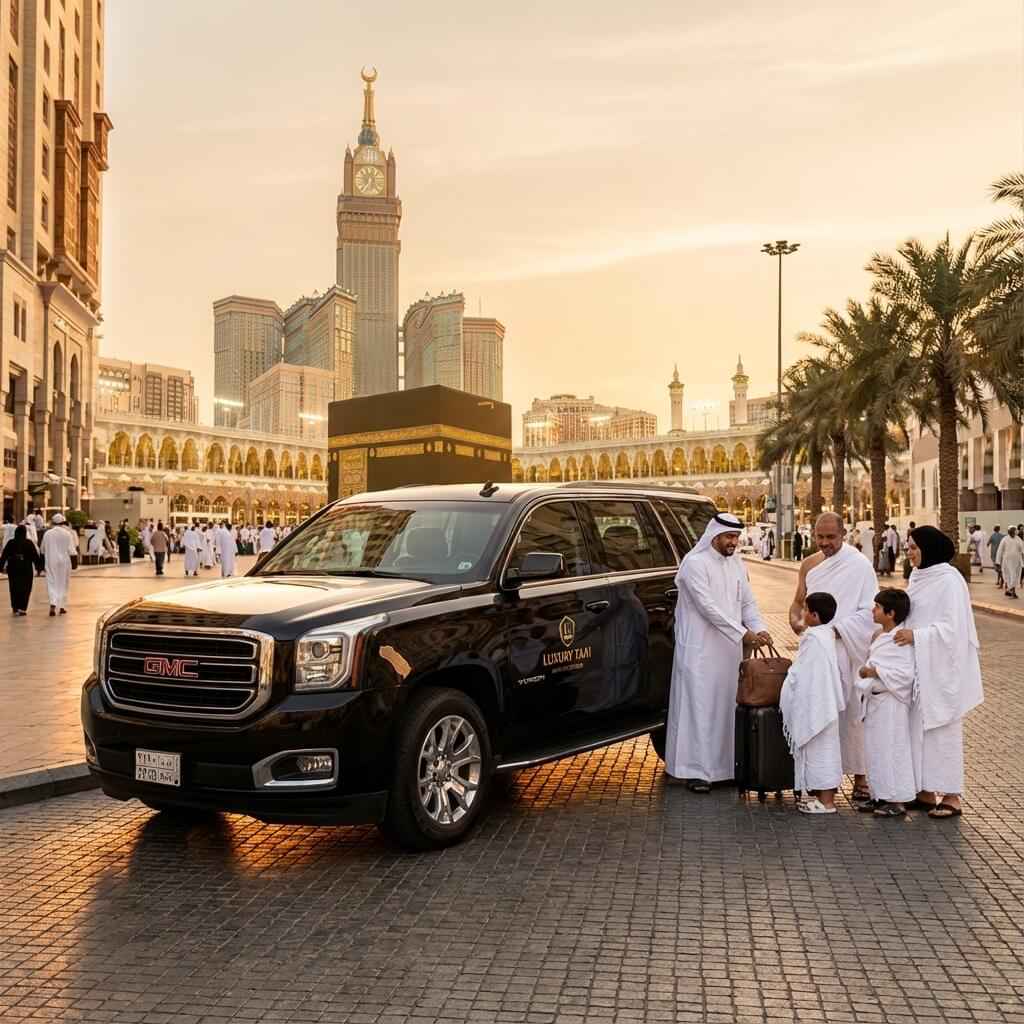
- GMC Yukon or luxury SUV: For travelers wanting extra comfort, more cargo space, or a higher-end experience, particularly for airport-to-hotel transfers combined with Ziyarat.
- Coaster or bus: Appropriate for larger groups traveling together, such as extended families or Umrah delegations.
Makkah Ziyarat Taxi maintains a fleet across these categories, so travelers can match the vehicle to their group size rather than being placed in whatever car happens to be available.
Booking Process With Makkah Ziyarat Taxi
Booking private transport from a Kudai or Hijrah Street hotel is straightforward:
- Reach out via WhatsApp at +966 57 4915 372 with your hotel name, group size, and preferred Ziyarat sites.
- Confirm your route — whether that’s a single site like Jabal al-Noor, a half-day loop, or a full Hajj-route transfer to Mina and Arafat.
- Select your vehicle based on group size and comfort preference.
- Set your pickup time, ideally with some buffer before peak prayer times or midday heat.
- Meet your driver at your hotel entrance for direct hotel pickup and drop-off, with no need to walk to a taxi stand or negotiate on the spot.
Because pricing and availability can vary by season — particularly around Ramadan and Hajj — it’s best to confirm current rates directly through makkahziyarat.taxi or via WhatsApp rather than relying on estimates found elsewhere.
Travel Tips for Families, Elderly Pilgrims, and Groups
- For families with young children: Build in extra time at each stop and avoid overly ambitious multi-site days; a private vehicle allows you to skip a site without disrupting a group schedule.
- For elderly or mobility-limited pilgrims: Some sites, particularly Jabal al-Noor and Jabal Thawr, involve significant walking or climbing and are not wheelchair accessible; a private driver can adjust the itinerary toward more accessible stops like Jannat al-Mu’alla, Masjid Aisha, or Masjid Al-Khaif.
- For larger groups: A single larger vehicle, such as a Hiace or Coaster, is usually more practical and cost-effective than splitting into multiple cars, and keeps the group together at each stop.
- For photography: Some sites have specific etiquette around photography, particularly near active worship areas; check locally before taking photos of other pilgrims.
Best Time to Start Your Ziyarat Trip
Early morning, shortly after Fajr, is generally the most comfortable time to begin a Ziyarat loop from Kudai or Hijrah Street. Temperatures are lower, traffic is lighter, and outdoor sites like Jabal al-Noor are far more manageable to climb before the midday heat sets in. Late afternoon, after Asr, is a reasonable second option, though the climb at Jabal al-Noor or Jabal Thawr should generally be avoided too close to sunset given the terrain.
Ramadan and Hajj Season Considerations
During Ramadan, Makkah’s traffic patterns shift significantly around Iftar and Taraweeh times, and Ziyarat trips are often best scheduled for the morning or early afternoon to avoid the heaviest congestion near the Haram.
During Hajj season, road closures and pilgrim volume around Mina, Arafat, and Muzdalifah increase substantially, and last-minute transport becomes difficult to arrange. Travelers planning Hajj-route Ziyarat, or needing transfers to Mina or Arafat as part of their pilgrimage, should book private transport well in advance rather than expecting to arrange it on arrival.
Local Etiquette and Ziyarat Manners
Ziyarat sites in and around Makkah are visited for reflection and remembrance, not as tourist attractions in the conventional sense. A few points of etiquette are worth keeping in mind:
- Dress modestly, consistent with the requirements of Ihram or general modest dress in Makkah.
- Keep noise to a respectful level, particularly at Jannat al-Mu’alla and near active mosques.
- Avoid touching or marking the rocks or structures at historical sites such as the Cave of Hira or Cave of Thawr.
- Be mindful of other pilgrims during busy periods, particularly at narrow trail sections leading up to the caves.
Conclusion
Staying near Kudai or along Hijrah Street doesn’t put you at a disadvantage for Ziyarat — it simply means your trip benefits from a bit more planning, particularly around transport. With a private driver who understands both the northern route toward Jabal al-Noor and Jabal Thawr and the southern route toward Mina, Arafat, and Muzdalifah, a Ziyarat loop from this part of the city can be just as smooth and meaningful as one starting from the Haram’s front door.
If you’re staying in Kudai or Hijrah Street and want to arrange hotel pickup for a Ziyarat trip – whether it’s a short visit to Jabal al-Noor or a full transfer to the Hajj sites — you can book directly through Makkah Ziyarat Taxi or reach out on WhatsApp at +966 57 4915 372 to plan your itinerary in advance.
FAQs
1. Is Kudai far from Masjid al-Haram?
Kudai sits on Makkah’s southern side, outside the immediate Haram perimeter, so most visitors need a taxi or private car to reach the Haram rather than walking.
2. How long does it take to reach Jabal al-Noor from a Hijrah Street hotel?
Typically around 20–30 minutes by car, depending on traffic conditions, since Jabal al-Noor is located on the northeastern side of the city.
3. Can I book a private taxi from Kudai directly to Arafat?
Yes. A Kudai to Arafat private transfer can be arranged in advance, and this route is generally more convenient from the southern side of the city compared with hotels near the Haram, though travel times increase significantly during Hajj season.
4. Is it better to book a private Ziyarat taxi or use a ride-hailing app?
For Ziyarat routes specifically, a private taxi with a driver familiar with mountain trailheads and Hajj-site pickup zones is generally more reliable than a standard ride-hailing app, which may not be set up for waiting at remote or non-standard stops.
5. What vehicle is best for a family of five visiting Ziyarat sites?
A Hyundai Staria or similar family van is usually the most comfortable option for a family of that size, offering more room than a sedan without the size of a larger van.
6. Are the Cave of Hira and Cave of Thawr wheelchair accessible?
No. Both sites require significant walking or climbing over uneven terrain and are not considered accessible for wheelchair users or those with limited mobility.
7. What is the best time of day to visit Jabal al-Noor?
Early morning, shortly after Fajr, is generally recommended to avoid the midday heat during the climb.
8. Can one driver take us to multiple Ziyarat sites in a single day?
Yes. A private booking allows a single driver to take your group to several sites in one outing, with the driver waiting at each stop rather than requiring separate bookings.
9. Do I need to book Ziyarat transport in advance during Hajj season?
Yes, strongly recommended. Availability for private transport to Mina, Arafat, and Muzdalifah tightens considerably as Hajj approaches, and last-minute arrangements can be difficult.
10. What is Masjid Aisha and why do pilgrims visit it?
Masjid Aisha, also known as Masjid Tan’im, is a common meeqat point where pilgrims already in Makkah enter a new state of Ihram, typically before performing an additional Umrah.
11. Is it possible to combine a Ziyarat trip with airport transfer?
Many visitors combine airport pickup with an initial hotel drop-off, then arrange separate Ziyarat trips once settled, since combining both in a single outing can make for a very long travel day.
12. How much walking is involved in a typical Ziyarat loop?
This varies significantly by site. Jannat al-Mu’alla and the mosques require minimal walking, while Jabal al-Noor and Jabal Thawr involve one to two hours of climbing round trip.
13. Are group and family bookings available for larger parties?
Yes. Larger vehicles such as the Toyota Hiace, Coaster, or bus are available for extended families and groups traveling together.
14. How do I contact Makkah Ziyarat Taxi to arrange a booking?
The most direct way is via WhatsApp at +966 57 4915 372, or through the website at makkahziyarat.taxi.
15. Does the price change based on the number of sites visited?
Pricing generally depends on route length, number of stops, vehicle type, and duration (half-day versus full-day), so it’s best to confirm current pricing directly with the booking service for your specific itinerary.