Jabal Al Rahmah (Mount of Mercy) Ziyarat Guide 2026
Jabal Al Rahmah, the “Mount of Mercy,” stands on the plain of Arafat roughly 20 kilometers southeast of Makkah, and it is one of the most emotionally significant stops on any Ziyarat itinerary. Muslims from every corner of the world know its name from the Day of Arafah, but many visitors and Umrah pilgrims are unsure how to visit outside of Hajj season, what the site actually looks like, or how to combine it with other historical landmarks in a single trip. This guide covers the history, religious significance, visiting logistics, and practical transportation options for reaching Jabal Al Rahmah safely and comfortably.
What Is Jabal Al Rahmah?

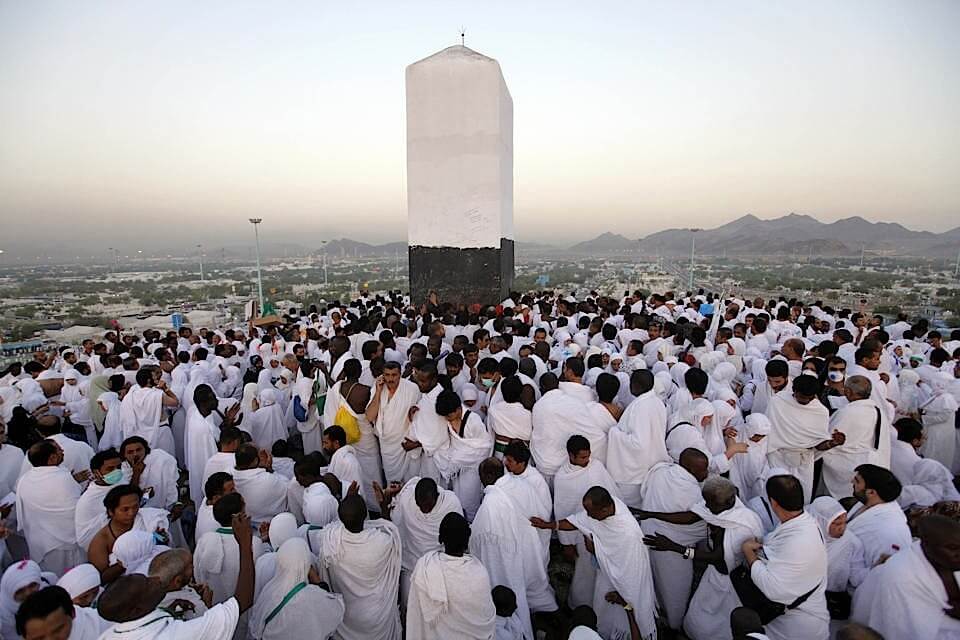
Jabal Al Rahmah (جبل الرحمة), also written Jabal ar-Rahmah or Jable Rehmat, is a granite hill rising about 70 meters above the plain of Arafat. Its summit sits at roughly 370–450 meters above sea level, and it is marked today by a distinctive white pillar visible from a distance across the plain. The hill itself is modest in size, but its place in Islamic history makes it one of the most visited and photographed sites connected to Hajj.
The name translates directly to “Mountain of Mercy,” and it is also referred to in some traditions as Jabal al-Dua, or the “Mountain of Supplication,” reflecting how pilgrims use the site: standing, raising their hands, and asking Allah for forgiveness and mercy.
Where Is Jabal Al Rahmah Located?
Jabal Al Rahmah sits on the eastern side of the plain of Arafat, along the route between Makkah and Taif. Approximate distances from key Hajj sites are:
- From Masjid al-Haram (Makkah): approximately 20–22 kilometers
- From Mina: approximately 10 kilometers
- From Muzdalifah: approximately 6 kilometers
Because it sits within the Arafat boundary, the area is subject to organized traffic management, and access can change significantly depending on the time of year, which is why private transportation planned in advance is especially useful for visitors traveling outside the main Hajj rush.
Historical and Religious Significance

Jabal Al Rahmah carries layered meaning in Islamic tradition, and understanding this context is part of what makes a visit meaningful rather than simply a photo stop.
The Farewell Sermon
The most widely cited reason for the mountain’s importance is that Prophet Muhammad ﷺ delivered his Khutbah al-Wada, the Farewell Sermon, near this location during his final Hajj in 632 CE (10 AH). In that sermon he addressed themes of justice, equality among people, the sanctity of life and property, and the responsibilities Muslims hold toward one another. For many pilgrims, standing near the site where this sermon was delivered is a powerful reminder of the values at the core of the pilgrimage itself.
Adam and Hawwa (Eve)
A widely told tradition holds that Prophet Adam (AS) and Hawwa (Eve) were reunited near this site after being sent down to earth and separated. This story is one of the reasons the mountain became associated with reconciliation, repentance, and mercy — themes that echo throughout the rituals of the Day of Arafah.
The Day of Arafah
The ninth day of Dhul Hijjah, known as Yawm al-Arafah, is considered the most important day of Hajj. The Prophet ﷺ is reported to have said, “Hajj is Arafat,” meaning that standing on the plain of Arafat during this day (a ritual known as Wuquf) is the central pillar of the pilgrimage; missing it invalidates the Hajj. Millions of pilgrims gather across the plain — not only on the hill itself — to spend the afternoon in prayer, Quran recitation, and heartfelt supplication, seeking forgiveness for the past year and setting intentions for the year ahead. Fasting on this day is also recommended for Muslims who are not performing Hajj, as it is believed to expiate sins of the preceding and following year.
It is worth noting for visitors that pilgrims are not required to physically climb the hill; standing anywhere within the wider plain of Arafat fulfills the ritual of Wuquf. The hill and its pillar have simply become the visual and symbolic focal point of the day.
Visiting Jabal Al Rahmah Outside of Hajj Season
Outside the days of Hajj, the plain of Arafat and Jabal Al Rahmah are far quieter, and many Umrah pilgrims, families, and history-minded travelers choose to include it as part of a broader Ziyarat itinerary covering Makkah’s Islamic historical sites. A few practical points to keep in mind:
- Best time to visit: Early morning or late afternoon, when temperatures are lower and the site is less crowded, especially outside of Ramadan and peak Umrah seasons.
- Weather considerations: Makkah and the surrounding plains can be extremely hot for much of the year. Sun protection, water, and light clothing are essential, and visits are more comfortable when scheduled around sunrise or after Asr.
- Ramadan and peak Umrah season travel: Roads leading toward Arafat can be busier during these periods due to the overall increase in pilgrim traffic in the Makkah region, so allowing extra travel time is wise.
- Elderly and family visitors: The area around the base of the hill is accessible by vehicle, and visitors are not obligated to climb to the summit to appreciate the site’s significance, making it manageable for elderly travelers and families with young children.
- Etiquette: As with all Ziyarat sites, visitors are encouraged to maintain quiet respect, avoid disruptive photography of other worshippers, and remember that the historical and spiritual value of the site comes from reflection rather than sightseeing alone.
- Photography: The white pillar and the open plain make for meaningful photographs, but visitors should be mindful of others who may be engaged in prayer or personal reflection nearby.
How to Get to Jabal Al Rahmah from Makkah
Because Jabal Al Rahmah sits outside the central Haram area, reaching it requires organized road transportation rather than walking. Public transport options in this area are limited compared to central Makkah, and self-driving can be difficult for visitors unfamiliar with local road restrictions, seasonal traffic plans, and the pilgrim zones around Arafat, Muzdalifah, and Mina.
For this reason, most Umrah pilgrims, tourists, and families choose to book a private Makkah Ziyarat taxi rather than relying on shared transport. A private vehicle allows visitors to:
- Depart directly from their hotel with hotel pickup and drop-off
- Set their own pace instead of following a group schedule
- Combine Jabal Al Rahmah with nearby sites such as Mina Taxi Transfer, Muzdalifah Taxi, and Jamarat Taxi routes in a single multi-stop Ziyarat trip
- Travel comfortably in an air-conditioned vehicle suited to Makkah’s climate
Makkah Ziyarat Taxi offers exactly this kind of flexible, door-to-door Ziyarat tour, with private vehicles ranging from sedans for individuals and couples to family vans and SUVs — including Toyota Camry, Hyundai Staria, Toyota Hiace, and GMC Yukon options — for larger families or groups. Visitors can arrange a half-day or full-day Ziyarat tour that includes Jabal Al Rahmah alongside other historically significant stops, all coordinated through makkahziyarat.taxi.
Recommended Vehicle Types
| Group Size | Recommended Vehicle |
|---|---|
| Solo traveler / couple | Sedan (e.g., Toyota Camry) |
| Small family (3–6) | Hyundai Staria or similar family van |
| Larger family or group | Toyota Hiace or GMC Yukon SUV |
| Large group | Coaster or Bus |
Combining Jabal Al Rahmah with Other Ziyarat Sites
Because Jabal Al Rahmah sits further from central Makkah than most historical landmarks, it pairs naturally with other sites along the Hajj route rather than the closer city-center locations. A well-planned private tour might include:
- Jabal Al Rahmah — the Mount of Mercy and site of the Farewell Sermon
- Muzdalifah Taxi stop — where pilgrims gather between Arafat and Mina
- Mina Taxi Transfer — the tent city associated with the days of Tashreeq
- Jamarat Taxi — the site of the symbolic stoning ritual
- Masjid Nimrah Taxi — the mosque near Arafat associated with the Day of Arafah sermon
- Masjid Al-Khaif Taxi — the historic mosque in Mina
For pilgrims who prefer to dedicate separate days to city-center history, sites such as the Cave of Hira, Jabal al-Noor, Cave of Thawr, Jabal Thawr, and Jannat al-Mu’alla are better grouped together as they sit closer to central Makkah, while Masjid Aisha and Masjid Ji’ranah can be combined depending on the traveler’s route toward the Miqat boundaries.
A private group or family taxi makes it possible to build a custom route around these sites rather than following a fixed group schedule, which is particularly valuable for elderly travelers, families with children, or anyone who wants extra time for reflection at each stop.
Booking a Private Ziyarat Taxi for Jabal Al Rahmah
Arranging transportation in advance is the simplest way to avoid delays, especially since availability and road access around Arafat can shift depending on the season. Booking with Makkah Ziyarat Taxi typically involves:
- Contacting the team via WhatsApp at +966 57 4915 372 to share travel dates, group size, and preferred sites
- Selecting hotel pickup timing and the vehicle type that fits the group
- Confirming a flexible itinerary — whether a focused trip to Jabal Al Rahmah or a broader half-day or full-day Ziyarat tour
- Meeting the driver at the hotel for a direct, door-to-door journey
This process removes the guesswork of navigating unfamiliar roads and lets pilgrims focus on the spiritual purpose of the visit rather than transportation logistics. Whether traveling as a solo pilgrim, a couple, a family, or a larger group, a private vehicle offers the comfort and flexibility that shared or public transport options around Arafat generally cannot match.
FAQs
1. What does Jabal Al Rahmah mean?
It means “Mountain of Mercy” in Arabic, referring to the site’s association with repentance, forgiveness, and the reunion of Adam and Hawwa according to tradition.
2. Where is Jabal Al Rahmah located?
It is located on the plain of Arafat, approximately 20–22 kilometers southeast of Makkah, near the boundary between Makkah and Taif.
3. Is Jabal Al Rahmah the same as Mount Arafat?
Yes. Jabal Al Rahmah is the hill within the plain of Arafat, and the two names are often used interchangeably, though technically Mount Arafat refers to the wider plain and Jabal Al Rahmah refers specifically to the hill and its pillar.
4. Do pilgrims have to climb the hill during Hajj?
No. Standing anywhere on the plain of Arafat fulfills the ritual of Wuquf; climbing the hill itself is not required.
5. Can I visit Jabal Al Rahmah during Umrah, outside of Hajj season?
Yes. Many Umrah pilgrims and visitors include it as part of a broader Ziyarat tour of Islamic historical sites around Makkah.
6. How far is Jabal Al Rahmah from Masjid al-Haram?
Approximately 20–22 kilometers, which typically takes around 30–45 minutes by private vehicle depending on traffic.
7. What is the best time of day to visit?
Early morning or late afternoon, when temperatures are lower and the site is quieter.
8. Is public transport available to Jabal Al Rahmah?
Options are limited outside of Hajj season, which is why most visitors arrange a private Ziyarat taxi with hotel pickup.
9. Can families and elderly travelers visit comfortably?
Yes. The base of the hill is accessible by vehicle, and a private taxi allows the group to move at its own pace without following a fixed tour schedule.
10. What should I bring when visiting?
Sun protection, water, comfortable footwear, and modest clothing suitable for a site of religious reflection.
11. Can Jabal Al Rahmah be combined with other Ziyarat sites in one trip?
Yes. It pairs well with Muzdalifah, Mina, Jamarat, Masjid Nimrah, and Masjid Al-Khaif in a single multi-stop private tour.
12. How do I book a private taxi to Jabal Al Rahmah?
Visitors can contact Makkah Ziyarat Taxi via WhatsApp at +966 57 4915 372 or through makkahziyarat.taxi to arrange hotel pickup and a custom itinerary.
13. What vehicle types are available for groups?
Options range from sedans for individuals or couples to family vans (Hyundai Staria, Toyota Hiace) and SUVs (GMC Yukon) for larger families or groups, with coasters or buses available for bigger parties.
14. Is photography allowed at Jabal Al Rahmah?
Yes, though visitors should remain respectful of others who may be praying or reflecting nearby.
15. Does traffic change significantly during Ramadan or peak Umrah season?
Yes. Road traffic in the greater Makkah area increases during these periods, so booking transportation in advance and allowing extra travel time is recommended.
For pilgrims and visitors planning a trip to Jabal Al Rahmah, a private Ziyarat taxi offers the most comfortable and flexible way to experience this historically significant site. To arrange hotel pickup, a custom itinerary, or a full-day tour covering Jabal Al Rahmah and other Islamic landmarks around Makkah, reach out to Makkah Ziyarat Taxi via WhatsApp at +966 57 4915 372 or visit makkahziyarat.taxi.