How to Visit the Masar Destination Boulevard & Ziyarat Sites by Taxi
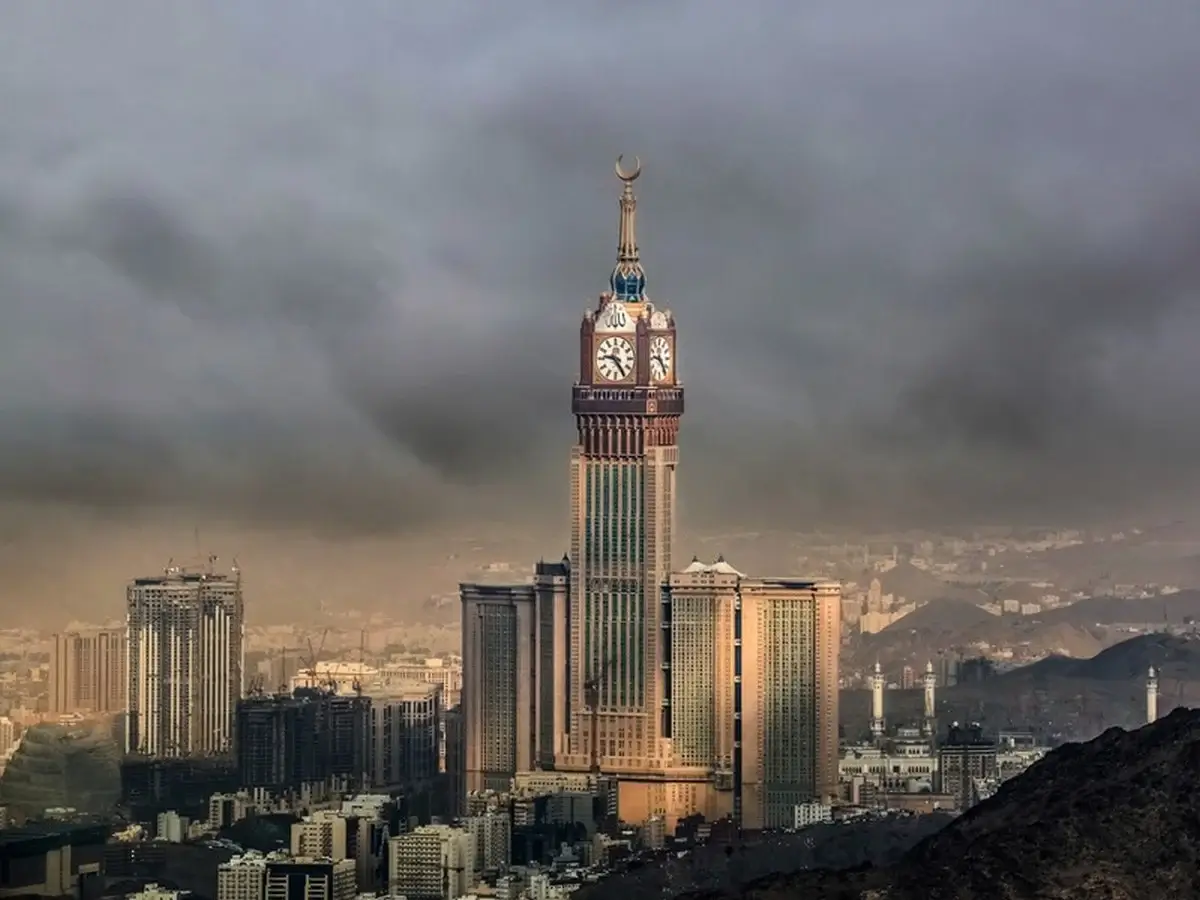
Makkah’s skyline west of the Grand Mosque has changed dramatically over the past few years. At the center of that change is Masar Destination – a large-scale urban development built around King Abdul Aziz Road (KAAR) and its signature pedestrian boulevard, connecting new hotel towers, retail centers, and public plazas directly to the courtyards of Masjid al-Haram.
For pilgrims and visitors planning a trip to Makkah in 2026, Masar is increasingly part of the itinerary — whether because their hotel sits along the boulevard, they want to explore the new retail and dining options, or they simply want to see how modern Makkah is expanding around its holiest site. This guide explains what Masar Destination actually is, how to visit the boulevard on foot or by vehicle, and — because Masar sits close to several historic Ziyarat sites — how to combine your visit with a private taxi tour of Makkah’s Islamic landmarks.
What Is Masar Destination?
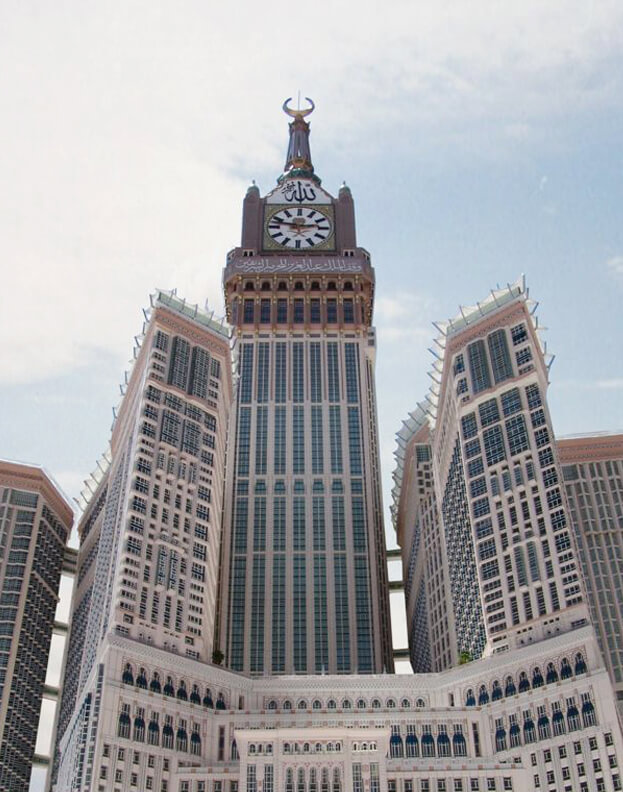
Masar Destination is a model urban development project led by Umm Al-Qura for Development and Construction, built around King Abdul Aziz Road, which forms the project’s core. Masar establishes an integrated development infrastructure built on comprehensive mobility, designed to serve Makkah’s residents, visitors, and pilgrims and make it easier for them to reach the Grand Mosque.
The project sits in the western part of Makkah. It runs along King Abdul Aziz Road toward the Grand Mosque, starting at the Third Ring Road, crossing the First Ring Road at the western edge of Jabal Omar, and continuing to the outskirts of the Grand Mosque. In practical terms, this means Masar connects the outer districts of Makkah — where many hotels, apartments, and the Jeddah–Makkah highway corridor are located — directly to the Haram precinct on foot.
At the heart of the development is a dedicated pedestrian boulevard. The main corridor is a two-way road roughly 80 meters wide, with a 360-meter pedestrian boulevard running through it that leads pedestrians toward the Haram Al Sharif area from Makkah’s western entrance. Earlier project documentation describes the full corridor as roughly 3,650 meters long and 320 meters wide, linking the first, second, and third ring roads to Abdullah Arif and Mansour Roads.
Architecturally, the most recognizable section is the KAAR Gateway, a mixed-use complex marking the threshold between Masar and the Haram itself. This six-building complex sits at the boundary of Masjid al-Haram and the wider King Abdul Aziz Road development, and includes two five-star hotel towers, a luxury residential tower, a four-star hotel tower, two multi-story retail centers, and public plazas above a Bus Rapid Transit (BRT) station.
The scale of the project is significant. Masar spans roughly 1.25 million square meters of land, alongside the separate 141,000-square-meter footprint of King Abdullah Mosque at the center of the site. Construction has been phased over more than a decade, with infrastructure works targeted for completion around 2022, an initial development package due in 2024, and full build-out of the wider project extending toward 2038.
Why Masar Was Built
Masar is one of the flagship development projects intended to serve Makkah’s residents, visitors, and pilgrims, in line with Saudi Vision 2030’s goal of raising annual Umrah numbers to 30 million by 2030 while improving quality of life in the city. In short: as Umrah numbers grow every year, Makkah needed more walkable, well-organized infrastructure between the wider city and the Haram — and Masar is the answer.
Where Is Masar Destination Located?
Masar sits along King Abdul Aziz Road, on the western approach to the Grand Mosque, between Jabal Omar and the outer ring roads of the city. If you’re staying in the Ajyad, Jabal Omar, or Ibrahim Al Khalil hotel districts, you’re likely within a short taxi ride — sometimes even walking distance – of the boulevard’s eastern end.
For pilgrims arriving from Jeddah, King Abdulaziz International Airport, or hotels further out along the Jeddah–Makkah highway, Masar functions as a formal gateway corridor into the holy city, which is one reason the temporary opening of King Abdulaziz Road in 2023 was treated as a major civic event. Deputy Emir of Makkah Prince Badr bin Sultan inaugurated a temporary section of King Abdulaziz Road, opened for buses and hotel guests in the Central Haram area while the rest of Masar’s infrastructure work continued, with the road stretching 3.65 kilometers and 40 meters wide in each direction. Alongside it, a First Ring Road project connecting Jabal Al-Kaaba Road, Prince Mohammed bin Salman Road, Masar Destination, the Jabal Omar hotels, Ajyad Street, and the King Abdulaziz Endowment towers was also opened.
Practical distance to the Haram: Earlier planning documents placed the development roughly 550 meters from the courtyards of the Holy Mosque, underlining how tightly Masar is integrated with the Haram precinct rather than being a separate district.
What You’ll Find Along the Boulevard
Visitors exploring Masar today can expect a mix of:
- Retail and shopping centers – multi-story malls forming part of the KAAR Gateway complex
- Hotel towers – including new five-star and four-star properties within walking distance of the Haram
- Public plazas – open spaces designed for pedestrians moving between transport hubs and the mosque
- A car-free pedestrian boulevard – separated from vehicle traffic, running through the center of the corridor
- Transit connections – the boulevard is planned around a Bus Rapid Transit (BRT) station and future metro links
Because the site is still being built out in phases through the late 2030s, the exact mix of open shops, hotels, and public spaces will keep expanding year over year. If a specific mall, hotel tower, or attraction you’ve read about isn’t open yet, it’s worth checking current status before your trip — and this is one area where a local driver who works these routes daily can save you a wasted trip.
How to Visit Masar Destination Boulevard
On Foot
If your hotel sits within the Masar or Jabal Omar district, walking the boulevard is often the most pleasant option — it’s a dedicated pedestrian corridor, shielded from vehicle traffic, and leads naturally toward the Haram plazas. Wear comfortable shoes, carry water, and plan around prayer times, since foot traffic increases sharply in the hour before each prayer.
By Public Transport
The corridor is designed around Bus Rapid Transit access and, longer term, metro connectivity. Public transport is a reasonable option if you’re staying further out and don’t mind navigating shared routes and schedules, though it can be slow and crowded during peak Umrah season and Ramadan.
By Private Taxi (Recommended for Most Visitors)
For pilgrims arriving with luggage, traveling as a family, visiting with elderly relatives, or simply short on time between prayers, a private Makkah taxi is the most flexible way to reach Masar and move on to other parts of the city afterward. A private driver can:
- Pick you up directly from your hotel, whether inside Makkah or in Jeddah
- Drop you at the most convenient entry point to the boulevard for your plans
- Wait or return at a set time while you shop, walk, or sightsee
- Continue on to Ziyarat sites the same day, without you needing to arrange separate transport
This is where Makkah Ziyarat Taxi fits naturally into a Masar visit. Rather than treating the boulevard as an isolated stop, most pilgrims combine it with a broader half-day or full-day Ziyarat tour — and a private vehicle makes that possible without the back-and-forth of arranging multiple rides.
Combining Masar with Makkah’s Historic Ziyarat Sites
One of the most practical reasons to book a private taxi rather than walk or rely on public transport is that Masar sits close to — or on the route toward — several of Makkah’s most visited Islamic historical sites. A private driver familiar with these routes can link them into a single, comfortable trip.
Jabal al-Noor & the Cave of Hira
Jabal al-Noor, home to the Cave of Hira where the Prophet Muhammad (peace be upon him) received the first revelation, is one of the most spiritually significant stops for Umrah pilgrims. The climb itself is steep and takes most visitors 60–90 minutes round trip, so an early morning or late afternoon visit – avoiding midday heat — is strongly recommended. A Cave of Hira taxi or Jabal al-Noor taxi booked in advance means your driver can wait at the base while you climb, rather than you needing to find return transport afterward.
Cave of Thawr & Jabal Thawr
Jabal Thawr and the Cave of Thawr, where the Prophet and Abu Bakr (may Allah be pleased with him) sheltered during the Hijrah, sit south of the Haram and involve an even more demanding climb than Jabal al-Noor. This site is best suited to visitors in good physical condition, and because of the terrain and distance, a Cave of Thawr taxi or Jabal Thawr taxi with a driver who knows the access points is far more practical than public transport.
Jannat al-Mu’alla
This historic cemetery, the resting place of many of the Prophet’s family members and early companions, is a quieter but deeply meaningful stop, usually visited briefly and respectfully rather than as a long stop. It fits easily into a multi-stop Ziyarat itinerary.
Masjid Aisha (Masjid at-Tan’eem)
Masjid Aisha is where many pilgrims — particularly those performing multiple Umrahs during their trip — enter Ihram before returning to the Haram. A Masjid Aisha taxi is one of the most frequently booked short trips in Makkah, since it’s a functional stop as much as a historical one.
Masjid Ji’ranah and Masjid Nimrah
Slightly further from the city center, Masjid Ji’ranah and Masjid Nimrah are less crowded but historically important sites, better suited to visitors who have set aside a half or full day for Ziyarat rather than a quick stop between prayers.
Mina, Arafat, Muzdalifah & Jamarat
For visitors traveling outside the Hajj period, these sites can still be visited for their historical and spiritual significance. A Mina taxi transfer, Arafat taxi transfer, or Muzdalifah taxi allows non-Hajj visitors to see these locations without the logistical complexity of Hajj-season crowd management, which is otherwise the biggest challenge at these sites.
Suggested Itinerary: Masar Boulevard + Ziyarat in One Day
A typical full-day private Ziyarat tour that includes Masar might look like this:
- Morning: Hotel pickup, early visit to Jabal al-Noor and the Cave of Hira before the heat sets in
- Late morning: Masjid Aisha for Ihram (if performing an additional Umrah)
- Midday: Return to the Haram area for prayer, then a walk along the Masar boulevard and lunch at one of the retail centers
- Afternoon: Jannat al-Mu’alla, followed by Jabal Thawr for visitors able to make the climb
- Evening: Drop-off back at the hotel ahead of Maghrib prayer
Because this route mixes long waits (climbs), short functional stops (Masjid Aisha), and a leisure stop (Masar), it works far better with a private group taxi or family taxi that stays with you throughout the day than with separate rides booked stop by stop.
Choosing the Right Vehicle
The right vehicle depends mainly on group size and how much walking/climbing is planned:
- Sedan (e.g., Toyota Camry): Ideal for couples or solo travelers doing a focused Masar-plus-one-site trip
- Family Van (e.g., Hyundai Staria, Toyota Hiace): Best for families or small groups doing a full-day multi-stop Ziyarat tour
- SUV (e.g., GMC Yukon): A more comfortable option for elderly travelers or those wanting extra space and a smoother ride on longer transfers
- Coaster/Bus: Suited to larger groups traveling together for Hajj-season transfers or full Ziyarat tours
Makkah Ziyarat Taxi operates a fleet that spans all of these categories — from sedans and Staria vans to SUVs, Coasters, and buses — so the vehicle can be matched to your group size and itinerary rather than the other way around.
Travel Tips for Visiting Masar and Nearby Ziyarat Sites
- Time it around prayers. Both the boulevard and nearby sites get significantly busier in the hour before each prayer; early morning and mid-afternoon tend to be calmer.
- Dress modestly and comfortably. You’ll be walking on the boulevard and possibly climbing at Jabal al-Noor or Jabal Thawr, so breathable clothing and sturdy shoes matter more than formal wear.
- Carry water and sun protection. Makkah’s climate is hot for most of the year, and the climbs to Hira and Thawr caves have limited shade.
- Plan around Ramadan and peak Umrah season. Foot and vehicle traffic around Masar and the Haram increase substantially during Ramadan and the months leading into Hajj — booking a private driver in advance is more important during these periods than at other times of year.
- Consider accessibility needs early. If anyone in your group has mobility limitations, mention this when booking — climbs like Jabal al-Noor and Jabal Thawr are not wheelchair accessible, but Masar’s boulevard and most historic mosques are far easier to navigate, and a driver can plan drop-off points accordingly.
- Photography is generally welcome along the boulevard and at most historic sites, though visitors should always be mindful and respectful near active prayer areas and burial grounds like Jannat al-Mu’alla.
Why Book a Private Taxi for Masar and Ziyarat Instead of Going Alone
Public transport and walking both work for a single, simple trip to the boulevard. Where a private taxi becomes genuinely useful is when your day involves more than one stop, a group with mixed needs (elderly relatives, young children, differing energy levels), or timing that has to work around five daily prayers.
Makkah Ziyarat Taxi was set up specifically around this kind of itinerary — private Makkah Ziyarat transportation for Umrah pilgrims, Hajj pilgrims, families, tourists, and visitors, with professional drivers who know the current road layout around Masar and King Abdul Aziz Road, including any temporary detours while construction continues in parts of the corridor. Services include:
- Hotel pickup and drop-off, in Makkah or from Jeddah
- Door-to-door Ziyarat tours covering Jabal al-Noor, Jabal Thawr, Jannat al-Mu’alla, Masjid Aisha, Masjid Ji’ranah, and Masjid Nimrah
- Half-day and full-day tour packages that can include a stop at Masar Destination
- Private family and group vehicles, up to full bus transfers for larger parties
- Flexible, multi-stop routing built around your prayer schedule rather than a fixed bus timetable
If you’d like help planning a route that includes Masar Destination alongside the Ziyarat sites that matter most to you, you can reach the team directly on WhatsApp: +966 57 4915 372, or book through makkahziyarat.taxi.
FAQs
What is Masar Destination in Makkah?
Masar Destination is a large urban development built around King Abdul Aziz Road (KAAR), connecting the western districts of Makkah to the Grand Mosque via a dedicated pedestrian boulevard, new hotels, retail centers, and public plazas.
How far is Masar Destination from the Grand Mosque (Masjid al-Haram)?
Planning documents place the development roughly 550 meters from the courtyards of the Holy Mosque, making it one of the closest major developments to the Haram itself.
Can I walk from Masar Destination to Masjid al-Haram?
Yes. The boulevard is a dedicated pedestrian corridor designed specifically to lead visitors on foot from the western entrance of Makkah toward the Haram plazas.
Is Masar Destination fully open to visitors?
Parts of the development, including sections of King Abdul Aziz Road, hotel towers, and retail centers, have opened in phases, while the full build-out is expected to continue for years. It’s worth confirming current access with a local driver or your hotel before visiting a specific facility.
What’s the best time to visit the Masar boulevard?
Early morning or mid-afternoon, outside the hour before each prayer, tends to be less crowded than the periods immediately surrounding Maghrib and Isha.
Can I combine a Masar visit with other Ziyarat sites in one trip?
Yes, and it’s one of the most common ways visitors use the corridor — pairing a walk along the boulevard with stops at Jabal al-Noor, Jannat al-Mu’alla, or Masjid Aisha in the same day, typically arranged through a private taxi.
How do I get to the Cave of Hira and Jabal al-Noor from Masar?
A private taxi is the most practical option, since the site requires a drop-off at the base of the mountain followed by a 60–90 minute round-trip climb; public transport options are limited in that specific area.
Is Jabal al-Noor suitable for elderly visitors or those with mobility issues?
The climb is steep and physically demanding, and it is generally not recommended for visitors with limited mobility. A driver can still take the group to view the mountain and wait while others climb.
What vehicle should I book for a family Ziyarat tour that includes Masar?
A family van such as a Hyundai Staria or Toyota Hiace comfortably fits most families for a full-day, multi-stop tour, while an SUV or sedan suits smaller groups.
Do I need to book Ziyarat transportation in advance during Ramadan or Hajj season?
Yes – demand for private drivers rises sharply during Ramadan and the months leading up to Hajj, so booking ahead through WhatsApp or the website is strongly recommended during these periods.
Are Ziyarat taxi services available for both Umrah and Hajj pilgrims?
Yes, private Ziyarat transport, including transfers to Mina, Arafat, Muzdalifah, and Jamarat, is available for both Umrah and Hajj travelers, with routing adjusted for Hajj-season crowd management.
How much does a private Ziyarat taxi cost in Makkah?
Pricing depends on the vehicle type, number of stops, and whether it’s a half-day or full-day tour; the most accurate way to get a quote is to message the current itinerary details directly via WhatsApp.
Can a private driver pick me up from Jeddah and include Masar on the way to Makkah?
Yes – many visitors arriving via Jeddah combine their airport or hotel transfer with a stop at Masar Destination before continuing on to their Makkah hotel or Ziyarat sites.
Is photography allowed at Masar Destination and the nearby Ziyarat sites?
Generally yes at the boulevard and most historic mosques, though visitors should be respectful and avoid photographing others without consent, particularly near active prayer areas and at Jannat al-Mu’alla.
What should I wear when visiting Masar and the Ziyarat sites?
Modest, breathable clothing and comfortable walking shoes are recommended, especially if your itinerary includes the boulevard plus a climb to Jabal al-Noor or Jabal Thawr.