
Clock Tower Museum Guide: Everything You Need to Know Before You Visit
If you’ve stood in the courtyard of the Grand Mosque and looked up at the massive illuminated clock face towering above it, you’ve already seen the outside of one of Makkah’s most unusual landmarks. The Clock Tower Museum, tucked inside the upper floors of the Abraj Al-Bait complex, lets visitors step behind that clock face, learn how it works, and look down on the Kaaba from roughly 480 meters in the air.
This guide covers everything a pilgrim or visitor needs before heading up: what the museum actually contains, current ticket types, opening hours, who is allowed to enter, and the most practical way to reach it from your hotel — including when it makes sense to arrange a private Ziyarat taxi instead of relying on the metro or walking through crowded plazas with elderly family members.
What Is the Clock Tower Museum?
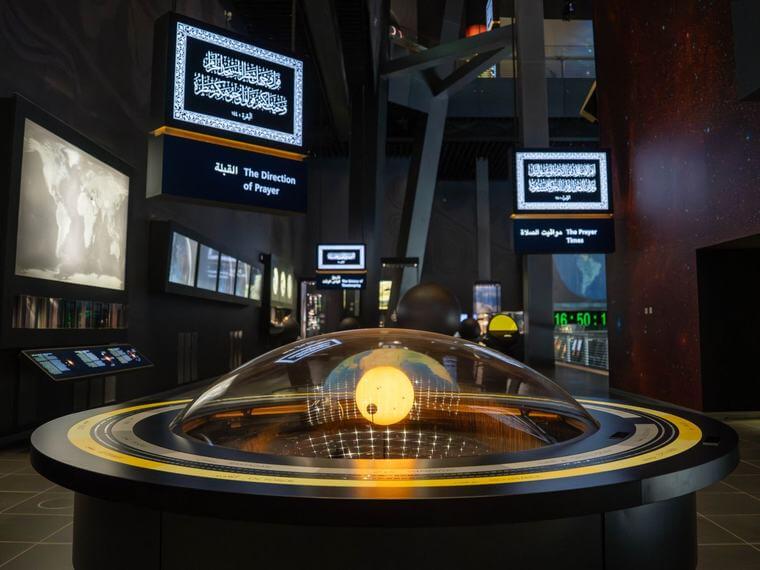
The Clock Tower Museum is an exhibition space housed behind the world’s largest clock face, on the upper levels of the Makkah Royal Clock Tower — the tallest of the Abraj Al-Bait towers overlooking Masjid al-Haram. Rather than being a single room, the museum occupies four floors near the top of the tower and blends interactive science exhibits with an observation terrace.
Its central theme is timekeeping: how Islamic astronomers historically calculated prayer times, how the modern clock mechanism operates, and how the tower itself was designed and built. The visit typically ends on a glass-walled balcony that offers what is widely considered the closest elevated view of the Kaaba and the Grand Mosque available anywhere in Makkah.
History and Religious Significance

The Abraj Al-Bait complex, completed in the early 2010s, was built as part of Saudi Arabia’s broader expansion of facilities around Masjid al-Haram to accommodate growing numbers of Umrah and Hajj pilgrims each year. The clock tower itself was designed with the call to prayer and Islamic lunar calendar in mind, and its four clock faces are visible from several kilometers away, helping pilgrims across the city orient themselves toward the Haram.
While the museum itself is a modern addition rather than a historic religious site, it sits directly above the holiest place in Islam, and many visitors treat the trip up as a moment of reflection — a rare vantage point to see the scale of the Grand Mosque and the tawaf circle from above.
What You’ll See Inside
The exhibition floors are arranged as a walking route rather than a static display, and typically include:
- Astronomy and timekeeping galleries explaining how early Muslim scholars tracked the sun, moon, and stars to determine prayer times and the start of Ramadan and Hajj.
- Models and calligraphy displays showing the architectural history of Masjid al-Haram and how it has expanded over the centuries.
- The clock mechanism itself, with information on how the tower’s four giant clock faces are illuminated and synchronized.
- Interactive digital installations, including large projected displays used to explain scientific concepts to visitors of different ages.
- The observation terrace, the highlight for most visitors, with telescopes positioned to look directly down at the Kaaba and the surrounding mataf area.
Most tickets include a digital guide or short narrated tour that walks you through each section in sequence, so you don’t need prior knowledge of astronomy or architecture to get value from the visit.
Location and How Close It Is to the Grand Mosque
The museum entrance is on King Abdul Aziz Road, at the base of the Clock Tower, directly connected to the Abraj Al-Bait complex that sits immediately beside Masjid al-Haram. In practical terms, this is one of the shortest possible distances between a hotel-adjacent attraction and the Grand Mosque itself — many pilgrims staying in the towers can walk to both the mosque and the museum entrance in a matter of minutes.
Once inside, visitors take dedicated elevators up to around the 47th floor, where the museum and balcony levels begin, roughly 480 meters above street level.
Opening Hours
Under normal (non-Ramadan) conditions, the museum generally operates:
- Saturday to Thursday: 9:00 AM – 11:00 PM
- Friday: 2:00 PM – 11:00 PM
During Ramadan, hours typically shift to accommodate prayer and iftar schedules, often running in two blocks (for example, a midday-to-afternoon window and a late-evening-to-early-morning window). Because hours can change around Ramadan, Hajj season, and public holidays, it’s worth confirming the current schedule on the day of your visit, either at your hotel or through your driver if you’re arranging transport locally.
Ticket Types and What Each One Includes
Most operators sell three tiers of access, and it helps to know the difference before you book:
Balcony-Only Access — A shorter visit (around 20 minutes) that skips the museum exhibits and goes straight to the observation terrace with telescope access. This suits visitors who mainly want the view and have limited time between prayers.
Museum + Balcony — The standard option (roughly 45–60 minutes), covering the full exhibition floors plus terrace access and a digital guide. This is the most popular choice for first-time visitors who want the complete experience.
VIP Access — A longer, fast-tracked option that includes priority entry (skipping general queues), a VIP lounge, and sometimes a private guide alongside terrace access. Useful during peak Umrah season when queues can be long.
Ticket prices vary by season, ticket reseller, and currency, so it’s best to check current pricing directly before your visit rather than relying on older published figures. Tickets are usually issued digitally and can be shown on a phone at the entrance.
Who Can Visit (Entry Rules)
A few practical rules apply to everyone visiting the Clock Tower Museum:
- Access to the museum and the upper floors is restricted to Muslim visitors, in line with the entry rules for the wider Masjid al-Haram area.
- Large bags, food, and drinks are generally not permitted inside the exhibition and viewing areas.
- The balcony is enclosed with glass barriers for safety, and the observation deck is wheelchair accessible, which is worth knowing if you’re traveling with elderly relatives.
If you’re unsure whether your itinerary qualifies for entry, it’s worth checking directly with the ticket provider before arriving, especially if you’re combining the visit with other tourism plans in Makkah.
Best Time to Visit
Early morning (shortly after opening) and late evening tend to be the quietest windows, with shorter queues at the elevators. Sunset is a particularly popular time for the balcony, since the Haram is lit up and the crowds below are easier to appreciate from height — but this also means it’s the busiest slot, so expect to wait longer if you go right before Maghrib.
During peak Umrah months and the weeks leading up to Hajj, all time slots see heavier footfall. If your schedule is flexible, visiting between Fajr and Dhuhr generally offers the calmest experience.
How to Get There: Metro, Walking, or Private Taxi
If you’re staying in one of the Abraj Al-Bait towers or a nearby hotel, walking to the Clock Tower entrance is usually the simplest option. For visitors staying further out, or traveling with family, luggage, or elderly relatives, getting to the base of the tower through Makkah’s dense pedestrian zones and prayer-time crowds can be more tiring than expected.
This is where a private Makkah Ziyarat taxi makes a real difference. Rather than navigating crowded walkways or timing a visit around public transport schedules, a private driver can pick you up directly from your hotel, drop you at the Clock Tower entrance, and wait or arrange a return pickup once your visit is finished — particularly useful if you’re combining the museum with other stops in the same afternoon.
Travelers booking through Makkah Ziyarat Taxi can arrange hotel pickup and drop-off in a private vehicle, avoiding the need to plan around fixed transport schedules. This is especially helpful during Ramadan and Hajj season, when foot traffic around the Haram area is at its heaviest.
Visiting With Family, Elderly Relatives, or Large Groups
The Clock Tower Museum involves a reasonable amount of walking between exhibition floors, plus elevator waits, so families traveling with young children or elderly parents often find it easier to plan the visit around a private door-to-door transfer rather than public transport. A private family taxi or larger vehicle removes the guesswork of parking, walking distance, and timing your return around prayer calls.
For bigger travel groups, a private group taxi with a larger vehicle — such as a Hyundai Staria, Toyota Hiace, or a small coaster — keeps everyone together for the trip to and from the tower, rather than splitting into separate taxis or relying on ride-hailing apps during peak hours when demand around the Haram area is highest.
Photography and Etiquette Inside the Museum
Photography is generally allowed in designated areas, including the observation balcony, but visitors should avoid photographing other guests without permission and follow any posted signage restricting photography in specific exhibition rooms. As with any site adjacent to Masjid al-Haram, it’s respectful to keep noise levels down, especially near prayer times, and to be mindful of other visitors trying to capture the view.
Combining the Clock Tower With Other Makkah Ziyarat Sites
Many pilgrims treat the Clock Tower Museum as one stop within a broader day of Ziyarat, since Makkah is home to several historically significant sites beyond the Grand Mosque itself. Depending on your schedule and physical stamina, a single day could realistically include:
- The Cave of Hira on Jabal al-Noor, where the first revelation is believed to have taken place
- The Cave of Thawr on Jabal Thawr, associated with the Prophet’s migration to Madinah
- Jannat al-Mu’alla, the historic cemetery in Makkah
- Masjid Aisha, a common starting point for Umrah pilgrims entering ihram
- Masjid Ji’ranah, another significant miqat site
These locations are spread across different parts of the city and involve varying amounts of walking or hiking, particularly the caves. Rather than arranging separate transport for each stop, many visitors find it more practical to book a half-day or full-day private Ziyarat tour, which allows flexible, multi-stop routing at your own pace, with the driver waiting between visits.
Makkah Ziyarat Taxi offers exactly this kind of door-to-door Ziyarat tour, covering the Clock Tower area alongside the historical Islamic sites above, in a private vehicle suited to your group size — from a standard sedan for couples to a larger van for extended families.
Practical Tips for Umrah and Hajj Travelers
- Time it around your Umrah rites. If you’re visiting the Clock Tower on the same day as performing Umrah, plan the museum visit either before entering ihram or well after completing your rites, so you’re not rushed.
- Check the weather. Makkah’s climate is hot for much of the year, so early morning or evening visits are more comfortable, particularly if you’re also walking to and from the Grand Mosque.
- Confirm hours in advance during Ramadan and Hajj. Operating hours shift seasonally, and queues lengthen significantly during peak pilgrimage periods.
- Keep prayer times in mind. The museum sits directly above the Haram, and elevators can be busier immediately before and after each prayer.
- Arrange transport in advance if traveling with elderly family members. Booking a private taxi ahead of time avoids waiting for transport once your visit ends, particularly late at night.
Ready to Visit? Book Your Private Transfer
If you’re planning a trip to the Clock Tower Museum and want a stress-free way to get there — with hotel pickup, flexible timing, and the option to combine it with other Ziyarat sites — you can contact Makkah Ziyarat Taxi directly on WhatsApp at +966 57 4915 372, or book through https://makkahziyarat.taxi. Whether it’s a quick round trip to the tower or a full day covering Jabal al-Noor, Jabal Thawr, and other historical landmarks, a private driver keeps the day comfortable, flexible, and on your schedule.
FAQs
1. What is the Clock Tower Museum in Makkah?
It’s an exhibition space inside the Makkah Royal Clock Tower, part of the Abraj Al-Bait complex, covering the history of Islamic timekeeping and astronomy, with an observation balcony overlooking the Kaaba.
2. How high up is the Clock Tower Museum?
The museum and balcony levels sit roughly 480 meters above the Grand Mosque, near the top of the tower.
3. What are the Clock Tower Museum’s opening hours?
Typically 9:00 AM–11:00 PM Saturday through Thursday, and 2:00 PM–11:00 PM on Fridays, with adjusted hours during Ramadan. It’s best to confirm hours on the day of your visit since they can change seasonally.
4. How much does it cost to visit the Clock Tower Museum?
Pricing varies by ticket type (balcony-only, museum plus balcony, or VIP) and by season, so it’s best to check current prices with a ticket provider before your visit rather than relying on older figures.
5. Can non-Muslims visit the Clock Tower Museum?
Access to the museum and upper floors is generally restricted to Muslim visitors, consistent with entry rules for the surrounding Masjid al-Haram area.
6. Is the Clock Tower Museum wheelchair accessible?
The observation deck is wheelchair accessible, which makes it a reasonably manageable stop for visitors traveling with elderly or mobility-limited family members.
7. How long does a visit to the Clock Tower Museum take?
Balcony-only visits run around 20 minutes, while the standard museum-plus-balcony ticket takes roughly 45–60 minutes. VIP packages allow more time, often around two hours.
8. What’s the best time to visit for fewer crowds?
Early morning shortly after opening, or late evening, tend to be quieter. Sunset is popular for the view but also the busiest window.
9. Can I take photos inside the museum?
Photography is generally permitted in designated areas, including the balcony, though some exhibition rooms may have restrictions — follow posted signage.
10. How far is the Clock Tower Museum from the Grand Mosque?
The entrance sits directly beside Masjid al-Haram within the Abraj Al-Bait complex, making it one of the closest attractions to the mosque itself.
11. What should I bring – or avoid bringing?
Large bags, food, and drinks are typically not allowed inside the exhibition and viewing areas, so it’s best to travel light.
12. Can I combine the Clock Tower with other Ziyarat sites in one day?
Yes – many visitors pair it with sites like the Cave of Hira, Jabal Thawr, or Jannat al-Mu’alla as part of a half-day or full-day private Ziyarat tour with flexible, multi-stop routing.
13. What’s the easiest way to get to the Clock Tower Museum from my hotel?
Walking is straightforward if you’re staying in or near the Abraj Al-Bait towers. For visitors further away or traveling with family, a private Ziyarat taxi with hotel pickup avoids crowded walkways and lets you set your own schedule.
14. Is the Clock Tower Museum suitable for children?
Yes, the interactive digital displays and large-scale models tend to appeal to children, though the elevator queues and walking between floors are worth factoring into timing with young kids.
15. Do I need to book museum tickets in advance?
Booking ahead is recommended, especially during Ramadan, Hajj season, and around sunset, when demand for balcony access is highest.