Umrah Duas for Every Step: The Complete Guide in Arabic, English & Urdu
Umrah is a journey of the heart as much as it is a journey of the body. From the moment a pilgrim enters the state of Ihram to the final moments of Tawaf and Sa’i, every step of Umrah has a corresponding dua (supplication) that connects the pilgrim to Allah. Knowing these duas – and understanding their meaning – transforms Umrah from a set of physical rituals into a deeply personal spiritual experience.
This guide walks you through every dua for every stage of Umrah, presented in Arabic, English transliteration, and Urdu translation, along with practical guidance on where and when to recite each one. Whether you are performing Umrah for the first time or returning for the tenth, this guide is designed to be your step-by-step companion – one you can save, print, or keep open on your phone throughout your journey.
We have also included a section on visiting Makkah’s Islamic historical sites (Ziyarat) after Umrah, since many pilgrims choose to combine their spiritual journey with visits to Cave of Hira, Jabal al-Noor, Cave of Thawr, and other landmarks connected to the Prophet Muhammad ﷺ.
Note on authenticity: The duas below are drawn from the Qur’an and authentic Sunnah as commonly taught by Umrah guides and scholars. Pronunciation and translation can vary slightly between schools of thought, so we recommend cross-checking with your group leader, a trusted scholar, or an official Umrah guidebook before your trip.
1. Why Duas Matter During Umrah

Umrah is often described as a “lesser pilgrimage,” yet spiritually it carries immense weight. Every movement — putting on the Ihram, circling the Kaaba, walking between Safa and Marwah — is paired with words of remembrance (dhikr) and supplication (dua). These duas are not rigid scripts; they are moments where a pilgrim speaks directly to Allah, asking for forgiveness, guidance, and blessings for themselves and their loved ones.
Reciting the correct dua at the correct step also helps pilgrims stay mentally present during the rituals, rather than rushing through them. For first-time visitors, having duas available in Arabic (for accuracy), transliteration (for pronunciation), and Urdu or English translation (for understanding) makes the entire experience more meaningful.
2. Dua Before Traveling for Umrah

Before setting out on the journey, it is Sunnah to recite the traveler’s dua, asking Allah for a safe and blessed trip.
Arabic: اللَّهُمَّ إِنَّا نَسْأَلُكَ فِي سَفَرِنَا هَذَا الْبِرَّ وَالتَّقْوَى، وَمِنَ الْعَمَلِ مَا تَرْضَى
Transliteration: Allahumma inna nas’aluka fi safarina hadhal-birra wat-taqwa, wa minal-‘amali ma tarda.
English meaning: “O Allah, we ask You on this journey of ours for righteousness, piety, and deeds that please You.”
Urdu: اے اللہ، ہم اپنے اس سفر میں تجھ سے نیکی، تقویٰ اور ایسے عمل کا سوال کرتے ہیں جو تجھے پسند ہوں۔
This dua is typically recited once you are settled in your vehicle or seat, whether you’re flying into Jeddah, arriving through Madinah first, or being driven directly to Makkah.
3. Dua for Entering Ihram

Before crossing the Miqat (the designated boundary), pilgrims perform ghusl, wear the Ihram garments, and make the intention (niyyah) for Umrah.
Niyyah for Umrah (Arabic): اللَّهُمَّ إِنِّي أُرِيدُ الْعُمْرَةَ فَيَسِّرْهَا لِي وَتَقَبَّلْهَا مِنِّي
Transliteration: Allahumma inni uridul-‘umrata fa yassirha li wa taqabbalha minni.
English meaning: “O Allah, I intend to perform Umrah, so make it easy for me and accept it from me.”
Urdu: اے اللہ، میں عمرہ کا ارادہ رکھتا ہوں، اسے میرے لیے آسان فرما اور مجھ سے قبول فرما۔
After making this intention, the pilgrim enters the state of Ihram, and specific restrictions (no cutting hair or nails, no perfume, no marital relations, etc.) come into effect.
4. Talbiyah — The Umrah Dua You’ll Recite Most
The Talbiyah is the signature dua of Umrah. It is recited repeatedly from the moment of entering Ihram until the start of Tawaf, especially while traveling toward Masjid al-Haram.
Arabic: لَبَّيْكَ اللَّهُمَّ لَبَّيْكَ، لَبَّيْكَ لَا شَرِيكَ لَكَ لَبَّيْكَ، إِنَّ الْحَمْدَ وَالنِّعْمَةَ لَكَ وَالْمُلْكَ، لَا شَرِيكَ لَكَ
Transliteration: Labbayk Allahumma labbayk, labbayka la shareeka laka labbayk, innal-hamda wan-ni’mata laka wal-mulk, la shareeka lak.
English meaning: “Here I am, O Allah, here I am. Here I am, You have no partner, here I am. Verily all praise, grace, and sovereignty belong to You. You have no partner.”
Urdu: حاضر ہوں، اے اللہ، میں حاضر ہوں۔ حاضر ہوں، تیرا کوئی شریک نہیں، میں حاضر ہوں۔ بے شک تمام تعریف، نعمت اور بادشاہت تیرے ہی لیے ہے، تیرا کوئی شریک نہیں۔
Many pilgrims recite this loudly during the drive from the airport or hotel toward the Haram — this is a beautiful moment shared by pilgrims from all over the world, often heard echoing through taxis and buses across Makkah’s approach roads.
5. Dua for Entering Makkah
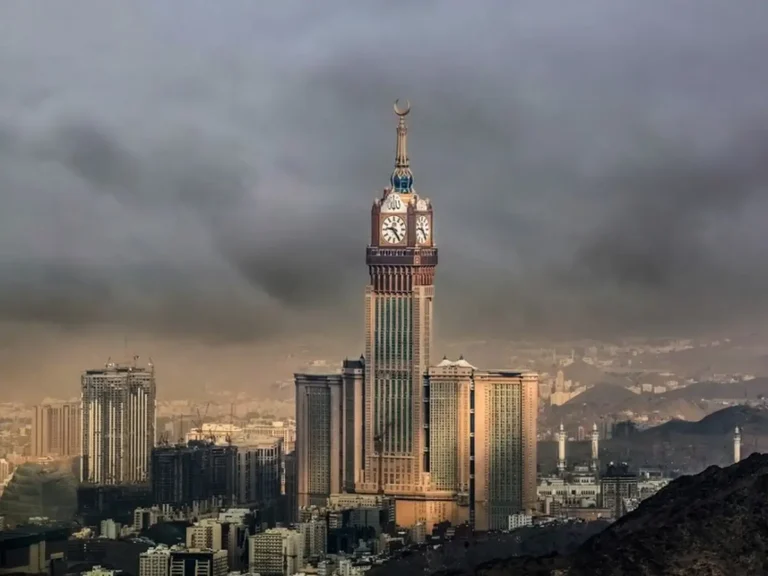
As the city of Makkah comes into view, it is recommended to praise Allah and ask for His mercy.
Arabic: اللَّهُمَّ هَذَا حَرَمُكَ وَأَمْنُكَ فَحَرِّمْنِي عَلَى النَّارِ
Transliteration: Allahumma hadha haramuka wa amnuka fa harrimni ‘alan-nar.
English meaning: “O Allah, this is Your sanctuary and Your sanctuary of safety, so protect me from the Fire.”
Urdu: اے اللہ، یہ تیرا حرم اور امن کی جگہ ہے، پس مجھے آگ سے بچا۔
6. Dua for Entering Masjid al-Haram
Entering any mosque calls for a specific dua, and Masjid al-Haram — the holiest site in Islam — carries even greater significance.
Arabic: بِسْمِ اللَّهِ، وَالصَّلَاةُ وَالسَّلَامُ عَلَى رَسُولِ اللَّهِ، اللَّهُمَّ افْتَحْ لِي أَبْوَابَ رَحْمَتِكَ
Transliteration: Bismillah, was-salatu was-salamu ‘ala Rasulillah, Allahumma-ftah li abwaba rahmatik.
English meaning: “In the name of Allah, and peace and blessings be upon the Messenger of Allah. O Allah, open the doors of Your mercy for me.”
Urdu: اللہ کے نام سے، اور اللہ کے رسول پر درود و سلام ہو۔ اے اللہ، میرے لیے اپنی رحمت کے دروازے کھول دے۔
It is Sunnah to enter with the right foot first, in a state of humility and focus.
7. Dua Upon Seeing the Kaaba
The first sight of the Kaaba is one of the most emotional moments of Umrah. There is no single fixed wording required at this moment — scholars note that pilgrims may raise their hands and make any sincere personal dua. Many recite the following:
Arabic: اللَّهُمَّ زِدْ هَذَا الْبَيْتَ تَشْرِيفًا وَتَعْظِيمًا وَتَكْرِيمًا وَمَهَابَةً، وَزِدْ مَنْ شَرَّفَهُ وَكَرَّمَهُ مِمَّنْ حَجَّهُ أَوِ اعْتَمَرَهُ تَشْرِيفًا وَتَكْرِيمًا وَتَعْظِيمًا وَبِرًّا
Transliteration: Allahumma zid hadhal-bayta tashrifan wa ta’ziman wa takriman wa mahabah, wa zid man sharrafahu wa karramahu mimman hajjahu awi-‘tamarahu tashrifan wa takriman wa ta’ziman wa birra.
English meaning: “O Allah, increase this House in honor, greatness, dignity, and awe, and increase those who honor and venerate it, from among those who perform Hajj or Umrah, in honor, dignity, and righteousness.”
Urdu: اے اللہ، اس گھر کی عزت، عظمت، تکریم اور ہیبت میں اضافہ فرما، اور جو لوگ اسے عزت دیتے ہیں، حج یا عمرہ کرنے والوں میں سے، ان کی عزت، تکریم اور نیکی میں اضافہ فرما۔
This is a moment for personal, heartfelt dua as well — many pilgrims simply cry, thank Allah, and ask for their deepest wishes to be granted.
8. Tawaf Duas (Step by Step)
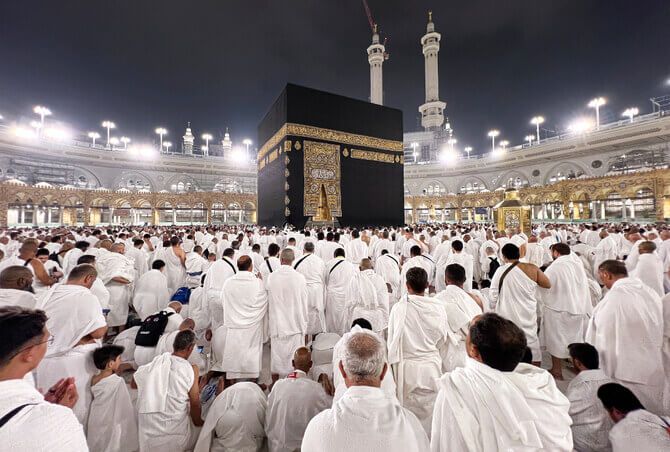
Tawaf is performed in seven counter-clockwise circuits around the Kaaba, starting and ending at the Black Stone (Hajar al-Aswad).
Starting Tawaf — At the Black Stone
Arabic: بِسْمِ اللَّهِ وَاللَّهُ أَكْبَرُ
Transliteration: Bismillahi wallahu akbar.
English meaning: “In the name of Allah, and Allah is the Greatest.”
Urdu: اللہ کے نام سے، اور اللہ سب سے بڑا ہے۔
If it is not possible to touch or kiss the Black Stone due to crowding, pilgrims simply point toward it while saying this phrase.
Between the Yemeni Corner (Rukn Yamani) and the Black Stone
This is the most well-known Tawaf dua, recited during each of the seven rounds between these two corners:
Arabic: رَبَّنَا آتِنَا فِي الدُّنْيَا حَسَنَةً وَفِي الْآخِرَةِ حَسَنَةً وَقِنَا عَذَابَ النَّارِ
Transliteration: Rabbana atina fid-dunya hasanatan wa fil-akhirati hasanatan wa qina ‘adhaban-nar.
English meaning: “Our Lord, give us good in this world and good in the Hereafter, and protect us from the punishment of the Fire.” (Qur’an 2:201)
Urdu: اے ہمارے رب، ہمیں دنیا میں بھلائی دے اور آخرت میں بھی بھلائی دے، اور ہمیں آگ کے عذاب سے بچا۔
General Tawaf Dhikr (For the Remaining Rounds)
Outside of the specific spots above, there is no single obligatory wording for the rest of Tawaf. Pilgrims are encouraged to recite the Qur’an, make personal dua, send blessings on the Prophet ﷺ (durood), and engage in dhikr such as:
- SubhanAllah (Glory be to Allah)
- Alhamdulillah (All praise is due to Allah)
- Allahu Akbar (Allah is the Greatest)
- La ilaha illallah (There is no god but Allah)
- Astaghfirullah (I seek forgiveness from Allah)
Many pilgrims use this time to make personal requests for their family, health, and forgiveness of sins in their own language and words — this personal, sincere dua is highly encouraged.
9. Dua at Maqam Ibrahim
After completing seven rounds of Tawaf, pilgrims move toward Maqam Ibrahim (the Station of Abraham) and recite:
Arabic: وَاتَّخِذُوا مِنْ مَقَامِ إِبْرَاهِيمَ مُصَلًّى
Transliteration: Wattakhidhu min maqami Ibrahima musalla.
English meaning: “And take the Station of Ibrahim as a place of prayer.” (Qur’an 2:125)
Urdu: اور مقامِ ابراہیم کو نماز کی جگہ بناؤ۔
Here, two rak’ahs of prayer (Sunnah of Tawaf) are offered, ideally behind Maqam Ibrahim, though anywhere in the mosque is acceptable if the area is crowded. Afterward, pilgrims often drink Zamzam water and make dua facing the Kaaba before heading to Safa for Sa’i.
10. Dua Before Sa’i Between Safa and Marwah
Before beginning Sa’i (walking between the hills of Safa and Marwah seven times), pilgrims recite the following verse upon approaching Safa:
Arabic: إِنَّ الصَّفَا وَالْمَرْوَةَ مِنْ شَعَائِرِ اللَّهِ
Transliteration: Innas-safa wal-marwata min sha’a’irillah.
English meaning: “Indeed, Safa and Marwah are among the symbols of Allah.” (Qur’an 2:158)
Urdu: بے شک صفا اور مروہ اللہ کی نشانیوں میں سے ہیں۔
At the Top of Safa (Facing the Kaaba)
Arabic: اللَّهُ أَكْبَرُ، اللَّهُ أَكْبَرُ، اللَّهُ أَكْبَرُ، لَا إِلَهَ إِلَّا اللَّهُ وَحْدَهُ لَا شَرِيكَ لَهُ، لَهُ الْمُلْكُ وَلَهُ الْحَمْدُ وَهُوَ عَلَى كُلِّ شَيْءٍ قَدِيرٌ
Transliteration: Allahu Akbar, Allahu Akbar, Allahu Akbar, la ilaha illallahu wahdahu la shareeka lah, lahul-mulku wa lahul-hamdu wa huwa ‘ala kulli shay’in qadir.
English meaning: “Allah is the Greatest, Allah is the Greatest, Allah is the Greatest. There is no god but Allah alone, with no partner. His is the dominion and His is the praise, and He is capable of all things.”
Urdu: اللہ سب سے بڑا ہے، اللہ سب سے بڑا ہے، اللہ سب سے بڑا ہے، اللہ کے سوا کوئی معبود نہیں، وہ اکیلا ہے، اس کا کوئی شریک نہیں، بادشاہی اسی کی ہے اور تعریف اسی کے لیے ہے، اور وہ ہر چیز پر قادر ہے۔
This is repeated three times at Safa, and again at Marwah, with personal dua recited between each repetition. Between the two green markers (for men), it is Sunnah to walk briskly (ramal); women walk at a normal pace throughout.
11. Dua for Halq or Taqsir (Completing Umrah)
The final ritual of Umrah is cutting or shaving the hair. Before or after this, pilgrims commonly recite dua asking Allah to accept their Umrah:
Arabic: اللَّهُمَّ اغْفِرْ لِلْمُحَلِّقِينَ وَالْمُقَصِّرِينَ
Transliteration: Allahummagh-fir lil-muhalliqina wal-muqassirin.
English meaning: “O Allah, forgive those who shave their heads and those who shorten their hair.”
Urdu: اے اللہ، سر منڈوانے والوں اور بال کتروانے والوں کو معاف فرما۔
Once the hair is cut, the restrictions of Ihram are lifted, and Umrah is considered complete. This is a moment for gratitude — many pilgrims pause to thank Allah for the opportunity to complete this journey safely.
12. Duas for Visiting Makkah’s Historical Sites
Many pilgrims extend their trip to visit the Islamic historical sites (Ziyarat) connected to the life of the Prophet Muhammad ﷺ. While these visits are not part of the Umrah rituals themselves, they hold deep spiritual and historical value, and pilgrims often reflect and make personal dua at each location.
Cave of Hira (Jabal al-Noor)
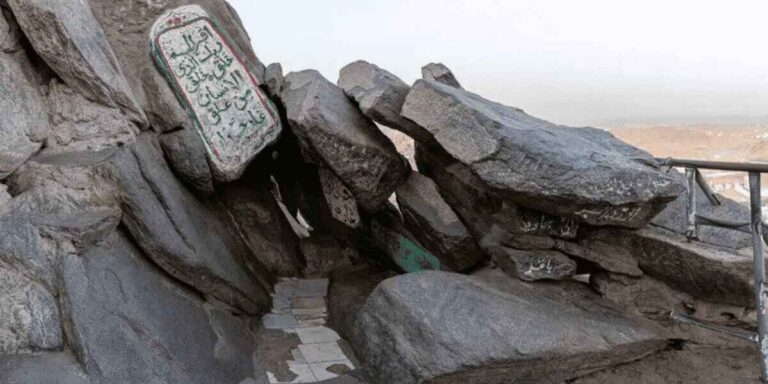
The cave where the Prophet ﷺ received the first revelation. Pilgrims often reflect on the verses of Surah Al-Alaq here and make dua for knowledge and guidance. The climb is steep (around 600–700 steps), so it is best suited to visitors in good physical condition, ideally in the cooler hours of early morning or after Asr.
Cave of Thawr (Jabal Thawr)
The cave where the Prophet ﷺ and Abu Bakr (RA) took refuge during the migration to Madinah. It is located south of Makkah and involves a challenging climb, so it is generally not recommended for elderly visitors or those with mobility limitations.
Jannat al-Mu’alla
The historic cemetery in Makkah where members of the Prophet’s family, including his first wife Khadijah (RA), are buried. Many pilgrims recite the dua for visiting graveyards here:
Arabic: السَّلَامُ عَلَيْكُمْ أَهْلَ الدِّيَارِ مِنَ الْمُؤْمِنِينَ وَالْمُسْلِمِينَ، وَإِنَّا إِنْ شَاءَ اللَّهُ بِكُمْ لَاحِقُونَ
Transliteration: As-salamu ‘alaykum ahlad-diyari minal-mu’minina wal-muslimin, wa inna in sha’Allahu bikum lahiqun.
English meaning: “Peace be upon you, O inhabitants of these graves, among the believers and Muslims, and we will, if Allah wills, join you.”
Urdu: تم پر سلامتی ہو، اے مومنین اور مسلمینِ اہلِ قبور، اور ہم بھی، اگر اللہ نے چاہا، تم سے جا ملیں گے۔
Masjid Ayesha (Masjid at-Tan’eem)
The most common Miqat for pilgrims already in Makkah who wish to perform an additional Umrah. Many visitors stop here to change into Ihram and make their niyyah before returning to Masjid al-Haram.
Masjid Ji’ranah, Masjid Nimrah, and Masjid Al-Khaif
These mosques are connected to key moments in Islamic history — from the Prophet’s ﷺ distribution of spoils after the Battle of Hunayn (Ji’ranah) to the sites near Mina and Arafat used during Hajj (Nimrah and Al-Khaif).
Visiting These Sites Comfortably
Because these historical sites are spread across Makkah — some over 20–30 minutes from the city center — most pilgrims find it far more convenient to book a private Makkah Ziyarat taxi rather than relying on public transport or walking long distances in the heat. A private driver allows you to visit multiple sites such as Cave of Hira, Cave of Thawr, and Jannat al-Mu’alla in a single flexible trip, at your own pace, with stops for prayer, rest, and photography.
Families traveling with elderly parents or young children, as well as groups wanting a private and unhurried experience, generally benefit from a dedicated vehicle rather than shared transport. You can arrange hotel pickup and drop-off, choose a half-day or full-day Ziyarat tour, and select a vehicle size suited to your group — from a comfortable sedan for a couple to a spacious van or SUV for a larger family. This kind of door-to-door service is exactly what Makkah Ziyarat Taxi was created to provide.
13. Printable Dua Cards — How to Use This Guide Offline
Mobile data can be unreliable inside Masjid al-Haram, especially during peak crowds. We recommend:
- Taking a screenshot of each dua section before you travel.
- Saving this page for offline reading in your browser.
- Printing the Arabic, transliteration, and translation of each dua as pocket-sized cards to carry with your Ihram or in your bag.
- Keeping a small printed booklet as a backup in case your phone battery runs low — a very common issue during long days at the Haram.
Many Umrah travel agencies distribute printed dua booklets; if yours does not, this guide can be printed directly from your browser (use “Print to PDF” from your device) to create your own personal Umrah dua card set.
14. Practical Tips for Reciting Duas During Umrah
- Understand before you memorize. Reading the English or Urdu meaning first helps the Arabic words carry more weight when you recite them.
- Don’t rush Tawaf or Sa’i. If you forget a specific dua at a specific spot, general dhikr (SubhanAllah, Alhamdulillah, Allahu Akbar) and personal dua are always acceptable.
- Recite in a low voice during Tawaf so as not to disturb pilgrims around you, especially in crowded periods like Ramadan or the days before Hajj.
- Keep a list of personal requests — many pilgrims write down what they want to ask Allah for before entering Ihram, so they don’t forget in the emotion of the moment.
- Stay hydrated and pace yourself, especially in Makkah’s heat. A tired body makes it harder to focus during dua.
- Plan your Ziyarat visits for early morning or after Asr, when temperatures are lower and the sites are less crowded — a private taxi service can help you time these visits efficiently around prayer schedules.
15. Getting Around Makkah for Ziyarat After Umrah
Once your Umrah is complete, many pilgrims spend an extra day or two visiting Makkah’s historical Islamic sites before continuing to Madinah, Jeddah, or Taif. Since these sites are scattered across the city and some involve uphill walking in the heat, transportation planning matters.
A private Ziyarat taxi offers several practical advantages over public transport or walking tours:
- Hotel pickup and drop-off, so you don’t need to arrange separate transport to a meeting point.
- Flexible multi-stop itineraries, letting you combine Cave of Hira, Jabal al-Noor, Cave of Thawr, Jannat al-Mu’alla, and other sites in one trip.
- Half-day or full-day tour options, depending on how many sites you want to cover and how much time you have before your next destination.
- Family and group-friendly vehicles, from sedans to larger vans and SUVs, suited to your party size and comfort needs.
- Air-conditioned, private vehicles, which matter significantly given Makkah’s climate, especially for elderly travelers or those with young children.
If you’re planning your Ziyarat itinerary, Makkah Ziyarat Taxi provides private transportation with professional drivers who know the routes, timing, and etiquette of each site. For bookings or help planning your route, you can reach the team directly on WhatsApp at +966 57 4915 372.
FAQs
1. What is the most important dua to know for Umrah?
The Talbiyah is considered the most essential, as it is recited repeatedly from the moment of entering Ihram until Tawaf begins. The Tawaf dua “Rabbana atina fid-dunya hasanah…” is a close second, recited during all seven rounds.
2. Do I have to recite duas in Arabic only?
No. While reciting the specific Qur’anic and Sunnah duas in Arabic carries particular reward, personal supplications can be made in any language, including English or Urdu. Understanding the meaning is more important than perfect pronunciation.
3. What if I forget a dua during Tawaf or Sa’i?
It’s completely fine. General dhikr such as SubhanAllah, Alhamdulillah, and Allahu Akbar can be recited at any point, along with personal dua in your own words.
4. Is there a specific dua for seeing the Kaaba for the first time?
There is no single obligatory wording; scholars note that pilgrims may recite the general dua of praise for the House of Allah or simply make sincere personal dua at that moment.
5. Can women recite duas aloud during Tawaf?
Yes, though it’s generally recommended to recite in a low voice, especially in crowded conditions, out of consideration for others performing Tawaf nearby.
6. What dua should I recite when entering Ihram?
The niyyah (intention) dua – “Allahumma inni uridul-‘umrata fa yassirha li wa taqabbalha minni” — is recited when making the intention for Umrah, typically at or before the Miqat.
7. Are the historical sites like Cave of Hira part of the Umrah rituals?
No, visiting sites such as Cave of Hira, Cave of Thawr, and Jannat al-Mu’alla is not part of the formal Umrah rituals. These are optional Ziyarat visits many pilgrims choose to make separately, before or after completing Umrah.
8. Is it possible to visit Cave of Hira and Cave of Thawr in one day?
It is possible but demanding, since both involve significant climbing and are located on opposite sides of Makkah. Many pilgrims prefer a private taxi to manage timing and rest stops between the two, especially if visiting both in a single day.
9. Are the historical sites elderly-friendly or wheelchair-accessible?
Jannat al-Mu’alla and Masjid Aisha are relatively accessible on flat ground. Cave of Hira and Cave of Thawr involve steep, uneven climbs and are generally not suitable for elderly visitors, young children, or wheelchair users.
10. How do I get from my hotel to these Ziyarat sites?
Most pilgrims arrange a private Ziyarat taxi with hotel pickup and drop-off, allowing for a flexible, multi-stop itinerary without the need to negotiate transport at each site separately.
11. What is the best time of day to recite Tawaf duas without crowds?
Early morning (after Fajr) and late night are generally less crowded, making it easier to focus on duas during Tawaf, especially outside of Ramadan and peak Umrah season.
12. Can I bring a printed dua booklet into Masjid al-Haram?
Yes, small printed booklets or cards are commonly carried by pilgrims and are a reliable backup when phone batteries run low or data connectivity is limited.
13. What dua is recited when cutting the hair to complete Umrah?
“Allahummagh-fir lil-muhalliqina wal-muqassirin” – a dua asking Allah’s forgiveness for those who shave or shorten their hair – is commonly recited around the completion of Umrah.
14. Do I need a guide to visit Makkah’s historical sites?
A guide is not required, but many visitors find a private driver familiar with the sites and their historical context helpful, particularly for understanding the significance of each location and managing timing around prayers.
15. Is Ramadan a good time to visit historical sites in Makkah?
Ramadan is an extremely busy period focused on worship at Masjid al-Haram, and daytime heat combined with fasting makes climbing sites like Jabal al-Noor more difficult. Many pilgrims prefer to schedule Ziyarat visits either before Ramadan or in the evening hours after Iftar.
Final Thoughts
Every step of Umrah — from the Talbiyah echoing through the streets of Makkah to the final moments of Halq at the end of Sa’i — is an opportunity to draw closer to Allah. Carrying these duas with you, understanding their meaning, and reciting them with sincerity is what transforms the physical rituals of Umrah into a lasting spiritual experience.
If your journey includes visiting Makkah’s Islamic historical landmarks — Cave of Hira, Jabal al-Noor, Cave of Thawr, Jannat al-Mu’alla, and beyond — planning your transportation in advance makes the experience far more comfortable, especially for families, elderly pilgrims, and groups. Makkah Ziyarat Taxi offers private, air-conditioned vehicles with hotel pickup and flexible multi-stop Ziyarat itineraries. For bookings or help planning your route, reach out on WhatsApp at +966 57 4915 372.
May your Umrah be accepted, and may your journey through Makkah’s sacred history be a meaningful one.