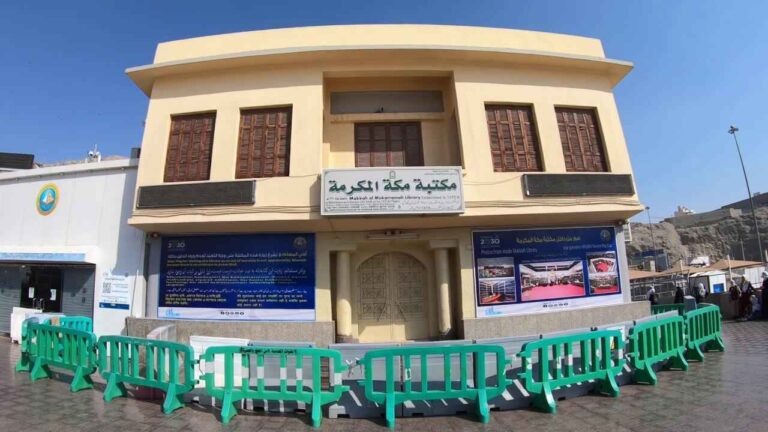
Al Hudaibiyyah Mosque Makkah Ziyarat Guide: History, Miqat Rules & Visiting Tips
Roughly 24 kilometers from the Masjid al-Haram, along the old Jeddah road, sits one of the most historically significant yet quietly visited sites in the Makkah region: Al Hudaibiyyah Mosque (also written as Masjid al-Hudaibiyah or Masjid al-Shumaisi). This is the ground where the Treaty of Hudaybiyyah was signed in 6 AH (628 CE) — an agreement the Qur’an itself describes as a “clear victory” (Fath Mubin) — and where the Companions pledged their famous oath, the Bay’at al-Ridwan, beneath a tree.
For Umrah and Hajj pilgrims, Al Hudaibiyyah Mosque carries a dual identity today. It is both a place of deep historical reflection and a functioning Miqat, where pilgrims already inside the Haram boundary can enter the state of Ihram to perform an additional Umrah. Because of this, it draws a steady stream of visitors throughout the year — residents of Makkah, repeat pilgrims, and history-minded travelers who want to stand where a pivotal moment of early Islam unfolded.
This guide covers the mosque’s history, religious significance, Miqat rules, practical visiting information, and the most convenient way to get there — a private Ziyarat taxi that handles the return trip and any other Islamic historical sites you’d like to combine into the same outing.
What Is Al Hudaibiyyah Mosque?
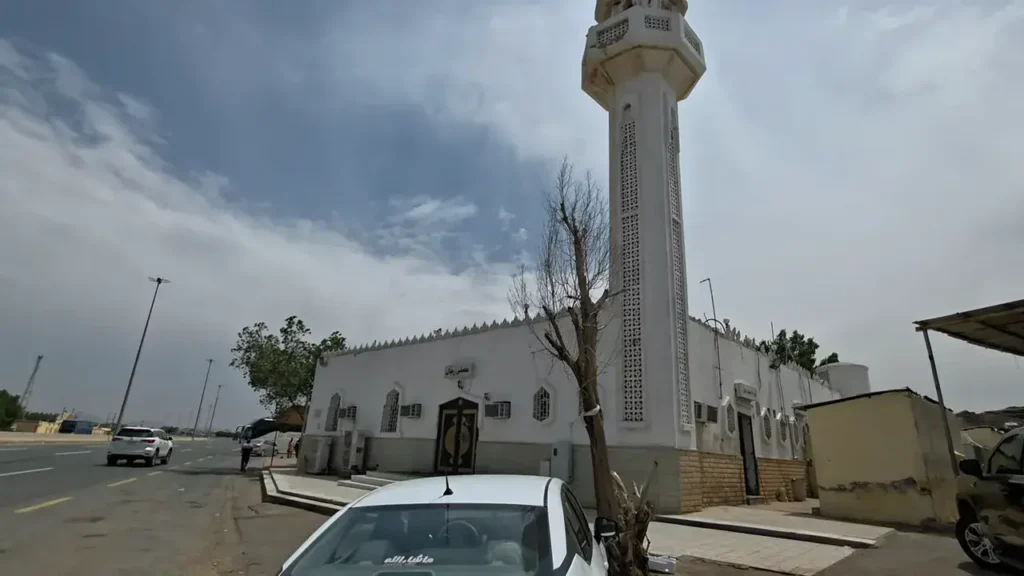
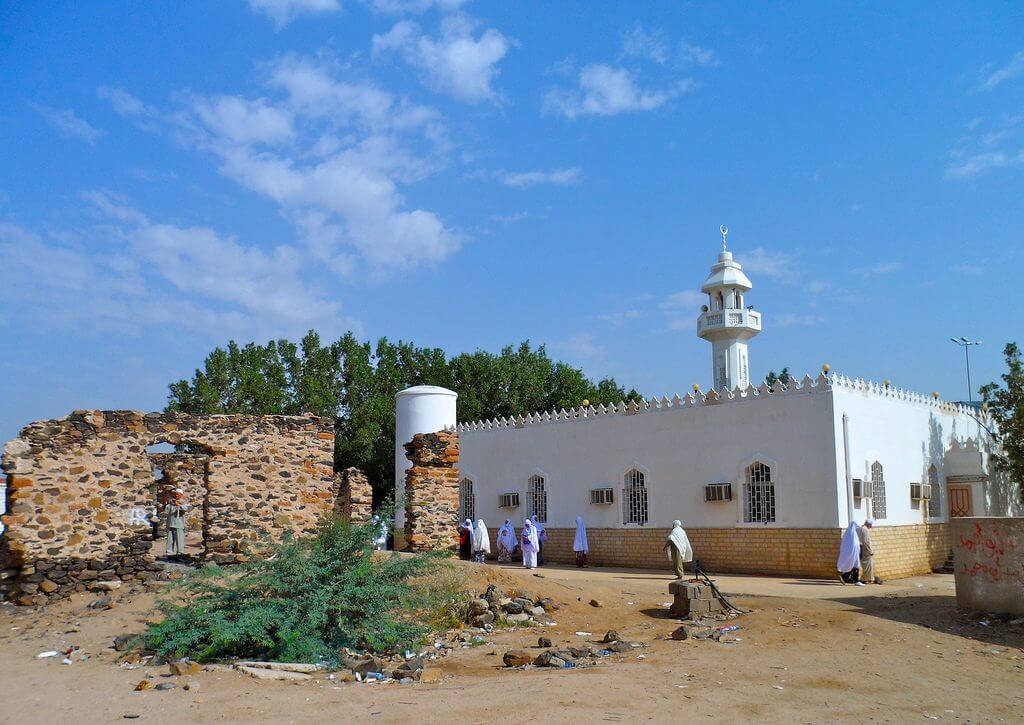
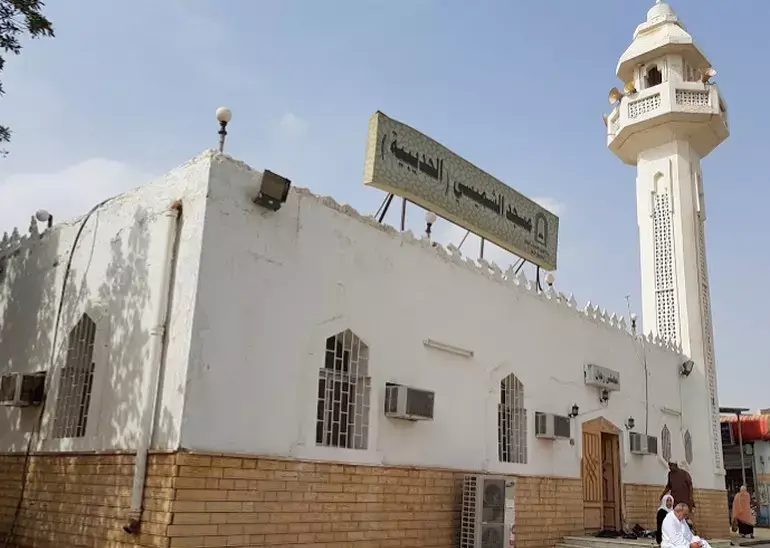
Al Hudaibiyyah Mosque is a historic mosque built at the site of the Treaty of Hudaybiyyah, in an area known as Al-Shumaisi, along the old Makkah–Jeddah road. It is also commonly referred to as Masjid al-Shumaisi (or Al-Syumaisi). A modern mosque with prayer facilities, changing rooms for Ihram, and parking now stands beside the remains of the older structure, which includes stonework believed to date back to the Ottoman era.
The name “Hudaibiyyah” refers to the well that once existed at this location — the same well where, according to tradition, the Prophet Muhammad ﷺ performed a miracle that provided water for roughly 1,500 Companions and their animals during a period of scarcity.
The History of the Treaty of Hudaybiyyah
In the sixth year after the migration to Madinah, the Prophet Muhammad ﷺ saw a vision that he and his Companions entered Makkah and performed Tawaf around the Kaaba. Taking this as a divine sign, he set out from Madinah with around 1,400–1,500 Companions, dressed in Ihram and intending Umrah rather than conflict.
When the group reached the outskirts of Makkah, the Quraysh — wary of the Muslims’ growing influence — blocked their path and refused entry into the city. Negotiations took place at Hudaybiyyah, and after tense discussions, a ten-year peace treaty was agreed upon between the Prophet ﷺ and the Quraysh. The terms initially appeared unfavorable to the Muslims, including a condition that the Umrah be postponed to the following year.
During this period of uncertainty, the Companions gathered beneath a tree and renewed their pledge of loyalty to the Prophet ﷺ — an event known as the Bay’at al-Ridwan, referenced directly in the Qur’an (Surah Al-Fath, 48:18).
What looked like a setback turned into one of the most strategically important moments in Islamic history. The truce halted hostilities, allowed open travel and dialogue between the two sides, and gave the message of Islam room to spread without the threat of war. Within two years, the number of people embracing Islam grew dramatically, setting the stage for the peaceful conquest of Makkah (Fath Makkah).
Religious and Spiritual Significance
Al Hudaibiyyah holds a unique place in Islamic memory because it demonstrates patience, diplomacy, and trust in divine wisdom over immediate victory. Several elements make the site especially meaningful for visitors:
- The treaty ground where a ten-year truce was agreed upon with the Quraysh.
- The site of Bay’at al-Ridwan, the pledge of allegiance given under a tree, described by Allah in the Qur’an as pleasing to Him.
- The well of Hudaybiyyah, associated with a reported miracle of water provision for the Companions.
- Its Qur’anic connection through Surah Al-Fath, which was revealed in relation to these events.
For many pilgrims, visiting Al Hudaibiyyah is less about sightseeing and more about reflecting on a turning point that shaped the early history of the Muslim community.
Al Hudaibiyyah Mosque as a Miqat: Rules for Pilgrims
Beyond its historical value, Al Hudaibiyyah functions today as a recognized point for entering Ihram — technically part of the Adna al-Hill (the nearest boundary outside the Haram) — for those who are already inside Makkah and wish to perform an additional Umrah.
Who typically uses this Miqat:
- Residents of Makkah performing a second or subsequent Umrah.
- Visitors already inside the Haram boundary who want to perform extra Umrah during their stay.
- Those arriving from Jeddah who did not enter Ihram at their original Miqat.
Important note: Al Hudaibiyyah is not a substitute for the primary Miqat stations (such as Dhul-Hulayfah, Qarn al-Manazil, or Yalamlam) for pilgrims arriving from outside Makkah. If a pilgrim intending Umrah or Hajj passes their designated Miqat without entering Ihram, they are required to return to it, not use Al Hudaibiyyah as a substitute.
Basic steps for entering Ihram at Al Hudaibiyyah:
- Perform ghusl (ritual bath) beforehand, either at your hotel or at the mosque’s facilities.
- Wear Ihram garments (two unstitched white sheets for men; modest, loose clothing for women).
- Pray two rak’ahs where possible.
- Make the intention (niyyah) for Umrah and begin reciting the Talbiyah.
- Return to Masjid al-Haram to perform Tawaf and Sa’i.
Because timing matters — especially returning promptly for Tawaf — many pilgrims prefer arranging a private Ziyarat taxi for this trip rather than relying on public transport, since a private vehicle waits for you and heads straight back to the Haram once you’re ready.
Location and Distance from Masjid al-Haram
Al Hudaibiyyah Mosque is located in the Al-Shumaisi area, along the old Jeddah–Makkah road, on the western outskirts of the city, just outside the Haram boundary.
- Distance from Masjid al-Haram: approximately 22–24 kilometers
- Approximate travel time: around 25–35 minutes by car, depending on traffic and time of day
- Area: Al-Shumaisi (Al Hamra / Umm Al Jud vicinity), Old Makkah–Jeddah Road
Because of this distance, walking or relying on shared transport is impractical for most visitors — a private taxi is by far the most efficient way to reach the site and return comfortably.
Best Time to Visit
- Early morning or late afternoon tends to be cooler and less crowded, particularly outside of peak Umrah seasons.
- Ramadan and peak Umrah months see higher numbers of pilgrims using the site as a Miqat for additional Umrahs, so mornings before midday heat are recommended.
- Hajj season brings a different rhythm to Makkah’s roads overall, so travelers combining Ziyarat visits during this period should plan for longer transit times and, where possible, coordinate timing with a private driver familiar with current road conditions.
- Outside of religious peak periods, the site is generally calm, making it a good stop for those who prefer a quieter, more reflective visit.
What You’ll See at the Site Today
The modern Masjid al-Shumaisi stands adjacent to the remains of the older mosque structure. Visitors can typically expect:
- A functioning mosque with prayer space and ablution facilities.
- Designated changing rooms for Ihram, used primarily by those entering the Miqat.
- The ruins of the older stone structure nearby, with visible Ottoman-era masonry.
- Open parking area, suitable for private vehicles.
The atmosphere is understated rather than monumental – there is no elaborate shrine or large tourist infrastructure – which is part of what makes the visit feel authentic to those seeking a genuine historical connection rather than a curated attraction.
Visitor Etiquette and Practical Tips
- Dress modestly, and be prepared with Ihram garments if you intend to perform Umrah afterward.
- Keep voices low and maintain respectful behavior near the mosque and the historical ruins.
- Photography of the mosque exterior and ruins is generally acceptable; avoid photographing other worshippers without their consent, especially inside prayer areas.
- Carry water, particularly in warmer months, as the site is outside the dense urban core of Makkah with fewer amenities nearby.
- If performing Umrah afterward, plan your return trip in advance so you’re not rushed once you begin Ihram — this is one of the main reasons pilgrims prefer a pre-booked private taxi over trying to arrange transport on the spot.
How to Get to Al Hudaibiyyah Mosque
Given the distance from the city center and the time-sensitive nature of entering Ihram, most visitors — whether local residents, Umrah pilgrims, or history-focused travelers — find that a private Ziyarat taxi is the most practical option. A private driver can:
- Pick you up directly from your hotel near the Haram.
- Wait at Al Hudaibiyyah while you visit or complete your Ihram preparations.
- Drive you straight back to Masjid al-Haram without the delays of shared transport.
- Adjust the pace of the trip for elderly travelers, families with children, or those who simply want unhurried time at the site.
Travelers can conveniently book a private Ziyarat taxi through Makkah Ziyarat Taxi for a comfortable, flexible, and hassle-free journey to Al Hudaibiyyah Mosque. The service offers hotel pickup and drop-off, air-conditioned vehicles suitable for the desert climate, and drivers familiar with Miqat timing and Ziyarat routes — a practical advantage for anyone entering Ihram on this trip.
Combining Al Hudaibiyyah with Other Ziyarat Sites
Since a round trip to Al Hudaibiyyah already involves some distance from central Makkah, many visitors choose to combine it with other Islamic historical sites in a single half-day or full-day outing. Popular combinations booked through private Ziyarat taxi services include:
- Cave of Hira (Jabal al-Noor) — where the first revelation was received.
- Cave of Thawr (Jabal Thawr) — the refuge site during the migration to Madinah.
- Masjid Aisha (Masjid Taneem) — a commonly used Miqat closer to the Haram, useful for comparison if visiting Al Hudaibiyyah primarily for its history.
- Masjid Ji’ranah — another historical Miqat site north-east of Makkah.
- Jannat al-Mu’alla — the historic cemetery in Makkah connected to early Islamic figures.
A flexible, multi-stop Ziyarat tour lets travelers set their own pace rather than being tied to a fixed group schedule, which is particularly valuable for pilgrims balancing Ziyarat visits with prayer times and rest.
Family, Elderly, and Group Travel Considerations
Al Hudaibiyyah’s distance from the city and its role as a Miqat make private, door-to-door transportation especially useful for certain groups:
- Families with children benefit from a private family taxi that allows breaks, feeding, and rest stops without disrupting a shared group schedule.
- Elderly pilgrims often need a slower pace, minimal walking, and a vehicle that waits nearby rather than a fixed-return shuttle — something a private driver can accommodate directly.
- Larger groups performing Umrah together can coordinate a group taxi or SUV/van (such as a Toyota Hiace, Hyundai Staria, or GMC Yukon) so everyone enters Ihram and departs together without splitting up.
- Luxury or extra-comfort travelers can opt for a premium vehicle for a more relaxed ride to and from the Miqat, particularly useful in the heat of midday.
For any of these situations, arranging transport in advance through a private Ziyarat taxi service removes the uncertainty of finding a ride back once Ihram has begun — an important detail, since pilgrims in Ihram are expected to keep their journey back to the Haram as smooth as possible.
FAQs
Where is Al Hudaibiyyah Mosque located?
It is located in the Al-Shumaisi area along the old Jeddah–Makkah road, roughly 22–24 kilometers west of Masjid al-Haram.
What is Al Hudaibiyyah Mosque also known as?
It is also called Masjid al-Shumaisi (or Al-Syumaisi), named after the surrounding area.
What happened at Al Hudaibiyyah?
The Treaty of Hudaybiyyah was signed here in 6 AH (628 CE) between Prophet Muhammad ﷺ and the Quraysh tribe of Makkah, and the Companions gave the Bay’at al-Ridwan pledge under a nearby tree.
Is Al Hudaibiyyah Mosque a Miqat?
Yes. It functions as a Miqat (part of the Adna al-Hill) for those already inside the Haram boundary who wish to enter Ihram for an additional Umrah. It is not a substitute for the main Miqat points used by pilgrims arriving from outside Makkah.
How far is Al Hudaibiyyah Mosque from Masjid al-Haram?
Approximately 22–24 kilometers, roughly a 25–35 minute drive depending on traffic.
Can I visit Al Hudaibiyyah Mosque without entering Ihram?
Yes, visitors can go purely to see the historical site and mosque without necessarily entering Ihram, unless they intend to perform an additional Umrah afterward.
What should I bring if I plan to enter Ihram at Al Hudaibiyyah?
Ihram garments, water, and comfortable footwear. Changing facilities are available at the mosque.
Is Al Hudaibiyyah Mosque suitable for families and elderly visitors?
Yes, though its distance from the city center makes private transportation more comfortable than public options, particularly for elderly travelers or those with young children.
What is the best way to get to Al Hudaibiyyah Mosque from my hotel?
A private Ziyarat taxi with hotel pickup is the most convenient option, since it removes the uncertainty of return transport, especially important once Ihram has begun.
Can I combine a visit to Al Hudaibiyyah with other Ziyarat sites in one trip?
Yes, many visitors combine it with sites like Masjid Aisha, Masjid Ji’ranah, Cave of Hira, or Cave of Thawr as part of a half-day or full-day private Ziyarat tour.
Is there parking available at Al Hudaibiyyah Mosque?
Yes, there is an open parking area suitable for private vehicles and taxis.
What remains of the original historical structure at Al Hudaibiyyah?
Ruins of an old stone structure, with masonry believed to date to the Ottoman era, stand next to the modern mosque.
Is Ramadan a good time to visit Al Hudaibiyyah Mosque?
It can be, though the site sees more pilgrims performing additional Umrahs during Ramadan, so earlier or later in the day tends to be less crowded.
Do I need to book transportation in advance for Al Hudaibiyyah?
It’s recommended, particularly during peak Umrah and Hajj seasons, so you have a reliable pickup and return without delays once you’re in Ihram.
How can I book a private taxi to Al Hudaibiyyah Mosque?
You can book through Makkah Ziyarat Taxi at https://makkahziyarat.taxi or contact the team directly via WhatsApp at +966 57 4915 372 to arrange pickup times and combine other Ziyarat stops.
Plan Your Visit Comfortably
Visiting Al Hudaibiyyah Mosque is a meaningful stop for anyone wanting to connect with a defining chapter of early Islamic history — whether purely for reflection or as part of entering Ihram for an additional Umrah. Given the distance from central Makkah and the importance of a smooth return journey, most pilgrims find that private transportation makes the experience far less stressful than relying on shared or public options.
For a comfortable, door-to-door trip to Al Hudaibiyyah Mosque — or a combined Ziyarat itinerary covering multiple historical sites around Makkah — you can book through Makkah Ziyarat Taxi at https://makkahziyarat.taxi, or reach out directly on WhatsApp: +966 57 4915 372 to arrange pickup times, vehicle type, and your preferred route.